


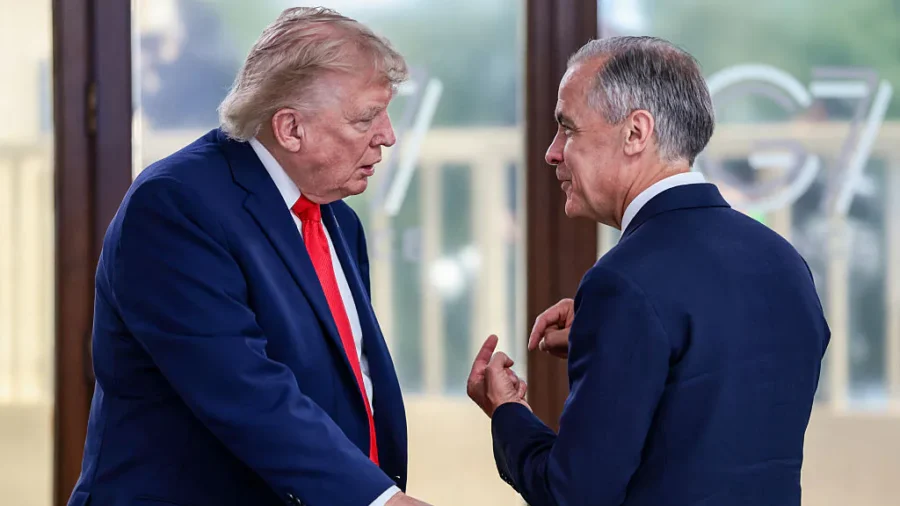
U.S. President Donald Trump says he will impose new 50 percent tariffs on all Canadian cars and trucks starting on Jan. 1, 2027.
His announcement comes after trade talks between Washington and Ottawa collapsed on Aug. 21, with new 50 percent U.S. tariffs on about US$20 billion (CA$28 billion) of Canadian products taking effect on Aug. 22, and Canada vowing to retaliate with its own tariffs.
"Build in the U.S. and there are ZERO TARIFFS. Canada will be treated like a State no longer! On Trade, and in other ways, also, they are among the worst Nations in the World to deal with. They feel entitled, and yet, WE DON’T NEED CANADA, THEY NEED US!"
Trump said that starting in the new year, all Canadian cars, trucks, and auto parts will be subject to a 50 percent tariff. Current tariffs on Canadian autos are 25 percent.
The U.S. president also included steel in the new announcement. Canadian steel, along with aluminum and copper, is already tariffed at 50 percent.
Canada has said its retaliatory tariffs will come into effect on Sept. 8. They are in response to the new 50 percent tariffs that were set to go into effect on Aug. 19, but were delayed by Washington until Aug. 22 to allow time for negotiations, which ultimately failed. Trump had cited Canada's dairy supply management, provincial U.S. alcohol sales ban, and counter-tariffs on autos as the reason for those tariffs.
The 50 percent tariffs that came into force on Aug. 22 affect about 5 percent of Canadian exports to the United States. They apply to a range of products, including dairy, alcohol, honey, and hockey sticks.
Canadian Prime Minister Mark Carney said on Aug. 22 that he told his team to walk away from Washington's proposed deal because it "asked too much and offered too little," taking issue with U.S. negotiators coming in with what he characterized as last-minute changes.
Carney said his three main concerns were Washington not including medium- and heavy-duty trucks in tariff relief, wanting to restrict Canada's French content and labelling requirements, and restricting Canada from engaging in other trade deals. He did not elaborate on the restrictions the United States asked for regarding Canada's other trade deals.
"We've been pragmatic, patient, and persistent. We pursued every opportunity to reach an agreement that protects Canadian workers and their families, that strengthens our economy, and that respects Canadian sovereignty," Carney said.
"We cannot accept what they've offered, and we will not give what they've asked."
Washington says blame should be placed on Canada's “new demands and walk-backs of other commitments.”
“Under President Trump, Canada has had the lowest tariffs for its exports to the U.S. market. At the last minute, Canada walked away from a nearly completed deal that would have lowered these tariffs even further,” the Office of U.S. Trade Representative Jamieson Greer said.