


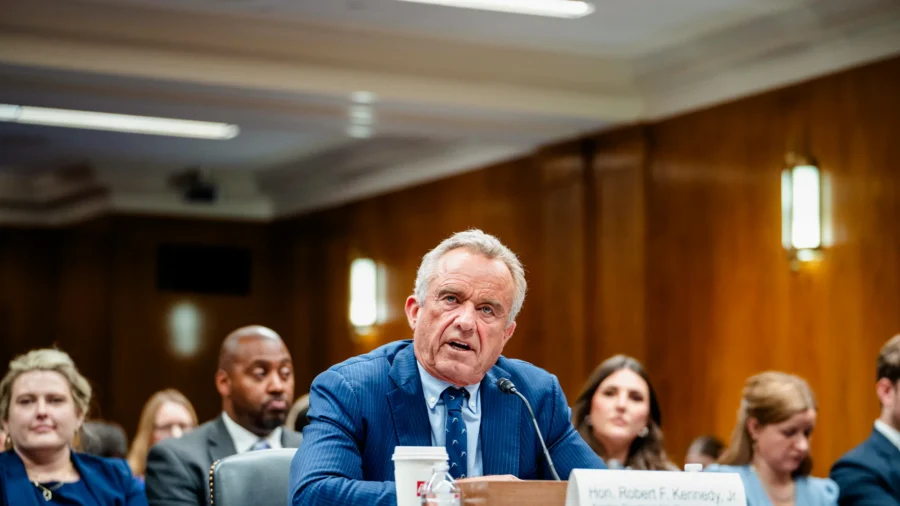
In his department’s latest move related to vaccine-related reform, Health and Human Services Secretary Robert F. Kennedy Jr. on Aug. 1 announced more repeals of federal policy that rewarded hospitals for reporting staff vaccination rates.
“Medical decisions should be made based on one thing: the wellbeing of the person—never on a financial bonus or a government mandate,” Kennedy said. “Doctors deserve the freedom to use their training, follow the science, and speak the truth without fear of punishment.”
Created under the Biden administration’s Centers for Medicare & Medicaid Services (CMS) inpatient payment rule, the policy linked hospital reimbursement to staff vaccination reporting.
“Doctors and other providers should have the same autonomy to choose what’s right for their own individual health care needs as the patients for whom they care. Today’s announcement helps put that power back in their hands,” CMS Administrator Dr. Mehmet Oz said in the press release.
The move represents the most recent policy repeal under CMS. These moves are “part of a broader HHS effort to restore medical autonomy in federally funded programs and root out financial and regulatory pressures that incentivize physicians towards pre-scripted medical decisions rather than individualized, evidence-based care,” according to the press release.
Since taking office as HHS secretary, Kennedy has implemented multiple changes regarding vaccines.
The Food and Drug Administration in late May said it planned to limit access to future COVID vaccines to people 65 and older and individuals with underlying health conditions.
The agency also announced it would permit vaccine manufacturers to coordinate in-depth studies to assess the efficacy and safety of COVID vaccines in children and younger, healthy adults.
After it voted to advise officials to stop recommending influenza shots that have mercury, the remade Advisory Committee on Immunization Practices (ACIP) said it plans to look at multiple other vaccines.
Martin Kulldorff, the new chair of ACIP, said on June 26 that one proposal is to notify the CDC that young children should not receive the measles, mumps, rubella, and varicella (MMRV) combination immunization.

A vote on the issue could happen as early as the next ACIP meeting, which is expected to be held in August or September.
“Raising questions without adequate data casts doubt on vaccination, which can further drive down confidence in vaccines. More than any other medications, vaccines are extensively and constantly reviewed and evaluated,” she added.
During the ACIP meeting, Kulldorff explained that Kennedy had given the committee “a clear mandate to use evidence-based medicine for making vaccine recommendations.”
“Vaccines are not all good or bad. If you think that all vaccines are safe and effective and want them all, or if you think that all vaccines are dangerous and don’t want any of them, then you don’t have much use for us—you already know what you want,” he said.
“But if you wish to know which vaccines are suitable for you and your children and at what ages, then we will provide you with evidence-based recommendations,” he added.
ACIP members who were removed by Kennedy said the panel has “lost credibility.” The former members wrote in a July 30 New England Journal of Medicine commentary that the process for recommending vaccines is “rapidly eroding.”
Groups that employ the experts have been informed that they won’t be part of the workgroups any longer, the Department of Health and Human Services (HHS), the CDC’s parent agency, told The Epoch Times on Aug. 1.
An official said some groups are being removed from the workgroups because of concerns that they have conflicts of interest.

The legal action seeks preliminary and permanent injunctions to stop Kennedy’s new COVID vaccine recommendations and a declaratory judgment declaring the decision unlawful.