

RFK Jr. Declares Public Health Emergency for Wildfire-Ravaged Washington State

The federal response comes as Washington endures what officials have called one of its most severe fire seasons on record
Published: 8/6/2026, 10:03:07 PM EDT
RFK Jr. Declares Public Health Emergency for Wildfire-Ravaged Washington State
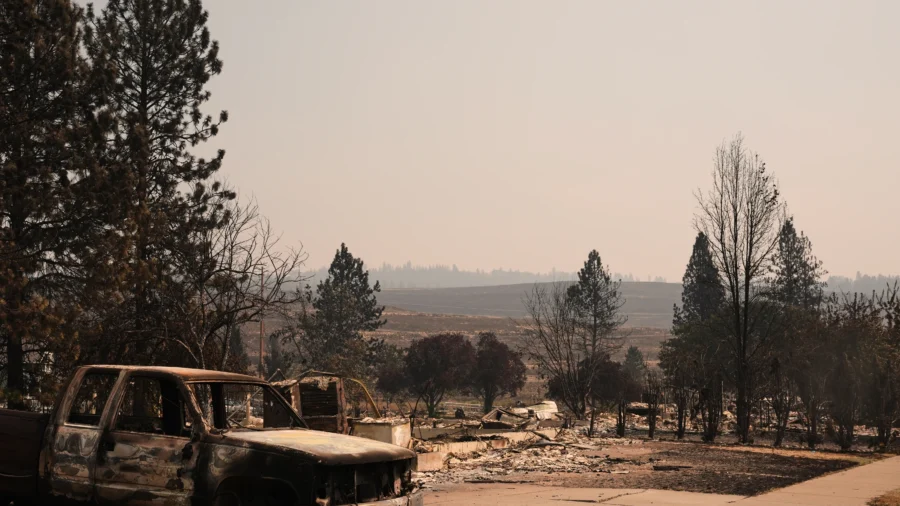
A burned truck sits in a driveway near several destroyed homes in a residential neighborhood on Aug. 4, 2026, after a wildfire hit the northern part of Spokane, Wash. (Lindsey Wasson/AP Photo)

Health and Human Services (HHS) Secretary Robert F. Kennedy Jr. declared a federal Public Health Emergency for Washington state on Thursday, unlocking new flexibility for hospitals and health care providers battling the fallout from the state's ongoing wildfire crisis.

Kennedy announced the declaration in a post on X, saying it would give medical facilities the tools needed "to respond to these devastating wildfires and protect lives." He said he spoke directly with Washington Gov. Bob Ferguson and pledged that HHS "will work alongside state and local leaders to keep care available, support frontline healthcare professionals, and help Washington communities through this emergency."

"We stand with the people of Washington, and we will not let them face this crisis alone," Kennedy wrote.

The health emergency follows a federal emergency declaration Ferguson secured two days earlier, on Aug. 4, covering six counties battered by fire: Chelan, Ferry, Okanogan, Spokane, Stevens, and Yakima, along with the Confederated Tribes and Bands of the Yakama Nation, the Confederated Tribes of the Colville Reservation, and the Spokane Tribe of Indians, according to a press release from the governor's office. That declaration frees up federal resources and personnel and allows local and tribal governments to tap funding for evacuation costs, emergency shelters, food and water distribution, and search-and-rescue operations. Ferguson's request was approved in full except for debris removal assistance.

"I appreciate the federal government moving quickly and granting our request for this emergency declaration," Ferguson said, adding that state officials are "laser-focused on getting assistance to those Washingtonians who have lost so much." The governor's office said Ferguson is now preparing a separate request for a Major Disaster Declaration, which would open the door to individual assistance for residents and public funding to repair damaged state infrastructure. Ferguson previously obtained such a declaration after historic flooding in December.

The federal response comes as Washington endures what officials have called one of its most severe fire seasons on record. The governor's office said in a separate Aug. 1 press release that more than 1,000 fires had scorched roughly 425,000 acres statewide by that date—the most acreage burned since 2021—with more than 200,000 acres actively burning across 12 large fires at the time. Public Lands Commissioner Dave Upthegrove said firefighters were "already stretched thin across the state," warning that "any new spark on our tinder dry landscapes can lead to another devastating wildfire.”

Ferguson declared a statewide state of emergency on Aug. 1, citing drought, extreme heat and high winds, and imposed a burn ban on most outdoor and agricultural burning through Sept. 30, 2026. That order took effect ahead of an "extreme" Red Flag Alert issued by the National Weather Service for Eastern Washington. The ban does not apply to gas or liquid-fueled stoves and grills used safely, permitted agricultural burning, or contained campfires on private property or at designated campgrounds. Selling or discharging consumer fireworks outside licensed displays remains unlawful.

To bolster firefighting efforts, Ferguson activated 110 Washington National Guard members on July 31 in addition to 27 helicopter crew members mobilized earlier in July. The state Fire Marshal's Office has deployed 13 task forces, including eight fighting the Sinlahekin Fire in Okanogan County and five battling the Bradeen Hill Fire in Stevens County, with additional strike teams assisting on the Kaiser Canyon and Little Giant fires. The Washington Department of Natural Resources continues to track active fires through its online wildfire portal and dashboard, and directs the public to Inciweb and the Northwest Interagency Coordination Center for official updates.