


The U.S. Centers for Disease Control and Prevention is winding down its response to hantavirus, which proved successful, officials said on June 23.
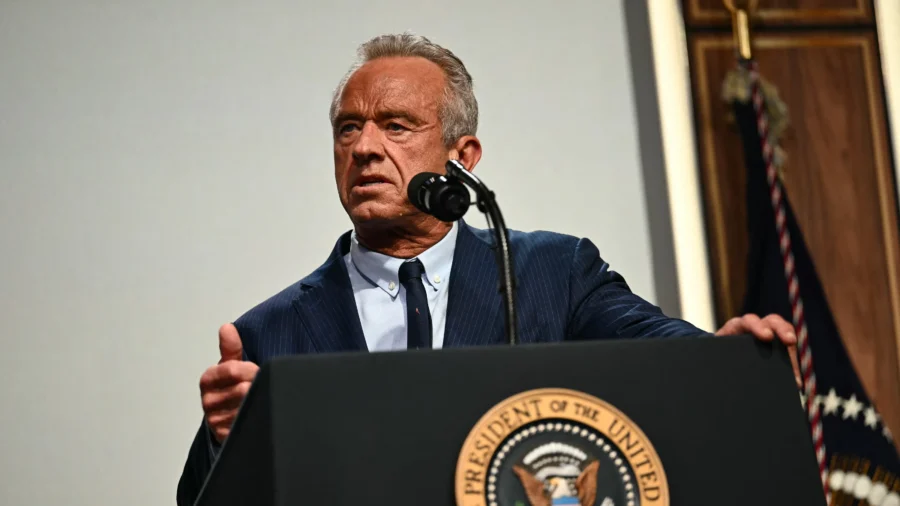
“Protecting the health and safety of the American people is our highest responsibility,” Department of Health and Human Services (HHS) Secretary Robert F. Kennedy Jr. said in a statement. “HHS moved swiftly to identify potential exposures, support state and local health officials, and prepare our healthcare system to respond. As a result, no sustained transmission of hantavirus occurred in the United States, and the monitoring period has concluded with no individuals remaining under observation.”
“The successful conclusion of this response demonstrates the strength of a coordinated response to infectious disease threats that occur outside of our borders,” Dr. Jay Bhattacharya, the CDC’s acting director, said. “I am grateful for the world-class team at CDC whose dedication and swift action helped identify potential exposures, provide clear guidance, and protect the American people. As a result, we prevented any new cases from arising in the U.S.”
An outbreak of the Andes strain of the hantavirus on a cruise ship that departed from Argentina earlier this year and made stops at remote islands left 13 people infected, and three dead.
Some Americans who had been on the ship were allowed to quarantine at home, while others were flown to a quarantine facility in Nebraska for monitoring. Two among the latter group were forced to remain there for 42 days, while six others remained there voluntarily. The monitoring period for those eight ended on June 21.
“This was a complex response, and it involved a lot of federal, state, and local partners … so the decision about monitoring was made across the federal government,” Dr. Brendan Jackson, the CDC’s manager for hantavirus response, told reporters on a call. “And that was both in terms of where they were monitored and in terms of what the monitoring requirements look like.”
Jackson declined to say how much the quarantine operation cost.
Kennedy also signed a declaration of an emergency under the Public Readiness and Emergency Preparedness Act that enabled people possibly exposed to the Andes virus to access favipiravir, an antiviral that is not approved in the United States.