


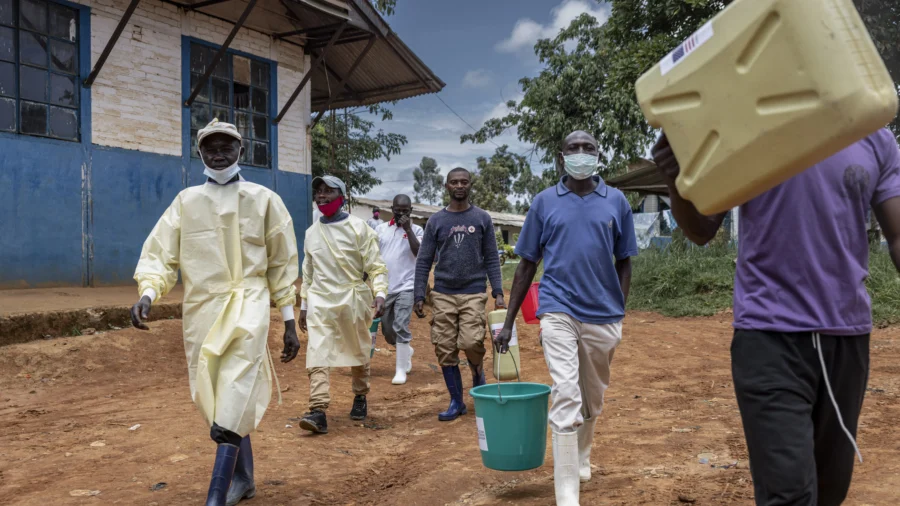
Scientists are working to test and produce vaccines against the rare virus behind the Ebola outbreak in Africa.
University of Oxford researchers and Serum Institute of India scientists are racing to make available an experimental shot they believe could work against the Bundibugyo virus, which is causing a growing outbreak centered in Congo.
Viral seed provided by Oxford University "will allow us to rapidly inoculate our cell bank and begin producing vaccine doses in record time," a spokesperson for the Serum Institute told The Epoch Times in an email on March 24.
He said that the company is looking at a 20- to 30-day production window and is "fully prepared to scale."
The experimental vaccine, which is not cleared for use anywhere in the world, uses the same ChAdOx1 platform as the AstraZeneca/Oxford COVID-19 vaccine.
The Oxford Vaccine Group said in a statement that it is working with its clinical biomanufacturing facility and the Serum Institute to quickly produce doses of the Bundibugyo shot, known as the ChAdOx1 BDBV vaccine.
"At the same time, we are working with our global partners to accelerate the generation of supportive preclinical data for the clinical development and testing of the ChAdOx1 BDBV vaccine in outbreak scenarios, all whilst continuing to follow established scientific, ethical, and regulatory standards," the group said.
Oxford and the Serum Institute produced and shipped doses of a vaccine candidate against the Sudan ebola virus 80 days after an outbreak caused by the virus started in Africa in 2022.
Congolese officials have discussed administering experimental vaccines during the outbreak, Jean-Jacques Muyembe, a virus expert at the National Institute of Biomedical Research, told reporters during a recent briefing.
The best option is Ervebo, a vaccine made by Merck that targets the Zaire virus, a more common orthoebolavirus that causes Ebola, according to Moorthy. But he said it would take six to nine months to begin testing a reformulated version targeting Bundibugyo.
Merck has not responded to requests for comment.
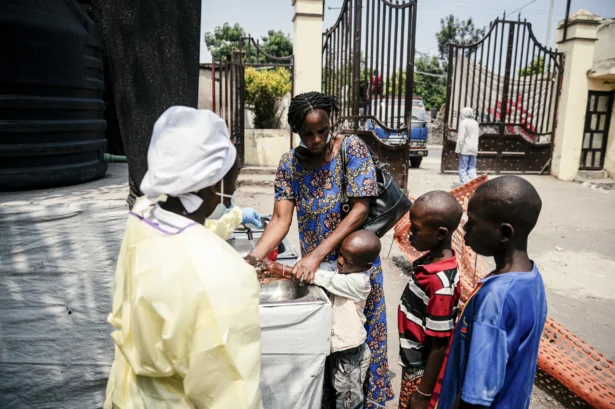
Organizations Outline Plans
Gavi, a Switzerland-based vaccine alliance that receives funding from countries and groups such as the Gates Foundation, said on May 21 that data for vaccines it has stockpiled against the Zaire virus concerning cross-protection against the Bundibugyo virus are "extremely limited."Gavi said it is working with CEPI, a Norwegian-based organization that funds vaccine development, to accelerate vaccine development, including the vaccine developed by Oxford.
CEPI said in a statement on May 20 that it is focused on evaluating possible treatments and vaccines against Bundibugyo, but that no candidates are yet in phase 1 clinical trials.
"Once that assessment is complete, we are prepared to move at-risk—i.e., accepting that a product may not succeed or be needed, and conducting activities in parallel—to accelerate the development and availability of vaccine candidates that are currently in preclinical development," CEPI stated.
Given the lack of approved vaccines and therapeutics for Ebola caused by Bundibugyo, the Gates Foundation said in a recent statement that the immediate priority is measures such as rapidly detecting cases and stopping transmission as quickly as possible.
Patrick Muyaya, a spokesman for the Congolese government, said on May 25 that the country has ramped up surveillance, mass testing, and efforts to raise awareness on how to detect and prevent more Ebola cases as it tries to contain the outbreak.
Officials have described a delay in detecting the outbreak due to some early testing being unable to identify Ebola cases caused by the Bundibugyo virus.
"We are now playing catch-up with a fast-moving epidemic," Tedros Adhanom Ghebreyesus, the World Health Organization's director-general, said on X on Monday.
He wrote that, due to the failure to quickly identify the outbreak and the lack of approved vaccines or treatments for the strain, the outbreak "will likely get worse before it gets better."