


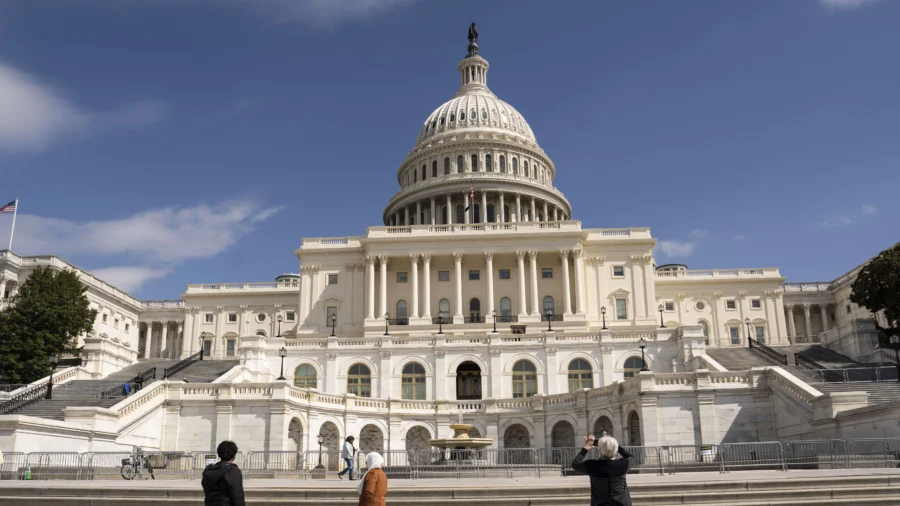
The Senate passed a bill on March 19 to end preferential airport security treatment for members of Congress.
The bill, introduced by Sen. John Cornyn (R-Texas), comes amid a 35-day partial shutdown of most Department of Homeland Security agencies, including the Transportation Security Administration (TSA).
It passed with unanimous consent as there were no objections to the measure. A recorded vote was not conducted.
The bill now heads to the House of Representatives.
In the past, lawmakers have often received expedited screening at airports. Some have also been given “courtesy escorts” through terminals by TSA personnel or airport police.
These privileges have been suspended during the ongoing shutdown.
The bill, titled the End Special Treatment for Congress at Airports Act, would require members of Congress to go through the same TSA screening procedures as other travelers.
It would also prohibit the use of federal funds for expedited or preferential security access.
However, lawmakers would still be allowed to participate in publicly available programs such as TSA PreCheck and other trusted-traveler initiatives.
Speaking on the Senate floor, Cornyn argued that the current system is unfair, particularly as travelers face longer lines and delays.
He said many Americans are unaware that members of Congress have been able to bypass standard screening and called for that to end.
“Staffing constraints have not only led to longer wait times around the country but also significant delays, disruptions, and missed flights,” Cornyn said.
“The only reason I can fathom, other than being completely out of touch, that our Democrat colleagues would do this is [that] not all members of Congress are being forced to experience the same mess of their own making,” Cornyn said.
Airport wait times have become increasingly unpredictable during the shutdown, with staffing shortages affecting how quickly security lines move. In some cases, lines have extended well beyond terminal checkpoints.
The shutdown marks the third disruption affecting TSA workers since the fall.
According to the American Federation of Government Employees, many TSA officers are experiencing financial strain, making it difficult to cover basic expenses such as gas and childcare while continuing to work.
The Department of Homeland Security reported that at least 376 TSA agents have resigned since the shutdown began on Feb. 14.
Additionally, about 10 percent of TSA officers nationwide were absent each day this week.
Many employees recently experienced their first pay period without income.