


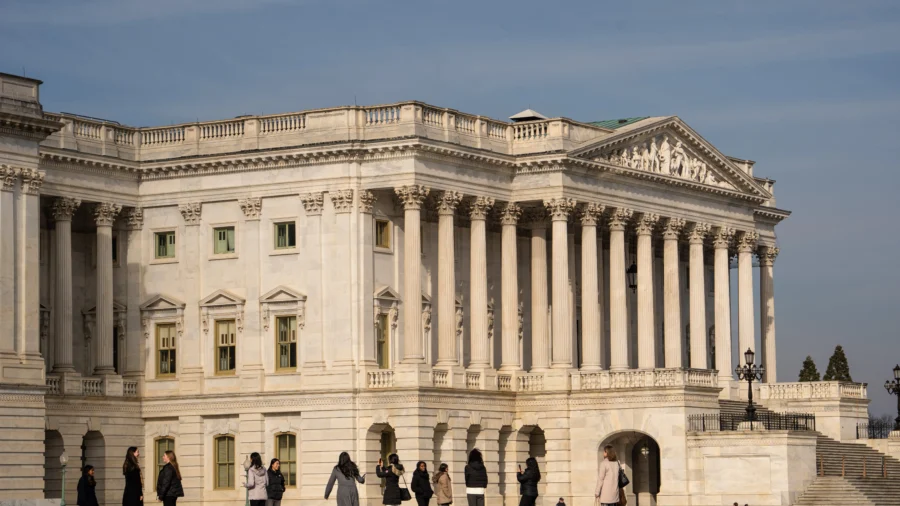
The fate of a funding plan for ICE and Border Patrol is now in the hands of the House after Senate Republicans voted to pass the $70 billion initiative overnight, bypassing Democrats’ demands for changes to the two agencies.
House Speaker Mike Johnson (R-La.) will put the funding plan on the House floor next week.
But Democrat leaders on Thursday have already said they will vote against the budget resolution that funds both agencies for the next three years.
In a 50-48 vote early Thursday, the GOP-led Senate adopted a non-binding budget resolution using a rare procedure called budget reconciliation to work around Democratic opposition.
The vote followed a nearly six-hour “vote-a-rama” session that began late Wednesday.
Two Republicans, Sen. Rand Paul (R-Ky.) and Sen. Lisa Murkowski (R-Alaska) broke ranks from the party and opposed the initiative.
Funding for most of Homeland Security ran out more than nine weeks ago, as Democrats pushed for new constraints on the two agencies that operate under the Homeland Security umbrella, especially after two U.S. citizens were shot and killed by federal agents in Minnesota earlier this year.
Republicans accused Democrats of seeking to defund critical operations that they said keep the country safe.
Wednesday night's session included a series of proposed amendments.
Republicans opposed an amendment pitched by Sen. Chuck Schumer (D-N.Y.) that said the reconciliation bill should have lowered out-of-pocket health care costs for the American people.
“Instead of pumping hundreds and billions of dollars into ICE and Border Patrol, Republicans should be working with Democrats to lower out of pocket costs,” Schumer said.
Democrats have insisted that ICE and Border Patrol operate under the same rules as police forces across the country, including the requirement of judicial warrants to enter private homes. But weeks of negotiations between the two sides ended in a stalemate.
Once the House approves the framework and the Senate Parliamentarian also greenlights it, the two chambers can then move to pass the budget resolution.
The vote comes as lawmakers on both sides of the aisle consider November's midterm elections, which will determine the party that holds control of Congress during the final years of Trump's presidency.