


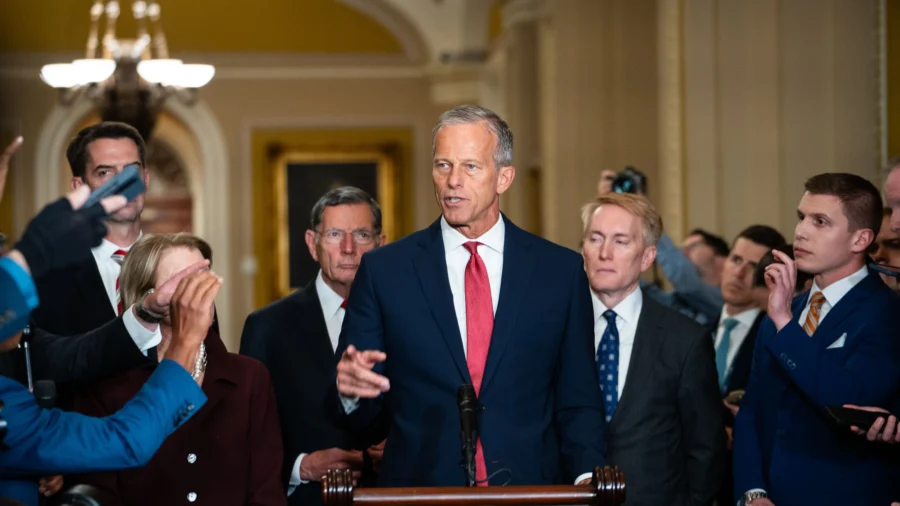
The United States Senate will vote on a measure to ensure that U.S. military servicemembers and other essential employees get paid during the government shutdown, Senate Majority Leader John Thune (R-S.D.) announced on Oct. 17.
"[Democrats] should at least agree to pay all the federal employees that are forced to continue working," wrote Johnson on social media.
The bill comes amid President Donald Trump's effort to ensure that U.S. military servicemembers are paid during the shutdown, which began on Oct. 1.
Many have already missed paychecks, though they are still required to report for duty due to their "essential" status for national defense.
The funds for such payments were "reprogrammed" from other accounts of the government that had money remaining, such as "Research, Development, Test, and Evaluation" funds.
The Department of War sourced $8 billion from there to ensure military paychecks were honored.
Some critics have claimed that the practice is illegal, though Democrats in Congress have not objected to the payments themselves.
Trump also noted an interest from outside groups in paying U.S. servicemembers, though these offers have not been accepted.
"A very wealthy person ... who called; a donor, a great gentleman, and he said, 'If there's any money necessary [for the] shortfall, for the paying of the troops, then I will pay it,' meaning he will pay it," Trump said during a meeting in the Cabinet Room of the White House on Oct. 14.
Any money gifted to the United States can only be spent on a specific purpose if authorized by Congress, though federal law permits specific tax-deductible gifts for the purpose of paying down the national debt, rather than for any targeted spending like salary payments.
Any bill to pay federal workers passed by the Senate would also have to be passed by the House of Representatives, as required by the Constitution.