


A Senate Foreign Relations Committee hearing on April 30 issued one of the strongest congressional warnings to date about China's growing role in suspected undersea cable sabotage, with lawmakers and witnesses urging the United States and its allies to adopt a more assertive deterrence posture in both the Baltic Sea and the Indo‑Pacific.
The hearing, titled “Sabotage in the Baltic Sea: Implications for European Security and Lessons for the Indo‑Pacific,” examined a series of cable and pipeline disruptions in Northern Europe since 2022. While many incidents have been linked to Russian vessels, senators repeatedly emphasized that the Chinese regime is now exhibiting similar patterns of behavior, particularly around Taiwan.
Committee Chairman Jim Risch (R‑Idaho) opened the session by warning that “the Chinese military has conducted research into cable‑cutting technologies,” adding that Taiwan has reported “five incidents of likely sabotage in only the last two years.” He said Beijing, like Moscow, has used commercial vessels to mask hostile activity, calling the trend “not just bad luck.”
Ranking member Jeanne Shaheen (D‑N.H.) underscored that the vulnerabilities seen in the Baltic are "not unique to Europe,” noting that a bipartisan Senate delegation observed similar risks during an April visit to Taiwan.
The Baltic–Indo‑Pacific Mirror
Witnesses drew direct parallels between Baltic incidents and a series of cable cuts around Taiwan’s outlying islands.Benjamin Schmitt, a senior fellow at the University of Pennsylvania, testified that there have been "several subsea cable cuts around Taiwan that suggest involvement of the People’s Republic of China." He described field research conducted this month in the Taiwan Strait, including visits to the sites of the 2023 and 2025 Matsu and Penghu cable breaks.
Schmitt said “all of these incidents involved PRC‑linked vessels,” and highlighted Taiwan’s prosecution of the Chinese captain of the bulk carrier HONG TAI 58, who is now serving a three‑year sentence for sabotaging a Penghu telecom cable.
He urged European governments to study Taiwan’s legal model, which allows prosecution based on the “results principle” even when sabotage occurs outside territorial waters.
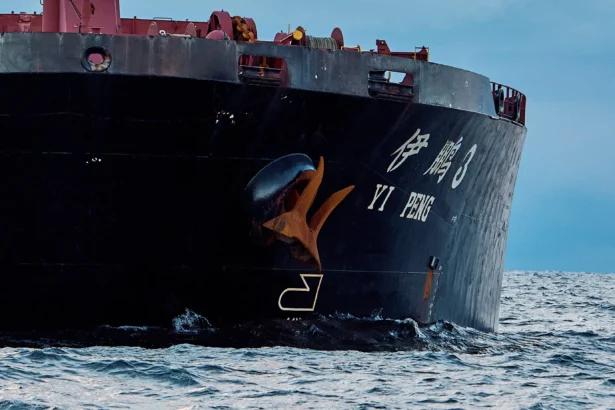
Former Assistant Secretary of State for European and Eurasian Affairs James O’Brien said the Baltic Sea has become a “test case” for how the United States responds to hybrid threats from both Russia and China.
“Russian and Chinese ships have been involved in multiple attacks in the Baltic Sea over the last several years, and those countries are learning how and whether the U.S. will answer,” he said.
The Indo‑Pacific, he added, faces similar risks as Chinese commercial, research, and maritime militia vessels operate near critical infrastructure.
The Asymmetric Cost of Conflict
While the hearing did not quantify the cost disparity between sabotage and repair, witnesses emphasized that undersea infrastructure remains a high‑impact, low‑cost target for state actors. O’Brien described the global network of roughly 500 cables as the “connective tissue” of the modern economy, carrying more than 99 percent of digital traffic.O’Brien warned that the current U.S. posture “poses a risk of escalation,” noting that Russia has reportedly placed armed personnel on shadow‑fleet vessels and that both Moscow and Beijing are probing for weak points. “We can deter now or pay later,” he said.
Legislative Teeth
Much of the policy discussion centered on the Strategic Subsea Cables Act of 2026 (S.3249), a bipartisan bill that would create new sanctions authorities for vessels and individuals involved in sabotage and require annual U.S. intelligence assessments of Chinese and Russian activities targeting undersea infrastructure.Schmitt urged Congress to pass the measure, calling it a “comprehensive” framework for deterring future attacks and improving U.S. and allied monitoring capabilities.
O’Brien also pointed to the need for targeted sanctions authority, noting that existing tools have been applied inconsistently. He said additional authorities tied specifically to undersea infrastructure “would offer an alternative approach” for responding to Russian and Chinese activity.
A Call to Action
O’Brien said U.S. allies are watching "closely" to see whether Washington will respond more forcefully to sabotage attempts. He said that a stronger U.S. role is essential to prevent miscalculation.“A stronger U.S. presence can persuade everyone that escalation is in no one’s interest,” he stated.
Resiliency as Deterrence
Lawmakers closed the hearing by emphasizing that the lessons of the Baltic Sea apply directly to the Indo‑Pacific. Risch said the United States “can’t allow this undersea sabotage” to continue unchecked, and Shaheen stressed that privately owned infrastructure must now be treated as a matter of national security.As Congress weighs S.3249, the lawmakers signaled that the era of treating cable breaks as maritime accidents is ending and that resilience—and the ability to attribute and respond quickly—may be the most effective deterrent against Chinese and Russian hybrid operations targeting the seabed.