

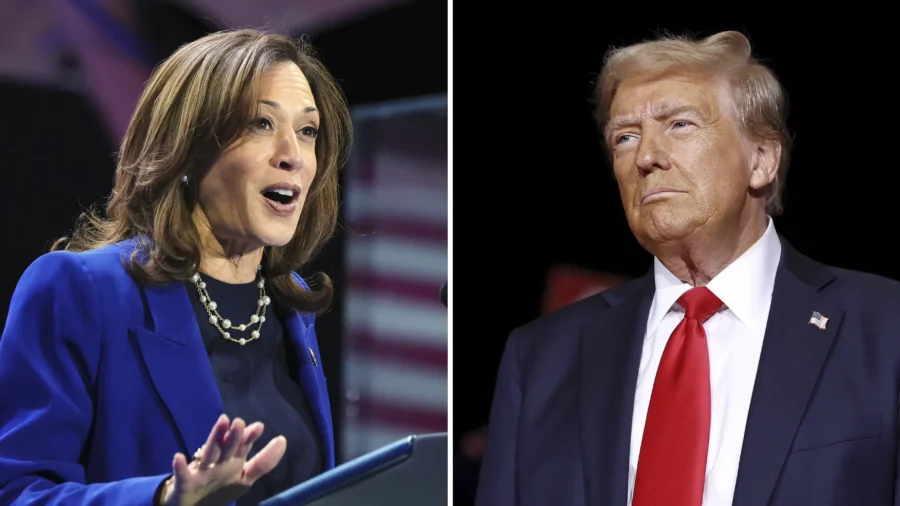
A new study offers a rear view into the 2024 election and tries to answer why former Vice President Kamala Harris lost to current President Donald Trump.
The 192-page document blames the Democrat party’s presidential loss on reductions in support and training for local and state party infrastructure, shifts in voter registration, loss of partisan organizing capacity, and an inability to listen to all voters.
“We must organize everywhere to Win Anywhere,” the study author writes. “Winning Anywhere means providing for a renewed focus on the voters of Middle America and the South, who have come to believe they are not included in the Democratic vision of a stronger and more dynamic America for everyone.”
Certified election results show that Trump won the national popular vote by 1.5 percent with 49.8 percent of ballots compared to 48.3 percent for Harris.
The report calls for an overhaul of the Democrat party’s geographical strategy and introduces a 10-year initiative that includes catering to rural areas.
“You can't lose rural areas by overwhelming margins and make it up elsewhere when rural voters are a significant share of the electorate,” the report states. “If Democrats are to reclaim leadership in the Heartland or the South, candidates must perform well in rural turf. Show up, listen, and then do it again.”
Pew Research found that nearly 69 percent of American voters living in rural communities supported Trump compared to only 29 percent who supported Harris.
In order to win in the future, the study advocates for geographic success that encompasses the suburbs, urban cores, and rural areas.
“Harris underperformed in rural areas and struggled in the suburbs,” the document says.
Harris won the urban vote by 65 percent compared to Trump, who won only 33 percent of the urban vote, according to Pew Research data.
But the urban vote wasn’t sustaining enough to win the election.
The study also raised awareness around media and communication.
While the total media spend on the two party nominees was $3,187,474,265, Trump landed an overall broadcast share of 56.7 percent compared to Harris, who claimed an overall broadcast share of 42 percent.
A political quagmire underlying the problem, according to the report, is that Democratic candidates are paying for seasonal access to television networks, stations, platforms, and newspapers owned by Republicans or right-wing entities, to advertise and communicate with voters.
“Within the current approach to paid media, Democrats are essentially raising billions of dollars from retirees, activists, working Americans, and organized labor, and transferring most of it to the pockets of legacy and digital media oligarchs,” the report author said. “In a sense, Democrats are funding right-wing media to buy more properties and expand their ability to drive partisan perspectives."