


The Biden administration appealed a recent decision handed down by Texas-based U.S. District Judge Mark Pittman to block the program, siding with an advocacy group. An appeals court also ruled against the relief program and placed it on hold.
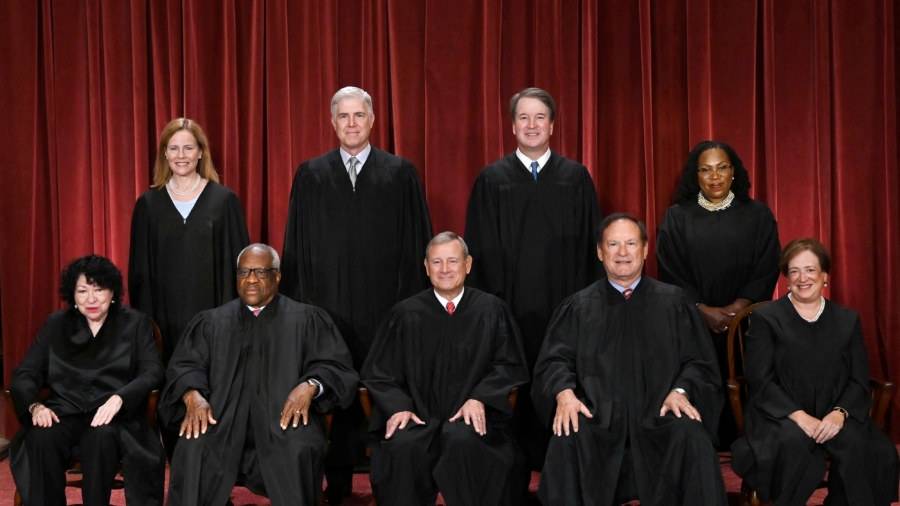
The case the court announced Monday it would take up involves two holders of student loan debt—Alexander Taylor and Myra Brown—who said the federal government did not follow the right procedure in announcing and implementing the plan earlier this year. In an order, the Supreme Court wrote that it would determine whether Taylor or Brown had standing to file their lawsuit and will then hear the merits of it.
The forgiveness program, which was announced by Biden in August, included up to $20,000 in loan relief for low- and middle-income debt holders. Some 26 million individuals already applied for relief, according to the Department of Education, which said that about 16 million of those have been approved.
The Texas lawsuit was filed by two borrowers who were partially or fully ineligible for the loan forgiveness, backed by the Job Creators Network Foundation, a conservative advocacy group founded by Bernie Marcus, a co-founder of Home Depot Inc.
Pittman, appointed as a judge by former President Donald Trump, ruled that the administration overstepped its authority to order debt cancellation under a 2003 law called the Higher Education Relief Opportunities for Students Act, which can “waive or modify” student financial assistance during war or national emergency.
The U.S. Court of Appeals for the 5th Circuit later ruled to allow the judge’s injunction to stay until a final ruling in the case is issued. That prompted the Biden administration to appeal to the Supreme Court.
Attorneys general in Nebraska, Missouri, Arkansas, Iowa, Kansas, and South Carolina filed a lawsuit against the relief plan several weeks after it was unveiled to the public. Those states had claimed that they have the legal standing to challenge the plan, which they also argued exceeds the federal government’s authority.
According to the Supreme Court order issued Monday, the Brown case will be “deferred pending oral argument,” which reports say is slated for February of next year, alongside Biden v. Nebraska, the suit that was filed by the six states. No specific date was given.
Other Challenges
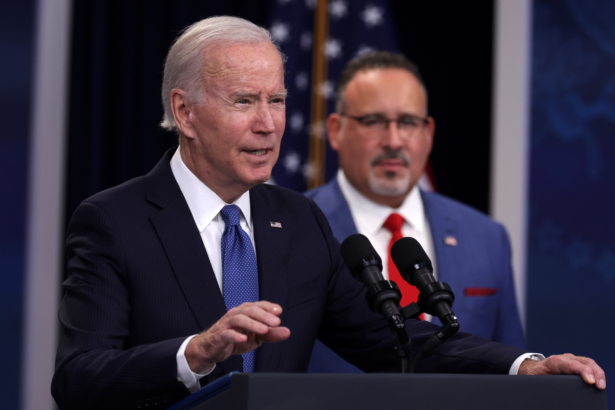
“The act requires a real connection to a national emergency,” the states’ lawyers wrote in court papers in late November. “But the department’s reliance on the COVID-19 pandemic is a pretext to mask the president’s true goal of fulfilling his campaign promise to erase student-loan debt.”Lawyers for the administration, in asking the Supreme Court to reverse a lower court’s injunction against the program on Nov. 18, wrote that the injunction should be lifted because it means that millions of people won’t be able to pay back their loans.
Because the plan won’t be implemented in the immediate future, the injunction “leaves millions of economically vulnerable borrowers in limbo, uncertain about the size of their debt and unable to make financial decisions with an accurate understanding of their future repayment obligations,” argued U.S. Solicitor General Elizabeth Prelogar in favor of the White House.
Prelogar asserted that the six states do not have the legal standing to file the lawsuit, she said, adding that the federal government acted within its authority to set up a debt-relief program.