

Supreme Court Chief Justice Pauses Block on White House Ballroom Construction

The order is in place until the justice, or the Supreme Court, rules otherwise.
Published: 8/21/2026, 3:11:23 PM EDT
Supreme Court Chief Justice Pauses Block on White House Ballroom Construction
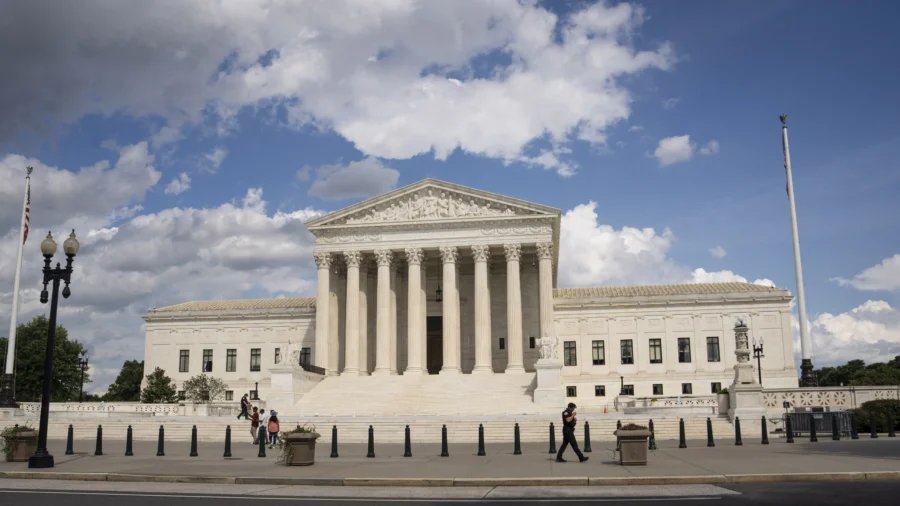
The Supreme Court on Aug. 17, 2026. (Madalina Kilroy/The Epoch Times)

Supreme Court Chief Justice John Roberts on Aug. 21 said the Trump administration can proceed with construction of a new White House ballroom.

Roberts, in a brief order, paused the preliminary injunction that had been entered by a U.S. district judge and upheld by a federal appeals court.

The lower court order “is hereby stayed pending further order of The Chief Justice or of the Court,” Roberts said.

Construction of the planned 90,000-square-foot ballroom began in 2025. Its cost has been pegged at $400 million, with financing coming from private donors.

Judge Richard Leon of the U.S. District Court for the District of Columbia in March entered the preliminary injunction against construction of the ballroom.
Leon said that there are no laws that give the president the authority to build the ballroom and that construction must stop until Congress authorized the ballroom's completion, even if private funds are being used for the work. Leon later clarified that the block was for above-ground construction.
A panel of judges on the U.S. Court of Appeals for the District of ​Columbia Circuit in April temporarily halted Leon's injunction as it considered the case.
A majority of the panel on Aug. 7 reinstated the injunction. The majority said that "whether or not a massive ballroom should be constructed is for Congress to decide and is not a matter for Executive self-help" and that Congress had not ceded "unfettered authority" to the president to dramatically alter the White House.

That prompted the government's appeal to the Supreme Court.

U.S. Solicitor General D. John Sauer said in the emergency application to the court that a quick decision was imperative because the injunction would halt work that was "vitally required by national security."

The National Trust for Historic Preservation, which filed the case, told Roberts that a removal of the injunction would cause irreparable harm because the ballroom will be substantially finished soon absent an injunction, and be virtually impossible to deconstruct once completed, citing administration statements.

"The injuries to the National Trust, its members, and the public from the unauthorized construction of the ballroom—catalogued by Petitioners’ own Environmental Assessment and already found to be irreparable by the lower courts—will in all likelihood become irreversible," it said in a filing.

This is a developing story that will be updated.