


The Supreme Court on May 18 declined to consider appeals by six pharmaceutical companies challenging the government’s ability to negotiate prescription drug prices for the Medicare program.
The decision effectively ends those lawsuits, all but guaranteeing that the Medicare Prescription Drug Price Negotiation Program, authorized by Congress in 2022, will continue.
“The Supreme Court did not find the issues presented very interesting, instead establishing what we all know,” said Peter Maybarduk of the consumer advocacy group Public Citizen, said on a press call hosted by Patients for Affordable Drugs, a patient advocacy group. “The government has the same right to bargain as everyone else.”
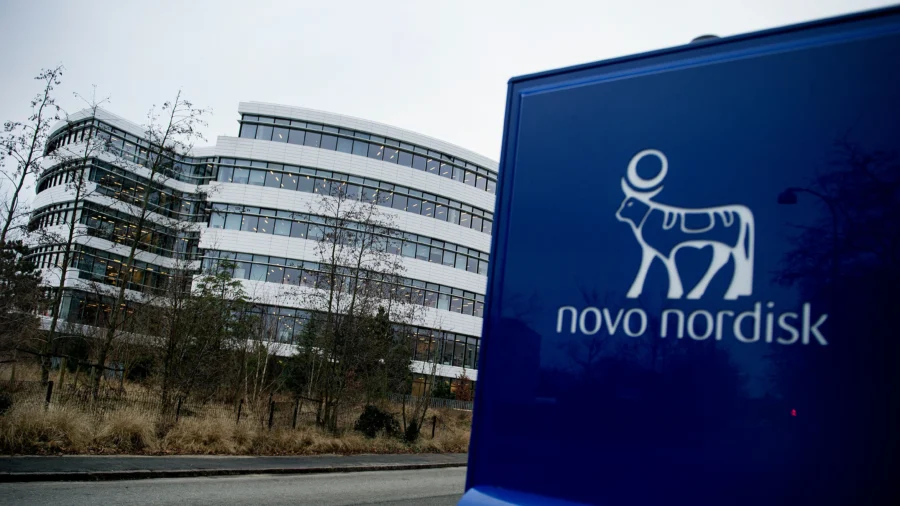
The lawsuits had been brought by AstraZeneca, Bristol Myers Squibb, Janssen, Novartis, Novo Nordisk, and Boehringer Ingelheim.
“They raised a variety of arguments challenging the program as a whole,” said Michael Lieberman, attorney at Fairmark Partners LLP, who had filed amicus briefs concerning the lawsuits.
The drug makers based their arguments on the 1st Amendment, the 5th Amendment's takings clause, the 8th Amendment's prohibition on excessive fines, and due process arguments, Lieberman told reporters on the press call.
“Those arguments were rejected uniformly at the lower courts. Every district court judge had ruled against them,” Lieberman said.
Merith Basey, CEO of Patients for Affordable Drugs, said pharmaceutical companies have long taken advantage of a legal loophole that allowed them to dictate prices to Medicare.
“That wasn't by accident,” Basey said. “It was due to a 2003 non-interference clause inserted into the Medicare law that prohibited Medicare from negotiating drug prices.”
Basey said that change in the law was driven by lobbying from the pharmaceutical industry.
Under the 2003 “non-interference clause,” Medicare played no role in drug pricing despite spending nearly $470 billion per year on medication as of 2024.
Prices were instead set by pharmacy benefit managers and health insurers.
That changed with the price negotiation program. The first round of 10 negotiated drug prices took effect at the beginning of 2026.
A second round of 15 negotiated drug prices will become effective in 2027.
The negotiated prices will cover an estimated 14 million Medicare patients with savings of about 62 percent.
Four additional lawsuits challenging the Medicare price negotiation program are still making their way through the courts, according to Lieberman.
“The ones raising the same issues now have an even more uphill battle, now that there is uniformity among not only other courts, but the Supreme Court,” Lieberman said.
The Epoch Times reached out for comment from AstraZeneca, Bristol Myers Squibb, Janssen, Novartis, Novo Nordisk, and Boehringer Ingelheim, but did not receive a reply by the time of publication.