

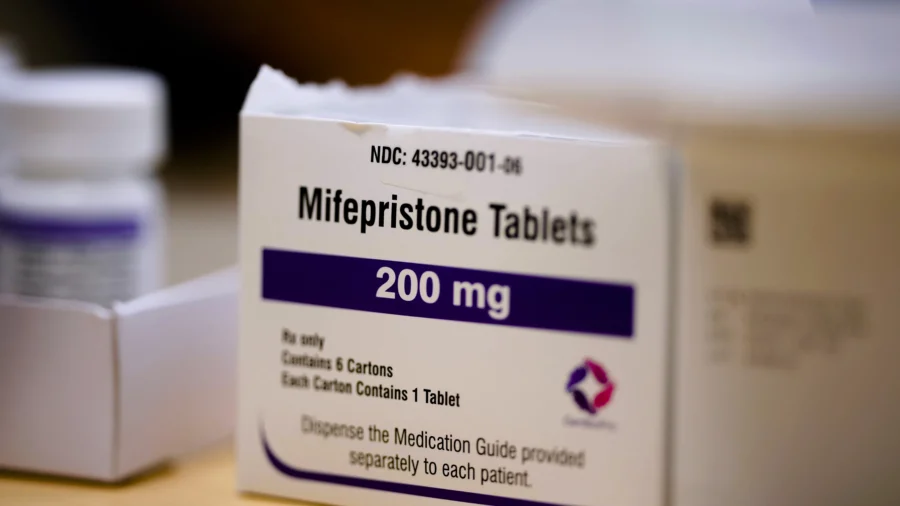
Women nationwide have been temporarily granted permission to obtain abortion-inducing pills at pharmacies or through the mail without an in-person visit to a doctor.
U.S. Supreme Court Justice Samuel Alito signed the order this week on May 4, restoring nationwide access to the abortion pill, which consists of a combination of mifepristone and misoprostol.
The order reverses a ruling last week by the 5th U.S. Circuit Court of Appeals in New Orleans that prevents medicinal access to abortion.
Mifepristone manufacturers, including Danco Laboratories, filed the emergency appeal; however, Alito’s order will remain in effect only for another week while the court more broadly considers arguments.
“Never before has a federal court purported to immediately enjoin a several years’ old drug approval; restrict a distribution system for that drug that manufacturers, providers, patients, and pharmacies have all been using for years; or reinstate conditions that FDA determined do not meet the mandatory statutory criteria,” Danco Laboratories said in court documents.
The May 1 unanimous ruling from a three-judge panel required that the abortion pill be supplied only in person and at clinics, which encroached upon federal Food and Drug Administration (FDA) regulations.
Under President Joe Biden, the FDA determined that women can safely use the pill unsupervised.
“Every abortion facilitated by FDA’s action cancels Louisiana’s ban on medical abortions and undermines its policy that ‘every unborn child is human being from the moment of conception and is, therefore, a legal person,’” 5th Circuit Court of Appeals Judge Stuart Kyle Duncan said in the ruling.
President Donald Trump nominated Judge Duncan to the U.S. Court of Appeals for the Fifth Circuit in 2017 and he was confirmed in 2018.
The 5th Circuit ruling was particularly concerning to abortion pill manufacturers following the 2022 Supreme Court ruling that overturned Roe v. Wade, which allowed states to enforce abortion bans.
U.S. abortions are commonly used from the Mifepristone and misoprostol pharmaceutical cocktail, according to surveys. One by the Society for Family Planning determined 1 in 4 abortions nationally are prescribed by telehealth.
“When telemedicine is restricted, rural communities, people with low incomes, people with disabilities, survivors of intimate partner violence and communities of color suffer the most,” ACLU lawyer Julia Kaye said.
Although Republican-led states, such as Louisiana, South Carolina, and Tennessee, have begun enforcing state bans on abortions, the impact has been blunted by the availability of abortion pills.
“I look forward to continuing to defend women and babies as this case continues,” Louisiana Attorney General Liz Murrill said in a statement.
The Associated Press contributed to this report.