


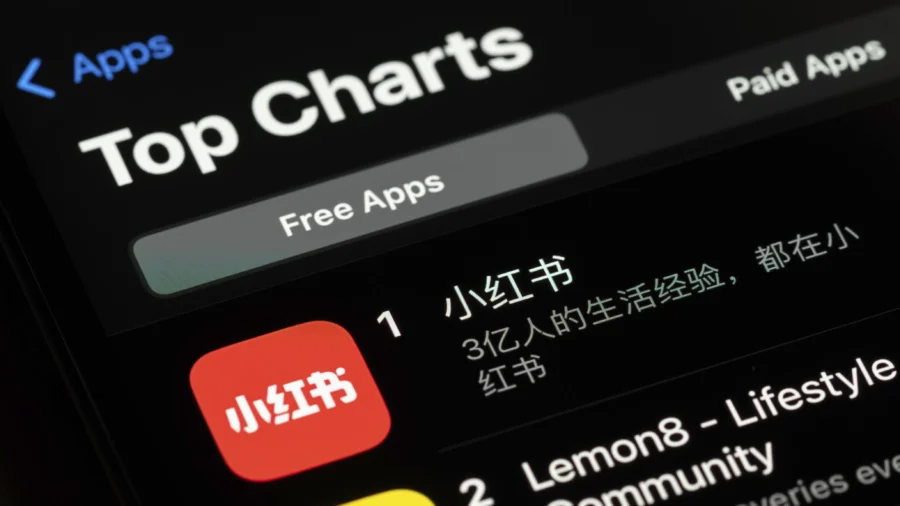
Three years after Taiwan banned the use of the Chinese social app Xiaohongshu on government devices, Taiwan announced on Thursday that it will also block the app for the whole island for one year, citing risks of fraud.
Xiaohongshu, also known as RedNote, is an Instagram-style platform with content like makeup, fashion, travel, and more that also integrates e-commerce features. In recent years, it has seen rapid growth in popularity among young people in Taiwan, attracting around 3 million users out of the island’s 23 million residents.
On Dec. 4, Taiwan’s Interior Ministry said that the Xiaohongshu app had failed all 15 cybersecurity indicators in tests conducted by the National Security Bureau. The indicators included collecting location data, accessing contacts, taking screenshots, forcing users to accept unreasonable privacy terms, and uploading unnecessary personal data even when the app is not actively in use.
From 2024 to the present, the app has been linked to 1,706 fraud cases in Taiwan, causing financial losses exceeding $247.7 million NTD (approximately $7.9 million), with the amount showing a continuing upward trend.
Xiaohongshu has no legal presence or registered entity in Taiwan and provides no point of contact reachable by investigative or law-enforcement authorities. The company has repeatedly ignored official requests from the Taiwanese government.
The Ministry therefore issued an order to block access to Xiaohongshu for a provisional period of one year and also urged international platforms such as Google to “completely cease publishing Xiaohongshu advertisements.”
Taiwan’s Presidential Office said it respects and supports the decision made by the Ministry of the Interior.
However, this decision has sparked backlash. Taiwan's largest opposition party, the Kuomintang, criticized the move, stating that Taiwan’s long-prized internet freedom and freedom of speech have already been “restricted and strangled.”
The Chinese Communist Party (CCP) insists that Taiwan is part of Chinese territory, even though it has never ruled the island. Taiwan rejects Beijing's claims, asserting that only the island’s people can decide their future.
Under Chinese law, authorities can access any data held by companies and routinely monitor and censor content that the CCP considers unfavorable. To safeguard the island, Taiwan has repeatedly cautioned its citizens about the risks of using Chinese apps, which are often used to spread pro-Beijing propaganda and disinformation.
In December 2022, Taiwan banned Xiaohongshu on all government-issued devices, labeling it a “tool for united front propaganda”—a term describing the CCP’s tactic of influencing overseas communities to spread pro-Beijing narratives and weaken Taiwanese sovereignty.
The page was written entirely in traditional Chinese characters—the standard script in Taiwan and Hong Kong, but not used on the mainland—and promoted unification, economic benefits of closer ties with China, and attacks on Taiwan’s ruling Democratic Progressive Party.
The effort backfired almost immediately. Within hours of going live, Taiwanese netizens flooded the comment sections with spam: Taiwan flags everywhere, memes, and sharp mockery of the CCP’s censorship regime.