



NASHVILLE—Tennessee Gov. Bill Lee signed a new U.S. congressional map into law on May 7.
Lee signed the legislation hours after it passed the state House 64–25, with three voting “present,” and the state Senate 25–5.
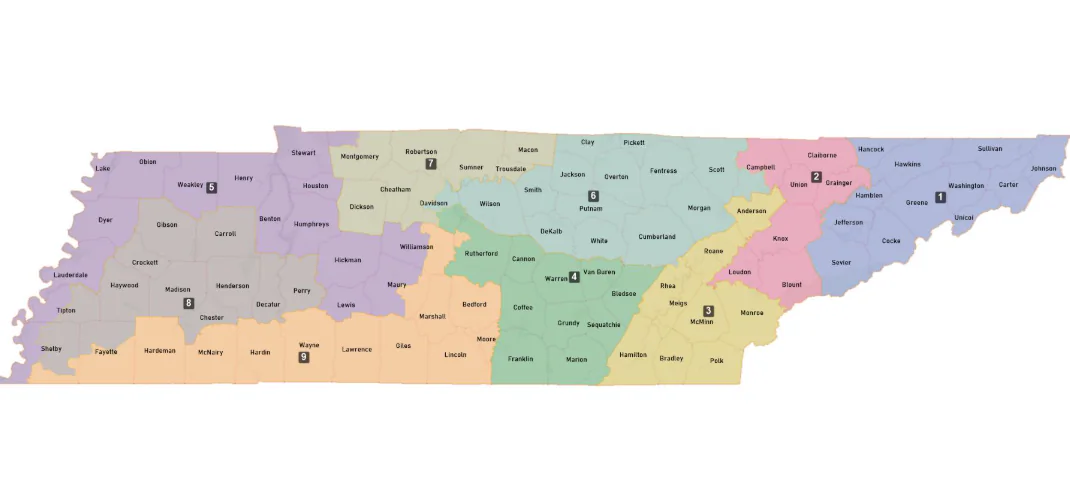
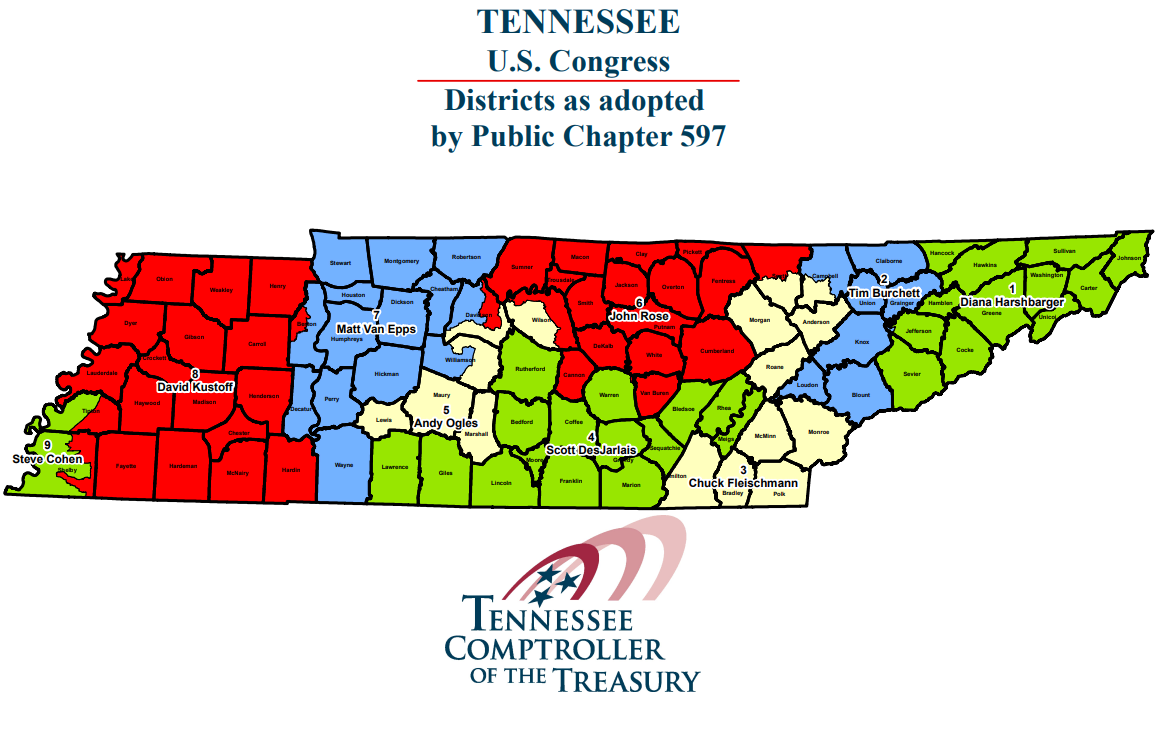
The proposal splits the Democratic stronghold of Memphis into three U.S. congressional seats, up from one, currently held by Rep. Steve Cohen (D-Tenn.).
All of Tennessee’s nine congressional districts will now likely lean Republican, so the only Democratic voice representing the Volunteer State could be voted out in the midterms.
Cohen—who currently represents District 9, covering parts of Shelby County including the city of Memphis, and Tipton County— called redistricting efforts “a blatant, corrupt power grab that would destroy the Black community's and [the] entire city's voice,” in a May 6 post on X.
State Democrats said the attempt to redistrict the state was racist and illegal after Lee, a Republican, had ordered the Tennessee General Assembly to review the state’s congressional map on May 1.
State Rep. Jason Powell, a Democrat, said Tennessee code allows redistricting only every 10 years and that the attempt to redraw the map was against the law.
“We ought to rename our state Washington, Tennessee, because we are here doing the work of D.C.; we might as well rename the state capitol the White House,” Powell said on the House floor on May 7.
State Rep. Gloria Johnson, a Democrat, called the special session “a white power rally and a white power grab.”
State Rep. Justin Jones, a Democrat, handed state Rep. William Lamberth, a Republican, a Confederate flag and accused him of trying to bring Tennessee “back to the Confederacy.”
State House Speaker Cameron Sexton, a Republican, said the redistricting was based on population numbers and not designed to split voters in a black-majority district into three other districts.
“On our software, when we put that map into ours, we turned all that data off so that the only thing that was referenced in our map was population,” Sexton said during the special session on May 6.
Sexton would not confirm whether any attempt was made to avoid dividing Shelby County, which includes Memphis.
The controversial session in Nashville prompted hundreds of protesters to fill the state capitol building on May 7.
One of the state troopers at a security checkpoint told The Epoch Times that he had discovered “countless knives” and even a pair of scissors in the possession of people trying to enter the Capitol building to watch the state House and state Senate debate the controversial map.
After the House passed the map, protesters erupted in shouts and used electronic whistles to fill the building with noise.
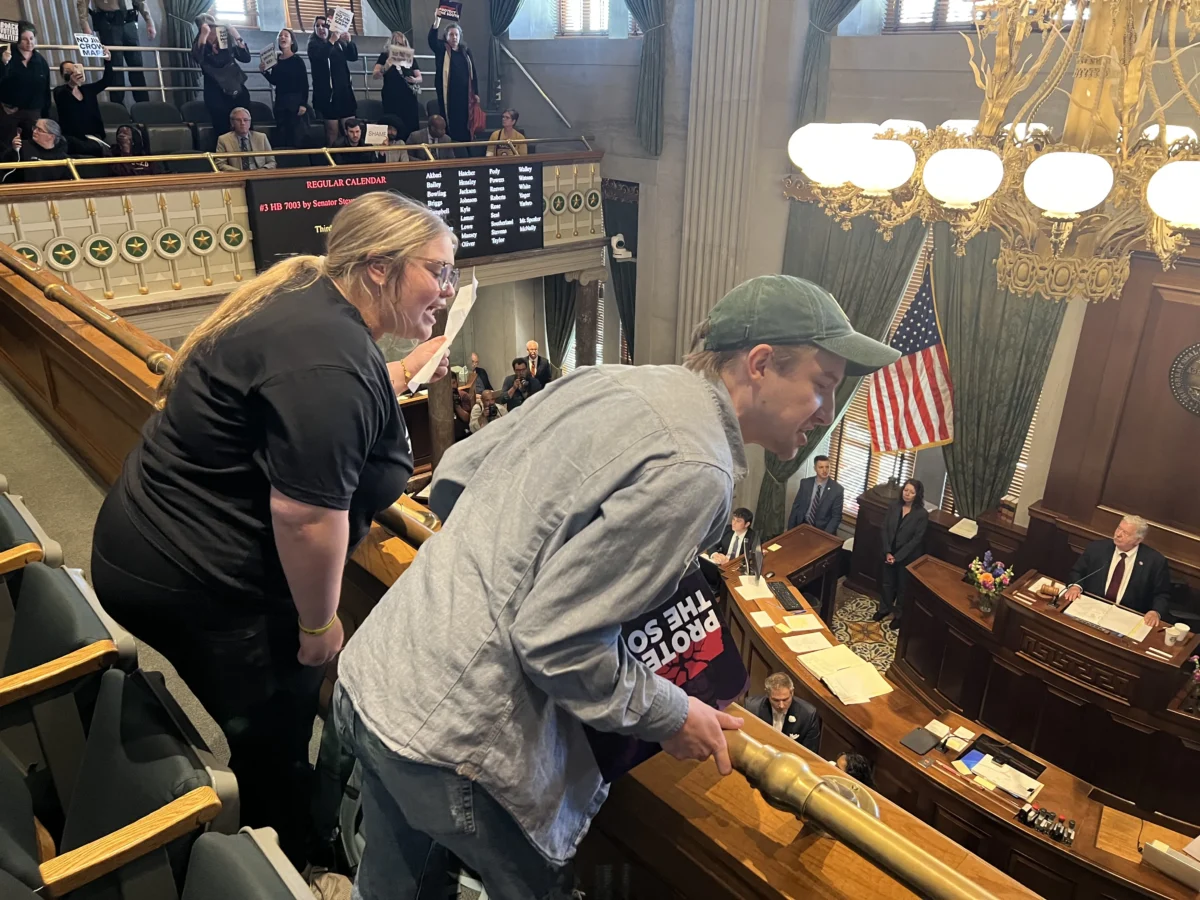
The outburst prompted law enforcement to prevent members of the public and some in the media from entering the Capitol building.
Last-minute redistricting is expected to cost county election commissions across Tennessee $3.1 million.
The act will take effect immediately.
Tennessee's primary election for the U.S. House of Representatives is set for Aug. 6.
The general election is on Nov. 3.