


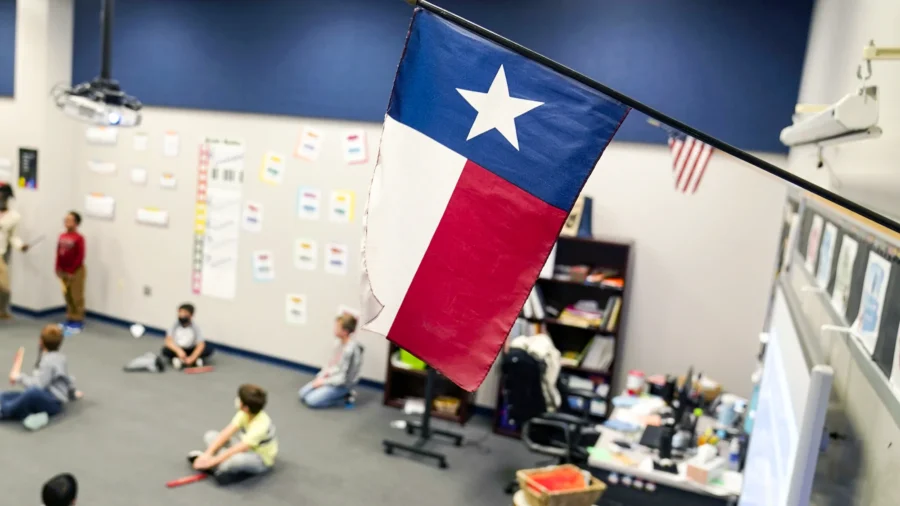
The Texas Board of Education approved on Friday a new public school reading list that includes stories from the Bible.
Texas is at the forefront of an expanding effort in the United States to include religion in classrooms, as the Longhorn State’s Republican-controlled education body finalized the plan for more than 5 million public school students from kindergarten through 12th grade.
The state’s reading list has drawn criticism from opponents, who say that the curriculum lacks diversity and favors Christianity over other religions. Supporters say Judeo-Christian principles were key to the country’s founding, and school curriculum should reflect that.
Required Bible story readings for Texas students begin in elementary school.
According to the plan, the account of David and Goliath is the first Bible story students will read in second grade.
Third-graders will read the story of Daniel and the lion’s den.
Grade four is required to read the “Necessity of Humility” from the Gospel of Luke, the plan says. Sections of the Book of Exodus about Moses, including the story of the burning bush and the parting of the Red Sea, are required for fifth graders.
For sixth grade, students are required to read “Do Not Be Anxious” from the Gospel of Matthew, chapter 6.
The seventh grade reading list includes Psalm 23 (often called “the Shepherd’s psalm”) and the Beatitudes from the Gospel of Matthew.
Ecclesiastes, chapter 3—”To everything there is a season”—and chapter three of the Book of Lamentations is on the eighth graders’ list.
For high schoolers, required readings are spread across four English classes.
The first includes the parable of the prodigal son from the Gospel of Luke. In the second English class, students will read several chapters from the Book of Job. Sections about Adam and Eve from the Book of Genesis are required in the third, and part of the definition of love from Corinthians is on the fourth class’s list.
President Donald Trump has consistently backed religious teachings and expression in schools going back to his first term in office.
On Jan. 16, 2020, his administration issued guidance on students’ right to pray in school. In his second term, Trump signed on May 1, 2025, an executive order establishing the Religious Liberty Commission, which is part of the Department of Justice. The commission advises the White House on a number of topics, including parental authority with regard to religious teachings in their children’s classrooms and voluntary prayer time in public schools.
The Department of Education issued updated guidance on prayer and religious expression in schools on Feb. 5.
Texas’s new required reading list will take effect in 2030.