


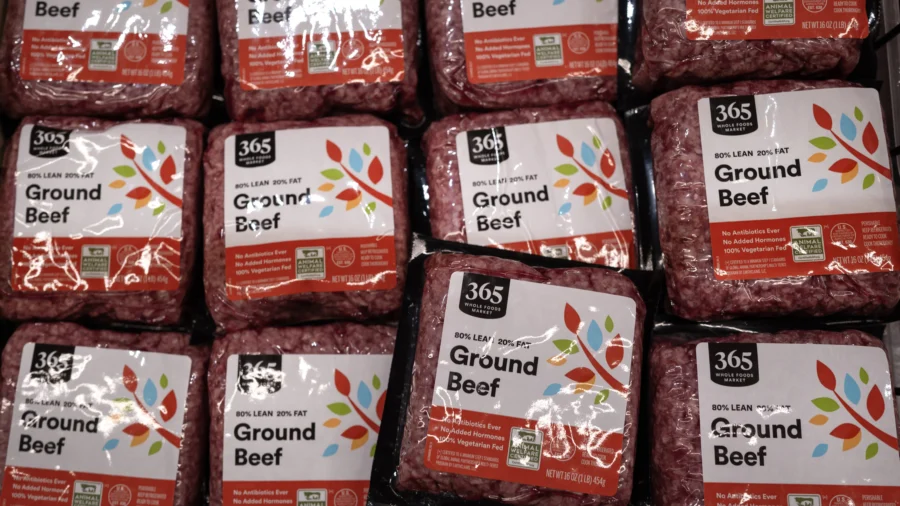
President Donald Trump on Wednesday temporarily increased the amount of lean beef trimmings allowed into the United States under lower tariff rates, aiming to bring down ground beef prices at the shops.
“As we work to rebuild this herd and help our ranchers, for the next 90 days, the United States will allow up to 300,000 metric tons of product for ground beef to be imported with no out-of-quota tariff,” he continued.
He said the imported product carried a commitment to sell at 25 percent below current market prices. “This deal will reduce prices for Americans while giving space for our Great American Beef Herd to grow again.”
The formal proclamation builds on an earlier one from February that raised the Argentine allocation by 80,000 metric tons. Officials tracking supplies concluded further steps were needed.
U.S. Department of Agriculture forecasts show beef output dropping about 4 percent this year from 2025 levels. The national cattle herd stood at 86.2 million head as of Jan. 1, the lowest since 1951.
The White House fact sheet said the temporary increase should lift overall beef supply by roughly 10 percent above current projections. It targets the lean trimmings used with U.S. beef for ground product and is not expected to impact the fed-cattle market.
Officials will monitor whether the imported trimmings actually sell at the promised discount. If they do not, the remaining quota can be cut.
The proclamation leaves the earlier Argentine increase untouched. It does not change free-trade agreement commitments or country-specific quotas. Customs and Border Protection will handle the new volumes. The agriculture secretary and U.S. trade representative must keep monitoring supplies and prices and report back if more action is required.
Trump’s earlier February proclamation also targeted unwieldy beef prices resulting from supply shocks and market disruptions. Wednesday’s announcement keeps the same legal footing under the Uruguay Round Agreements Act, which allows a temporary quota lift when domestic supply looks inadequate due to natural disasters, disease, or major market disruption.