


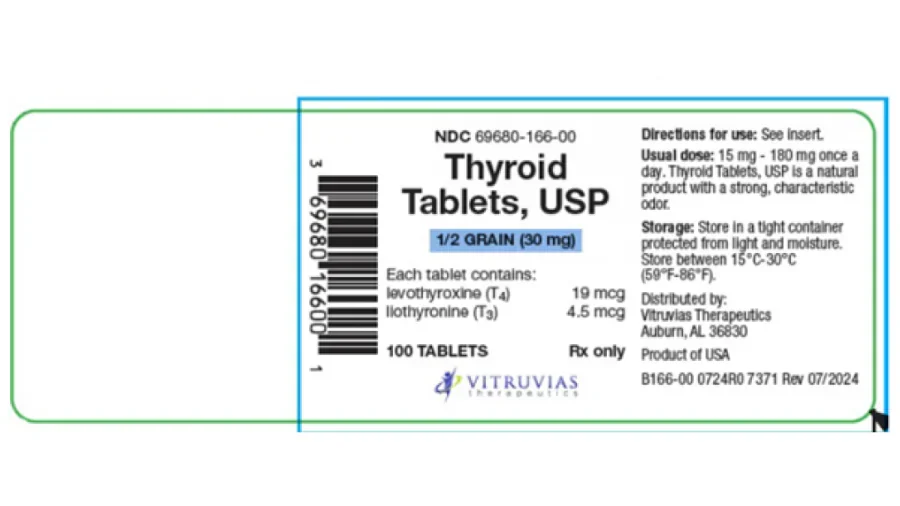
A thyroid medication sold nationwide has been recalled over concerns the drug could be far more potent than intended.
The agency said the recall extends to 3,655 units from Lot 504950, of which 1,955 were sold. The medication was distributed to patients across the country from Jan. 31, 2025, to Sept. 30, 2025.
According to the FDA's notice, taking overly potent thyroid tablets can actually have the opposite effect, leading to hyperthyroidism, or an overactive thyroid. This can cause a range of symptoms, including weight loss, heat intolerance, fatigue, nervousness, muscle weakness, high blood pressure, chest pain, rapid heart rate, and abnormal heart rhythms.
Vitruvias said elderly people, pregnant women, and infants face a greater risk from superpotent thyroid, especially following prolonged exposure.
The company noted that in older adults, excessive thyroid hormone levels have been linked to adverse effects, particularly those involving the heart. Overtreatment during pregnancy can increase the risk of complications for both mothers and their unborn children, including premature delivery and low birth weight, while excessive hypothyroidism treatment in infants can negatively affect growth and development, Vitruvias added.
However, the company said it has not received any reports of adverse health problems in connection with the recall to date.
Vitruvias said it has been proactively notifying wholesalers by email and phone of the recall and advising them to discontinue distribution of the affected lot. The company said it is also arranging for the destruction of all recalled thyroid tablets.
Per the notice, anyone who is taking the recalled batch of Thyroid, USP should not discontinue use without first speaking with their healthcare provider for additional guidance or a replacement prescription. The company said consumers should also contact their physician if they have experienced any problems that may be related to the drug.
Anyone with questions about the recall can contact Vitruvias Therapeutics, Inc. directly by emailing [email protected] or calling (256) 239-9373 during normal business hours. Adverse reactions or other issues can also be reported to the FDA's MedWatch Adverse Event Reporting program.