


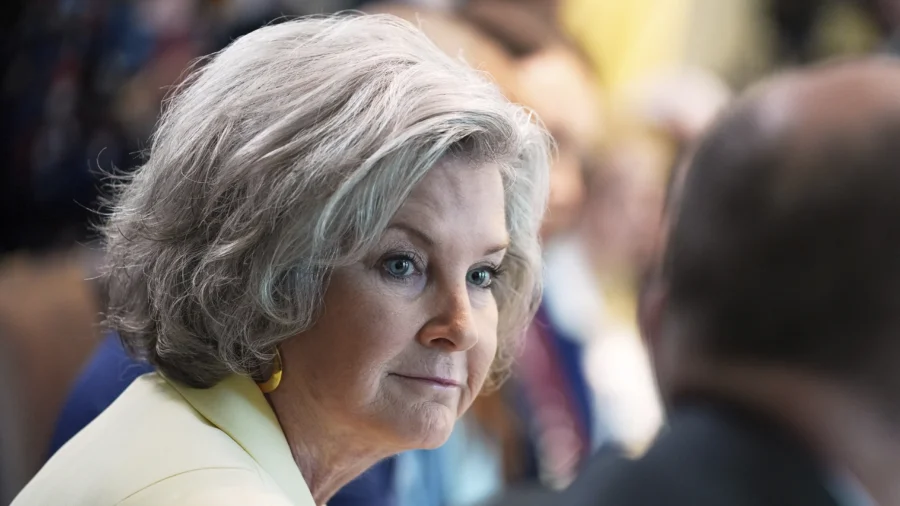
President Donald Trump revealed on Monday that White House Chief of Staff Susie Wiles has been diagnosed with early stage breast cancer, though she will continue to carry out her duties.
Trump personally acknowledged Wiles, 68, during a press conference, announcing that she had just begun breast cancer treatment and crediting her for seeking treatment as soon as possible.
The president said Wiles had suffered a “minor difficulty,” but that she was “an amazing fighter” who will soon be in “great shape” again.
Trump shared the diagnosis in a statement on social media.
Trump described Wiles as one of his closest senior advisers, praising her commitment to continue working during treatment and emphasizing that she is “deeply committed” to serving the people of the United States.
“She has a fantastic medical team, and her prognosis is excellent! During the treatment period, she will be spending virtually full time at the White House, which makes me, as President, very happy! Her Strength and her Commitment to continue doing the job she loves, and does so well, while undergoing treatment, tells you everything you need to know about her.”
Wiles, who is known to prefer staying out of the spotlight, did not comment on her diagnosis during Monday’s event at the White House.
Breast cancer mainly occurs in middle-aged and older women, according to the ACS. The median age at the time of breast cancer diagnosis is 62.
Treatment for breast cancer varies depending on how early the disease is detected, and involves either radiation treatment, hormone treatment, surgical removal of the tumor, or some combination of these. More severe cases may necessitate a surgical procedure called a mastectomy, which involves removing the breast.
The cancer’s stage, subtype, and genetic makeup can also help determine if additional treatment of the original tumor is needed, or if further therapy is needed to help prevent recurrence.
An outpouring of support for Trump’s chief of staff followed the announcement.