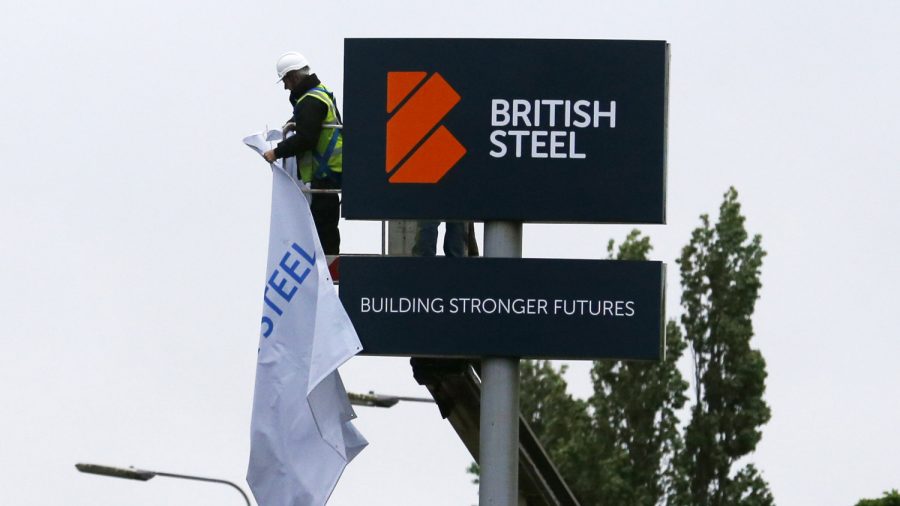
The UK government announced on Thursday that it will nationalize the steel manufacturer "British Steel" in order to protect "a vital national capability."
The company was previously owned by China’s Jingye Group. The British government took control of the enterprise in April 2025 to prevent the closure of its two blast furnaces and protect 2,700 jobs.
In a
statement, outgoing British Prime Minister Keir Starmer said: "British Steel is part of the fabric of our nation and a cornerstone of Britain’s industrial strength. Today’s decision secures the future of steelmaking in the UK, protects skilled jobs and safeguards a vital national capability."
British Steel is a strategic asset for the UK because it operates the nation's
last remaining blast furnaces capable of producing virgin steel. Military hardware—including ships, aircraft, and tanks—requires a guaranteed, reliable supply of steel, which becomes critical when international trade routes are disrupted.
Business Secretary Peter Kyle told The Times Radio that it was important for the government to nationalize the UK’s "one virgin steel producer here in Scunthorpe" because "if this were to disappear, we would become at the mercy of international markets and the supply from other countries for the kind of production that goes into our railways and our construction."
The UK government also announced that it has appointed a new management team to oversee operations. Their goal is to stabilize production and transform the company into a commercially sustainable, low-carbon, and competitive steel enterprise.
The government said that "despite extensive discussions," it could not reach a deal with Jingye that would "secure the future of the company while delivering value for taxpayers."
In 1967, the UK government—through the "Iron and Steel Act"—
brought into public ownership about 90 percent of British steelmaking, which then paved the way for the formation of BSC (British Steel Corporation) from the UK’s 14 main steel-producing companies.
In 1988, Prime Minister Margaret Thatcher privatized the company, which was profitable at the time, though those profits eventually turned into losses over the years. China’s Jingye Group subsequently acquired British Steel in 2020.
However, faced with ongoing financial losses, Jingye Group announced plans in 2025 to shut down the two blast furnaces located in Scunthorpe, northern England. These two blast furnaces are the last remaining coal-fired blast furnaces operating in the UK, reported the
BBC.
Following failed negotiations with Jingye Group, the UK government seized management control of British Steel through emergency legislation. IBC
reported that once the takeover was finalized, British police barred Jingye Group employees from entering the premises. This move temporarily triggered tensions in UK-China relations, reported
Sky News.
Former UK Business Secretary Jonathan Reynolds stated that by moving to shutter the furnaces, Jingye had not acted
"in good faith." Reynolds remarked that the UK should not have sold to a Chinese company, noting the influence that the regime in Beijing has over supposedly private companies in China. He added that the UK government had been "far too naive" about UK-China trade, reported
SCMP.