


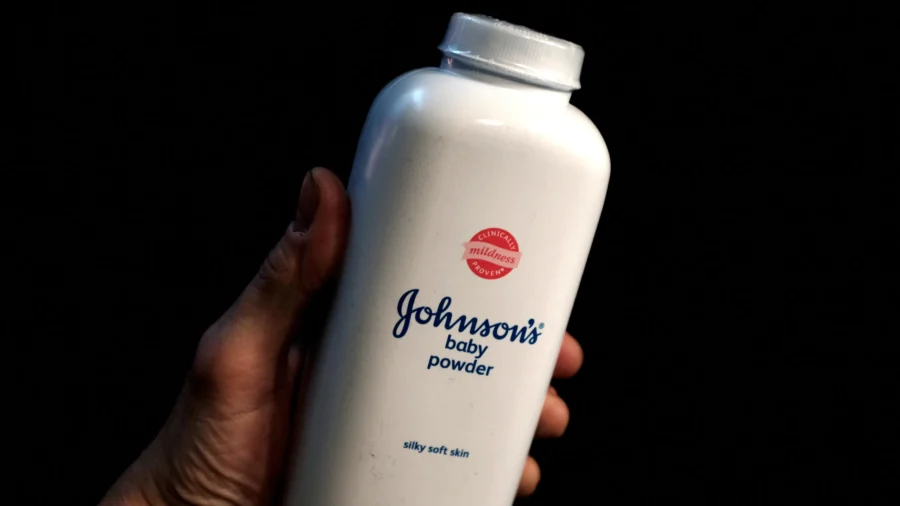
Johnson & Johnson (J&J) is facing its first lawsuit in the United Kingdom over allegations that its talc products cause cancer—primarily in women—following tens of thousands of similar claims in the United States and Canada.
Lawyers claim the United States-based multinational “knew for decades” that asbestos was present in its iconic baby powder and other talc products, but concealed this from consumers.
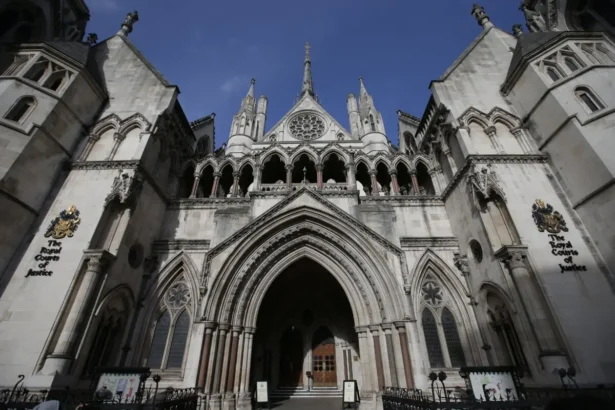
The latest lawsuit, on behalf of more than 3,000 claimants, was filed in the English High Court on Tuesday against J&J and Kenvue UK Limited—part of Kenue, to whom the pharmaceutical giant spun off its consumer health unit in 2023.
Claimants, including cancer patients and survivors, as well as relatives of those who have died from the disease, have expressed anger at the way the talc was marketed for babies for decades, and called for answers.
The types of cancer alleged to have been caused by sustained use of J&J’s talcum powder are ovarian and fallopian, and peritoneal and mesothelioma.
Using the product around the genital area allegedly placed women at particular risk of cancers affecting the reproductive organs.
Peritoneal cancer affects the lining of the abdomen, and while it is primarily found in women, it can occasionally affect men.
Mesothelioma is a type of cancer more common in men than women that develops in the lining that covers the outer surface of some of the body’s organs and is usually linked to asbestos exposure.
Lawyers say they have documents proving that J&J, which is headquartered in New Jersey, knew as early as the 1970s that asbestos in its products posed a danger but failed to warn consumers and carried on producing and selling the products in the UK up to 2022.
They argue their claimants’ cancers were caused by the use of the J&J-branded baby powder between 1965 and 2023.
“In some cases, they have died from their cancer, leaving their families devastated. All of these innocent individuals deserve justice.”
The firm’s statement added, “Scientists believe there is a link between the extended use of talcum powder and an increased risk of various types of cancer. With more and more findings pointing to a connection, we are committed to advocating for those affected. ”
Formula Changed to Corn Starch
J&J discontinued sales of talc-based baby powder in the UK in 2023, having announced in August 2022 that it would transition to using corn starch.It said the decision to change the formula was made due to what it termed “misinformation” about its famous product, a staple in many family bathrooms since its launch in 1894.
The company made the switch from talc-based to corn-starch baby powder in the United States three years earlier, in 2020.
The company, which manufactures Tylenol and made billions from its now withdrawn COVID-19 vaccine, has repeatedly sought to resolve the litigation through bankruptcy, but this strategy has been rejected three times by federal courts.
J&J had attempted to set up subsidiary companies with liability only for the talc claims, with money set aside for compensation.
J&J must now fight the claims against it in the United States, or settle under its own name.
Last week, in one of the largest compensation cases against the company, J&J was ordered by a jury to pay $966 million to the family of a woman who died from mesothelioma.
Erik Haas, J&J’s worldwide vice president of litigation, labeled the verdict “egregious and unconstitutional” and vowed to appeal.
The payment could be reduced on appeal as the U.S. Supreme Court has ruled that punitive damages should generally be no more than nine times compensatory damages.
Damages awarded by UK courts are usually significantly less than sums in the United States, as they are limited to compensation for losses caused by a defendant’s actions rather than for punitive damages.
KP Law estimates the value of the UK lawsuit at around 1 billion pounds ($1.34 billion).
Like virtually all civil suits in England and Wales, the outcome will be determined by a judge, rather than a jury.
J&J said that Kenvue “retained the responsibility and any purported liability for talc-related litigation outside of the United States and Canada.”
The two corporations completed a full separation through a share exchange in July 2023.
Kenvue, which owns well-known brands including Listerine and Band-Aid, said in a statement that J&J baby powder “did not contain asbestos, and does not cause cancer.”