


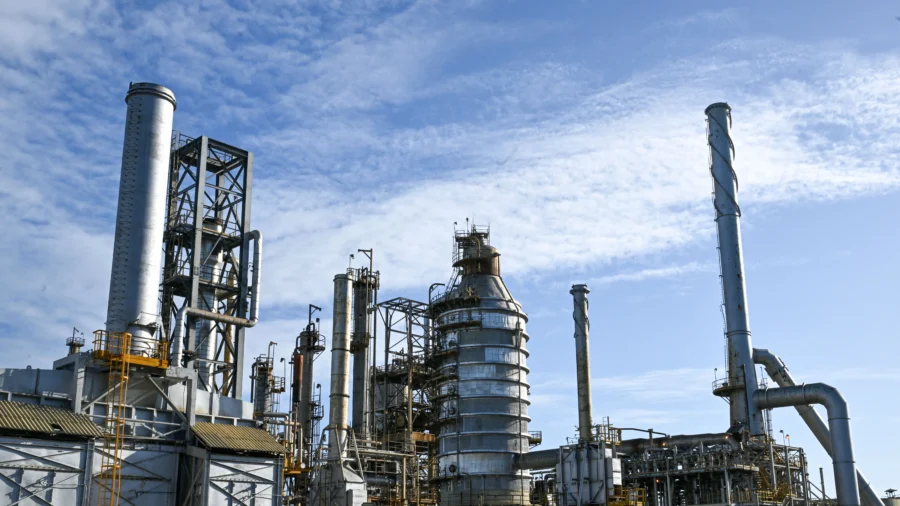
Major oil companies can resume operations in Venezuela after the U.S. government loosened its restrictions on the Latin American nation's energy industry.
The Treasury Department’s Office of Foreign Assets Control issued a broad license on Feb. 13 permitting BP, Chevron, Eni, Shell, and Repsol to restart their oil and gas operations in Caracas.
This represents the most significant rollback of U.S. sanctions on Venezuela since forces captured and removed leader Nicolás Maduro from power in January.
The United States has maintained sanctions on Venezuela since 2019.
Companies around the world will also be allowed to start negotiations regarding new investments in Venezuela’s oil and gas sector.
However, the Treasury’s move bars China, Iran, and Russia—as well as companies owned by or tied to joint ventures with individuals from those countries—from facilitating activities in Venezuela.
Over the past month, the Treasury has granted several general licenses to support exploration, development, and production of oil and gas in Venezuela, including the development of new sites.
The administration also approved U.S. equipment, software, services, and technology to be utilized for the development, exploration, and production of oil and gas in the country.
"Venezuela holds tremendous economic potential, but years of instability, corruption, and economic mismanagement have limited the nation’s growth and prosperity," a Treasury spokesperson said in a statement to The Epoch Times.
US–Venezuela Relations
Since the ouster of Maduro, President Donald Trump has urged U.S. and foreign energy companies to invest $100 billion to rebuild Venezuela’s energy sector.The United States and Venezuela announced an energy agreement.
Trump confirmed on Truth Social that interim authorities would sell as many as 50 million barrels to the United States.
"This year, we can drive a dramatic increase in Venezuelan oil production, in Venezuelan natural gas production, in Venezuelan electricity production, to increase the job opportunities, the wages, and the quality of life for all of the Venezuelans across the country," Wright said during a press briefing alongside the country’s acting leader, Delcy Rodríguez.
"It will also enormously benefit the United States ... the Western Hemisphere, and the future partnership for all of us."
Wright also told NBC News on Feb. 13 that upcoming sales of Venezuela could generate $5 billion over the next few months.
This money will then be transferred "into an account controlled by the U.S. government and released to authorities in Venezuela, subject to audit in Venezuela, and subject to continued positive progress in addressing American issues with Venezuela," he said.
But, according to Wright, Trump will have the final determination "over the flow of funds into Venezuela."
The United States will also "control the sale of their oil and the flow of their funds until a representative government is set up in Venezuela," he said.
Trump recently suggested that the federal government would reimburse firms for rebuilding Venezuela’s oil and gas sector.
However, more than half of that projection stems from the governments of Hugo Chavez and Maduro, raising questions about the veracity of these claims.
Still, if accurate, these socialist regimes failed to take advantage of the country's self-reported reserves due to deteriorating infrastructure and threatening foreign companies with expropriations.
While domestic refining is at near-maximum capacity, the United States maintains the infrastructure needed to refine a large share of Venezuela's oil.
Louisiana and Texas currently have six of the world's largest heavy crude refineries.
Energy Markets
Following last year’s sharp 20 percent decline, crude oil prices have steadily risen this year, driven mainly by geopolitical tensions in the Middle East.A barrel of West Texas Intermediate oil is up 10 percent this year to around $63 on the New York Mercantile Exchange.
“Uncertainty around oil has also led option market participants to become increasingly positioned for a potential move higher in prices, with a bullish volatility skew in Brent,” ING commodity strategists said in a Feb. 9 note.
While U.S. financial markets have been volatile, energy stocks have had a solid start to 2026.
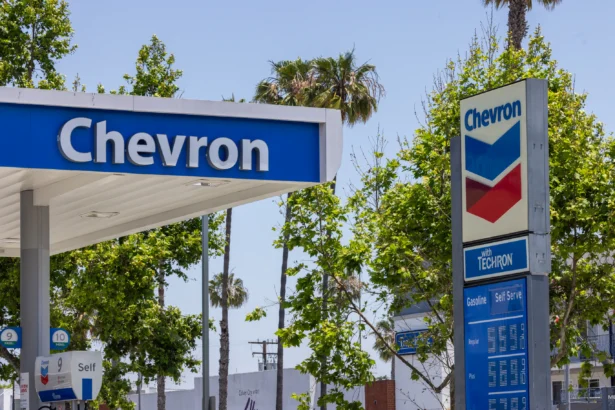
Chevron rose about 0.5 percent during the Feb. 13 trading session, adding to its year-to-date gain of more than 17 percent.
Shares of BP jumped nearly 1 percent, lifting this year's increase to almost 5 percent.
Shell's stock also ticked up 0.4 percent and is up 4 percent so far this year.