


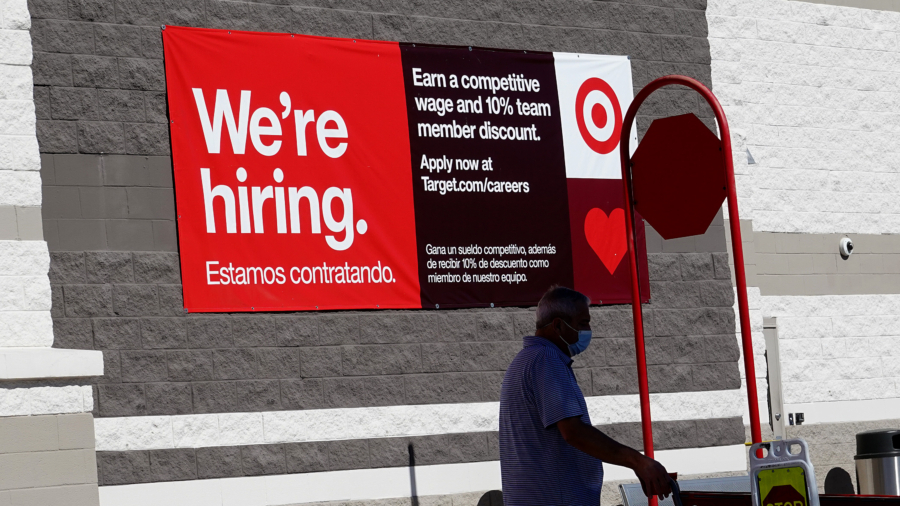
The U.S. economy created 223,000 new jobs in December, down from 256,000 in November, according to the Bureau of Labor Statistics (BLS). This was slightly higher than economists’ expectations of 200,000.
This represented the fifth consecutive month of slowing employment growth.
The unemployment rate slipped to 3.5 percent last month, down from 3.6 percent in the previous month. This was also below market estimates of 3.7 percent.
BLS noted that the changes in total non-farm payrolls for October and November were revised down by 21,000 and 7,000, respectively.
Average hourly earnings eased to 4.6 percent year-over-year and rose 0.3 percent month-over-month to $32.82. Average weekly hours also dipped to 34.3. The labor force participation rate edged up to 62.3 percent.
In total, the national economy added approximately 4.5 million new jobs in 2022, down from 6.7 million in 2021.
Employment gains were driven by leisure and hospitality, with 67,000 new positions. Health care also rose by 55,000, followed by construction (28,000) and social assistance (20,000). There was little change in retail (9,000), manufacturing (8,000), and mining (4,000).
The number of long-term unemployed fell by 146,000 to 1.1 million. The number of people employed part-time was flat at 3.9 million, while the number of people not in the labor force but who want a job dropped by 352,000 to 5.2 million.
In addition, the number of people who work two or more jobs topped 8 million, up from 7.7 million in November.
Once again, there was a divergence between the establishment and household surveys. The establishment component, which surveys businesses, showed the headline number. But the household survey revealed employment growth of just 136,000.
“Today’s jobs report indicates that we’re still in a healthy market, especially as available job openings beat expectations, showing employer demand remains high. However, there have been early signs of shifting, like the increase in part-time work and decrease in labor force participation. Jobseeker activity through December also remained on the cooler side,” said Cody Harker, head of Data and Insights from recruitment marketing firm Bayard Advertising, in a note.
In pre-market trading, investors responded favorably to the December jobs report, with the leading benchmark indexes recording modest gains on smaller-than-expected wage gains.
According to Jan Szilagyi, CEO and co-founder of investment firm Toggle AI, the latest jobs numbers show that “the economy is slowing, but not slowing enough.”
“Pace of job growth is still way above the speed limit so for now, the economy isn’t anywhere near the kind of ‘benign job growth’ the Fed wants to see,” he said.
Latest Developments in the US Labor Market
According to the ADP National Employment Report (pdf), the private sector created 235,000 jobs in December, topping market estimates of 150,000. This was also higher than the upwardly revised 182,000 positions in November.Interestingly enough, small- and medium-sized businesses contributed to all employment growth in December, creating 195,000 and 191,000 jobs, respectively. Large businesses lost 151,000 positions.
Overall, ADP noted that payroll growth averaged close to 301,000 jobs per month in 2022. In addition, annual pay eased to 7.3 percent year-over-year in December, down from 7.6 percent in the previous month.
“The labor market is strong but fragmented, with hiring varying sharply by industry and establishment size. Business segments that hired aggressively in the first half of 2022 have slowed hiring and in some cases cut jobs in the last month of the year,” said Nela Richardson, ADP chief economist, in a statement.
The tech sector trimmed the most amount of payroll, with 97,171 job cuts. The automotive industry also eliminated nearly 31,000 jobs last year.
“The overall economy is still creating jobs, though employers appear to be actively planning for a downturn. Hiring has slowed as companies take a cautious approach entering 2023,” said Andrew Challenger, senior vice president of Challenger, Gray & Christmas, in a statement.
Continuing jobless claims declined from 1.718 million to 1.694 million. The four-week average, which removes week-to-week volatility, fell from 220,500 to 213,750.
Job quits rose to 4.173 million, up from 4.047 million, and the number of hires slipped by 56,000 to 6.1 million.
Does this mean the U.S. labor market will remain strong in 2023? Not quite, says Eliza Winger, an economist at Bloomberg Economics.