

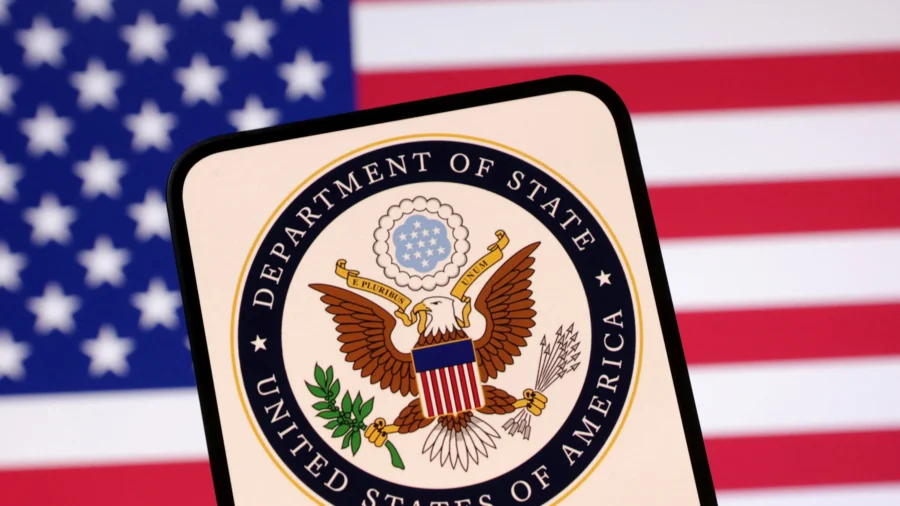
The U.S. State Department has added three individuals and six organizations to its sanctions and embargo list due to their alleged activity of enabling ISIS to move money across international borders.
The State Department's actions follow President Donald Trump's decision to waive sanctions against Iran that unblocked the production, sale, and delivery of oil through the Strait of Hormuz.
When Baghouz was captured in 2019 by the U.S. and Syrian Democratic Forces, ISIS began operating clandestinely without a state and its underground network has broadened to include Africa.
Nigeria secured its role as a U.S. geopolitical ally after joining in the May 16 operation that resulted in the killing of Abu-Bilal al-Minuki.
Al-Minuki was the alleged director of global operations for the ISIS network in the West Africa province, and U.S. military officials believe that al-Minuki was an active ISIS terrorist with a history of involvement in planning attacks and directing hostage taking.
Targeted attacks on Christian institutions and communities have occurred in Nigeria’s northern and central regions. For example, in January, more than 150 believers were kidnapped during a Sunday church ceremony in Kaduna state where armed men stormed three separate Christian churches at the same time.
The six entities include the Al-Karam Company under its various pseudonyms, Bitcoin Exchange Agent IDLIB’s No. 1 Coin Exchange, Generation Currency Bureau de Change Limited, Manhattan Bureau de Change Limited, Nine to Nine Exchange Bureau de Change Limited and Spider General Trading and Money Transfer Company.
“We will continue to use every diplomatic and legal tool available to hold ISIS and its supporters accountable – wherever they operate and however they move money," Pigott said.
Abderrahmane is allegedly a France-based facilitator who provided information concerning the use of explosives to ISIS supporters, while Abdelhakim is accused of being a Syria-based operator who used cryptocurrency to transfer funds on behalf of ISIS associates in multiple countries including the United States.
Muhammad is an alleged Nigeria-based facilitator whose money exchange businesses served as conduits for ISIS financing.
"We remain fully committed to protecting American lives, defending religious minorities, and working with international partners to eliminate the threat that ISIS poses to global peace and security," Pigott said. “The United States also reaffirms its strong partnership with Nigeria.”
Last month, U.S. Department of War Secretary Pete Hegseth announced that the administration is taking steps to protect Christians in Nigeria.
More than half of the African country is made up of Christians.
"[The president] heard the call of Nigerian Christians who were being targeted and killed by ISIS. … And he said, 'Pete, I want the War Department to focus on ensuring that we do everything we can to protect those Christians,'" Hegseth said on May 27 during an openly streamed cabinet meeting at the White House.
ISIS is an alleged group of fundamentalist Islamic adherents to Sharia law that employs terrorism and insurgency to expand their religious beliefs.