


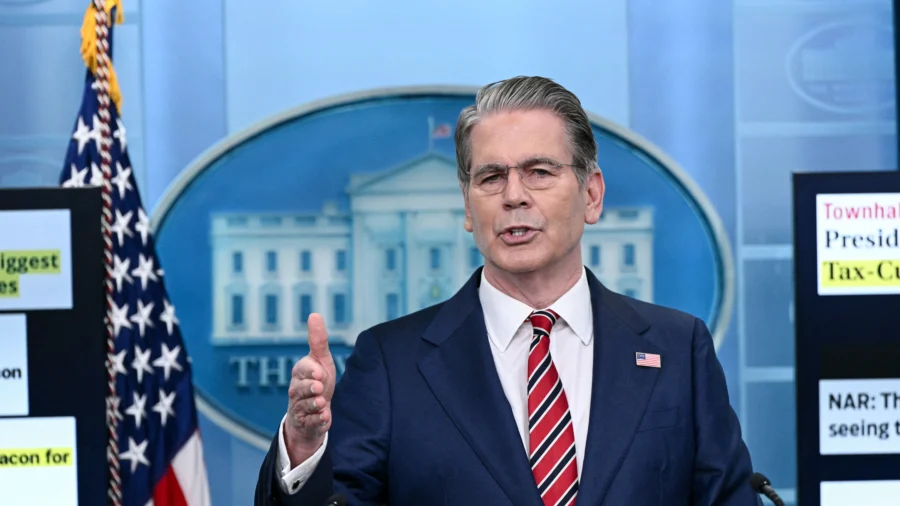
U.S. Treasury Secretary Scott Bessent said Friday the United States will not renew the sanctions waivers that enabled buyers to take delivery of Iranian and Russian crude already loaded on tankers at sea.
Bessent said a one-time license covering Iranian oil on the water would not be extended, calling it "totally off the table." The parallel waiver for Russian oil and petroleum products will also be allowed to end, he said.
"We will not be renewing the general license on Russian oil, and we will not be renewing the general license on Iranian oil," Bessent said. "That was oil that was on the water prior to March 11. So all that has been used."
The OFAC also sanctioned approximately 40 shipping companies and tankers connected to Iran's so-called shadow fleet.
"Treasury will continue to constrict the network of vessels, intermediaries and buyers Iran relies on to move its oil to global markets," Bessent said in the Treasury statement.
"We will follow the money that Tehran is desperately attempting to move outside of the country and target all financial lifelines tied to the regime," Bessent said. Blockchain analysts cited in the report tied some of the wallets to the Central Bank of Iran and to Iranian cryptocurrency exchanges.
"Constraining Iran's maritime trade directly targets the regime's primary revenue lifelines," he said.
Bessent said on Wednesday that the maritime oil waivers covering both countries had been quietly extended for another 30 days, noting that at the spring meetings of the World Bank and the International Monetary Fund that "more than 10 of the most vulnerable and poorest countries" had pleaded for relief as crude prices rose past $100 a barrel.
The original waiver, issued in March after the U.S.-Israeli war with Iran shut the Strait of Hormuz and squeezed global supply, was designed to keep barrels already at sea moving and calm jittery markets.
Bessent said that the administration is also ready to employ secondary sanctions against any country or bank that purchases Iranian oil or holds Iranian funds, noting that it is "a very stern measure." Bessent said pressure will next be placed on the banks and refiners still conducting business with Tehran.
The Associated Press contributed to this report.