


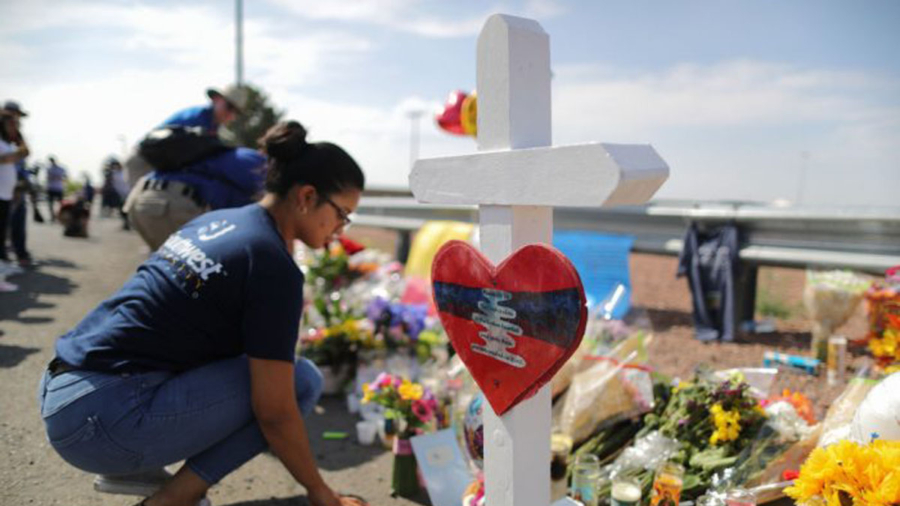
A database compiled by The Associated Press, USA Today, and Northeastern University shows that there were more mass killings in 2019 than any year dating back to at least the 1970s, punctuated by a chilling succession of deadly rampages during the summer.
In all, there were 41 mass killings, defined as when four or more people are killed excluding the perpetrator. Of those, 33 were mass shootings. More than 210 people were killed.
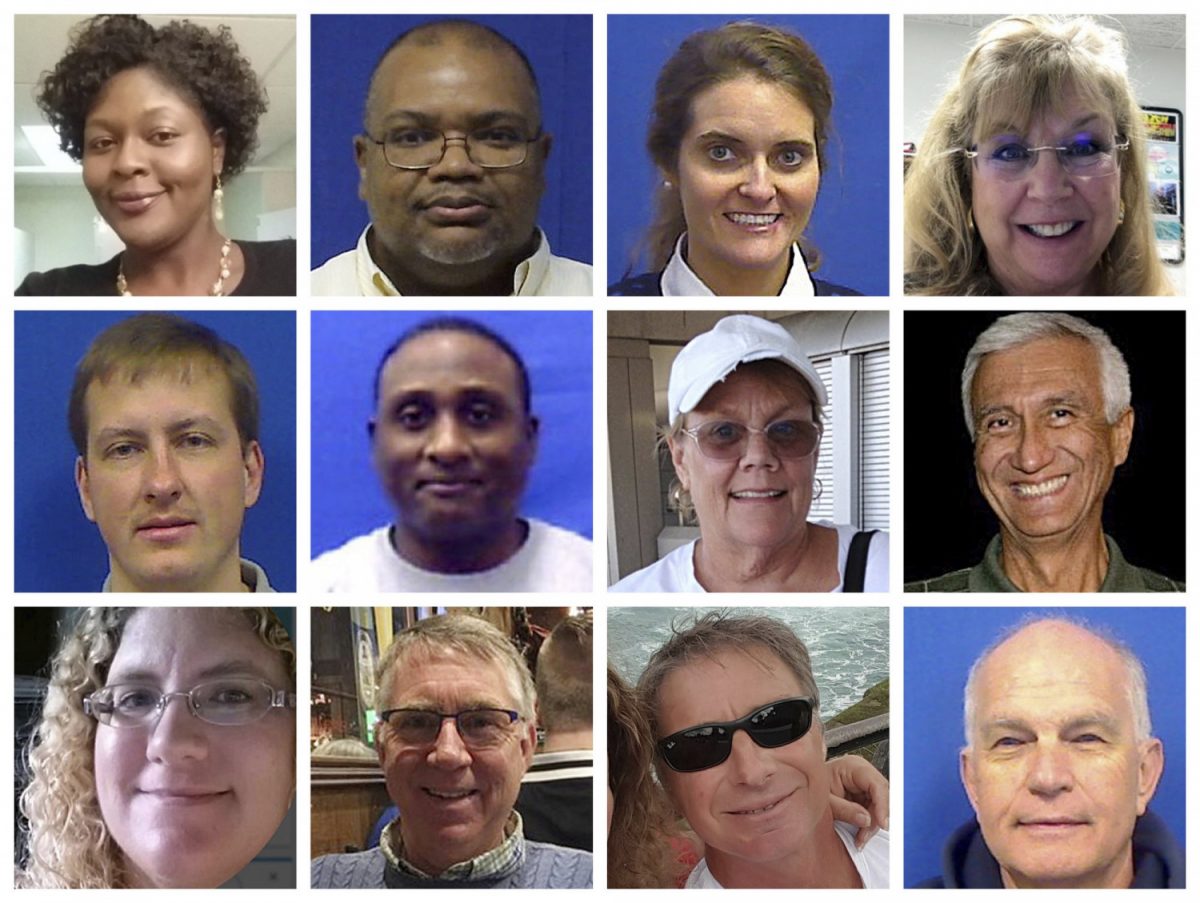
The majority of the killings involved people who knew each other—family disputes, drug or gang violence, or people with unresolved issues that directed their anger at co-workers or relatives.
In many cases, what set off the perpetrator remains a mystery.
The perpetrator had occasional run-ins with the police over the years, but what drove him to attack his family remains unknown. He had just gotten a job training mechanics at an auto dealership, and despite occasional arguments with his relatives, most said there was nothing out of the ordinary that raised significant red flags.
- The 41 mass killings were the most in a single year since the AP/USA Today and Northeastern database began tracking such events back to 2006, but other research going back to the 1970s shows no other year with as many mass slayings. The second-most killings in a year prior to 2019 were 38 in 2006.
- The 211 people killed in this year’s cases are still eclipsed by the 224 victims in 2017 when the deadliest mass shooting in modern U.S. history took place in Las Vegas.
- California, with some of the most strict gun laws in the country, had the most, with eight such mass slayings. But nearly half of the U.S. states experienced a mass slaying, from big cities like New York to tiny towns like Elkmont, Alabama, with a population of just under 475 people.
- Firearms were the weapon in all but eight of the mass killings. Other weapons included knives, axes, and at least twice when the perpetrator set a mobile home on fire which killed those inside.
- Nine mass shootings occurred in a public place. Other mass killings occurred in homes, in the workplace or at a bar.
“What makes this even more exceptional is that mass killings are going up at a time when general homicides, overall homicides, are going down,” Densley said. “As a percentage of homicides, these mass killings are also accounting for more deaths. ”
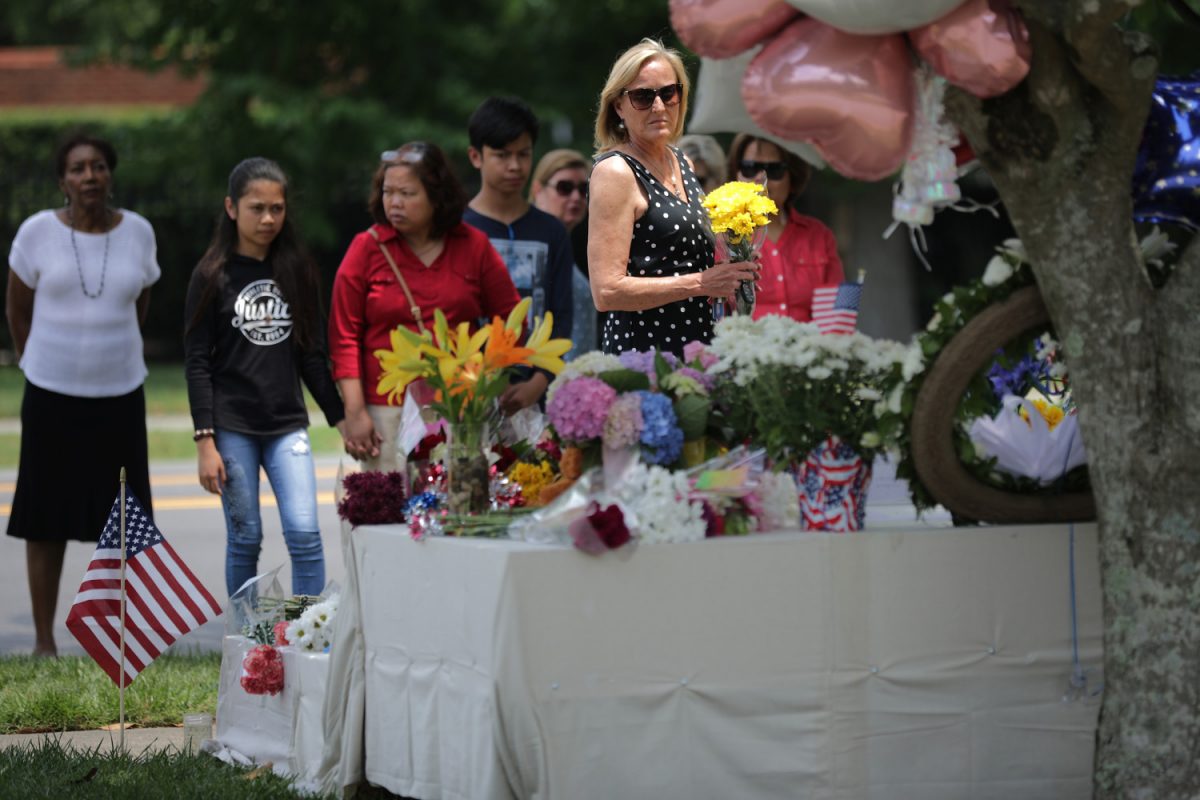
He believes it’s partially a byproduct of an “angry and frustrated time” that we are living in. Densley also said crime tends to go in waves with the 1970s and 1980s seeing a number of serial killers, the 1990s marked by school shootings and child abductions and the early 2000s dominated by concerns over terrorism.
“This seems to be the age of mass shootings,” Densley said.
He and James Alan Fox, a criminologist, and professor at Northeastern University, also expressed worries about the “contagion effect,” the focus on mass killings fueling other mass killings.
“These are still rare events. Clearly the risk is low but the fear is high,” Fox said. “What fuels contagion is fear.”
While the large death tolls attracted much of the attention, the killings inflicted a mental and physical toll on dozens of others. The database does not have a complete count of victims who were wounded, but among the three mass shootings in August alone, more than 65 people were injured.
Daniel Munoz, 28, of Odessa, was caught in the crossfire of the shooting that took place between a 10-mile stretch in West Texas. He was on his way to meet a friend at a bar when he saw a gunman and the barrel of a firearm. Instinctively, he got down just as his car was sprayed with bullets.
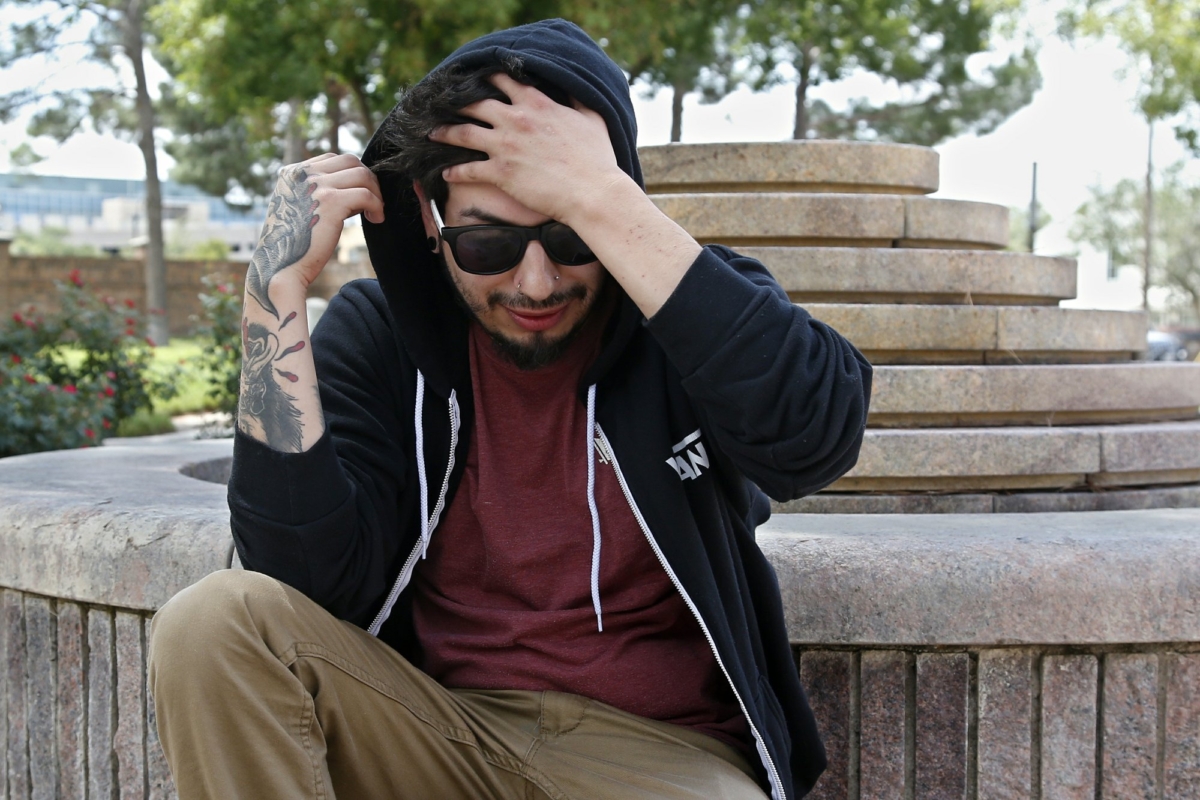
Munoz, who moved to Texas about a year ago to work in the oil industry, said he had actually been on edge since the Walmart shooting, which took place just 28 days earlier and about 300 miles away, worried that a shooting could happen anywhere at any time.
“You can’t just always assume you’re safe. In that moment, as soon as the El Paso shooting happened, I was on edge,” Munoz said.
Adding to his anxiety is that, as a convicted felon, he’s prohibited from possessing a firearm.
A few weeks later, as he sat behind the wheel of his car, he spotted the driver of an approaching car wielding a firearm.
“My worst nightmare became a reality,” he said. “I’m the middle of a gunfight and I have no way to defend myself.”
Now, the self-described social butterfly steers clear of crowds and can only tolerate so much socializing. He still drives the same car, still riddled with bullet holes on the side panels, a bullet hole in the headrest of the passenger seat and the words “evidence” scrawled on the doors. And, his shoulder remains pocked with bullet fragments.