


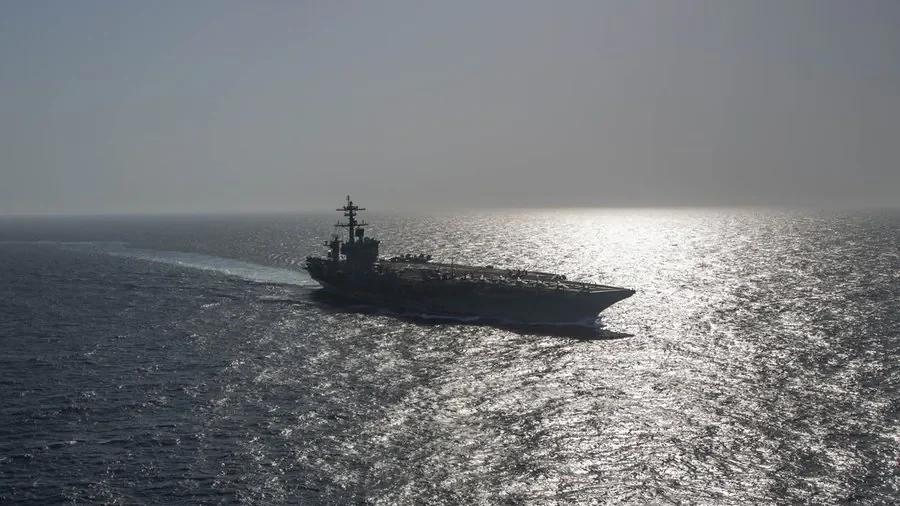
U.S. military forces said Sunday that the roughly two-month-long blockade of Iranian ports is still ongoing while confirming that the U.S. Navy helped in a search-and-rescue effort involving Indian mariners in the Arabian Sea.
In a post on X, the U.S. Central Command (CENTCOM) wrote that 142 commercial ships heading to or from Iran’s ports have been redirected after they complied, while another nine vessels been disabled, since the blockade was initiated on April 13.
U.S. Navy forces were deployed on Sunday in the North Arabian sea to help with the rescue of 14 mariners, according to a statement released by CENTCOM and the U.S. Navy’s Fifth Fleet, adding they dropped a “a search and rescue kit that included a life raft, which the 14 mariners boarded.”
A commercial vessel, the Comoros-flagged M/V Jabal Ali 9 rescued 11 of the Indian mariners while three mariners were rescued by a U.S. MH-60 Sea Hawk maritime helicopter, according to the statement.
Meanwhile, U.S. President Donald Trump said Saturday that he would be reaching a peace agreement with the Iranian regime on Sunday, although as of midday, no deal has materialized.
Trump on Sunday urged no further attacks by any party involved in fighting after Israel’s military said it launched strikes on Hezbollah targets in Beirut, potentially complicating efforts to finalize a deal to end the U.S.–Iran war. Iran also threatened a military response.
Responding to the strikes, Trump wrote on Truth Social that “we are very close to a Deal that will bring peace to the region, including to Lebanon,” adding “let’s not blow it!”
“Israel has the right to defend itself against threats, but the attack it was responding to was very small and meaningless, nobody was hurt, injured, or killed, and should not disrupt this important process,” he also said in the post.
Trump later told Fox News he still expects an agreement with Iran to be signed in the coming hours and planned to ask Tehran not to respond to Israel’s strikes.
Pakistani Prime Minister Shehbaz Sharif said Saturday the deal would be signed Sunday, while Iranian foreign ministry spokesperson Esmail Baghaei said it could happen in the coming days. Trump has said the Strait of Hormuz would open immediately after the signing.
However, Israeli Prime Minister Benjamin Netanyahu said in a statement, explaining the new strikes, said that “Israel will not tolerate firing into its territory. The country’s military later said on social media Hezbollah fired projectiles into Israel and also at Israeli military positions in southern Lebanon on Sunday.
A general in Iran’s military said Sunday that Tehran is prepared to strike following the Israeli strikes in Lebanon, according to comments carried semi-official IRNA media outlet.
“We are waiting for the smallest mistake by the aggressive enemy to teach them an unforgettable and final lesson,” said Iranian Maj. Gen. Ali Abdollahi through IRNA.
Wright, when asked about the operation at a Bloomberg News event, said that around 7 million barrels of oil per day are being transported out of the region with the help of the military. The figure represents about half of the flow of oil that had been moving through the Strait of Hormuz before the Iran war started, he added.