


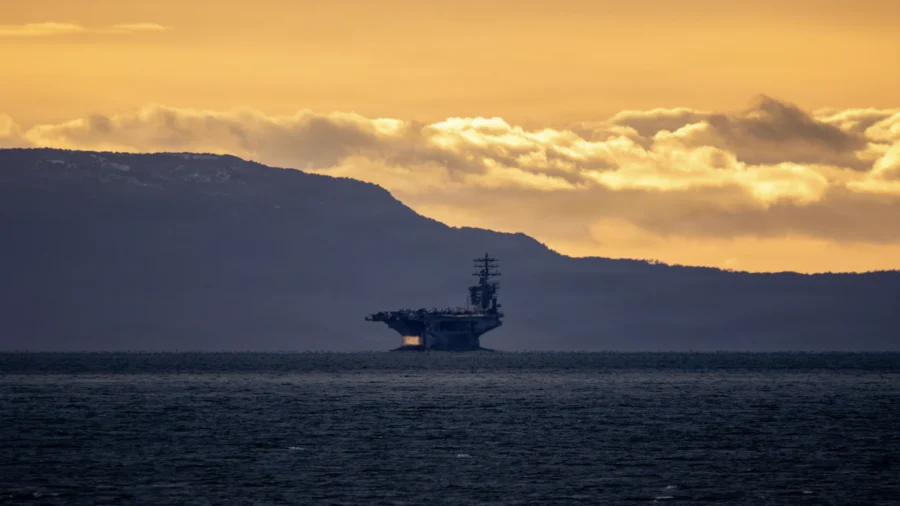
The Navy currently operates 291 battle force ships, the report states, despite a legal requirement for 355. The service says its budget has doubled since 2003, but its fleet size has barely changed.
“The Department of the Navy currently operates 291 battle force ships, while the Navy requirement by law is 355,” the report states. The plan says the Navy is “on a path to have a total naval inventory of 450+ vessels by the early 2030s.”
The Navy’s 30-year shipbuilding plan includes auxiliary vessels and select unmanned systems alongside traditional warships. And the plan confirms that for the first time, some battleships will be nuclear-powered.
“The nuclear-powered Battleship is designed to provide the Fleet with a significant increase in combat power by longer endurance, higher speed, and accommodating advanced weapon systems required for modern warfare,” states the report.
Acting Secretary of the Navy Hung Cao said the Shipbuilding Plan is built on three principles to change how the Navy does business, enhance maritime dominance, and revitalize the Navy’s industrial base.
“We are shifting from a slow, compliance-based bureaucracy to an accountable, warfighting enterprise,” states Cao in the report’s foreword.
“We will demand performance, reward speed, and empower our partners to deliver. We will no longer tolerate the backlogs that put our mission and America’s sons and daughters at risk,” he said.
Cao said that under President Donald Trump’s leadership, the Navy will launch the Golden Fleet, an initiative he said would “ignite a renaissance in American shipbuilding.”
The document points to years of acquisition failures and shifting requirements as reasons for delays and escalating costs.
“The Navy’s acquisition system grew administratively, but eroded operationally,” the report states, adding that the Government Accountability Office, Congressional Research Service, and internal Navy reviews have repeatedly cited these issues.
The plan additionally calls for procurement reform, industrial expansion, and more workforce investment. The Navy also aims to boost distributed shipbuilding from about 10 percent today to 50 percent, using modular construction.
“Modular construction expands production capacity, reduces bottlenecks, and accelerates delivery by leveraging industrial capability across the country, not just at a handful of legacy shipyards,” the report states.
The report said government-funded wage hikes at major shipyards helped hire more workers and reduce attrition, but also called on defense contractors to invest in their workforce and infrastructure rather than focus on stock buybacks and dividends.
The plan seeks funding for 34 manned ships and five unmanned platforms in fiscal 2027. Across the Future Years Defense Program, the Navy requests a total of 122 ships and 63 unmanned platforms.
“At the same time, the Navy is holding industry more accountable for both meeting contractual requirements and making capital investments to support this expansion. We are laser-focused on growing the fleet and delivering the ships that our Sailors and Marines depend on,” he said.