


WASHINGTON/DUBAI—The Trump administration expressed optimism on Wednesday about reaching a deal to end the war with Iran, while also warning of increasing economic pressure against Tehran if it remains defiant.
The United States warned it could add secondary sanctions on buyers of Iranian oil, just weeks after Washington loosened the enforcement of some Iran energy sanctions.
U.S. and Iranian officials were weighing a return to Pakistan for further talks as early as the coming weekend, after negotiations ended on Sunday without a breakthrough. Mediator Pakistan's army chief arrived in Tehran on Wednesday to try to prevent a renewal of the conflict.
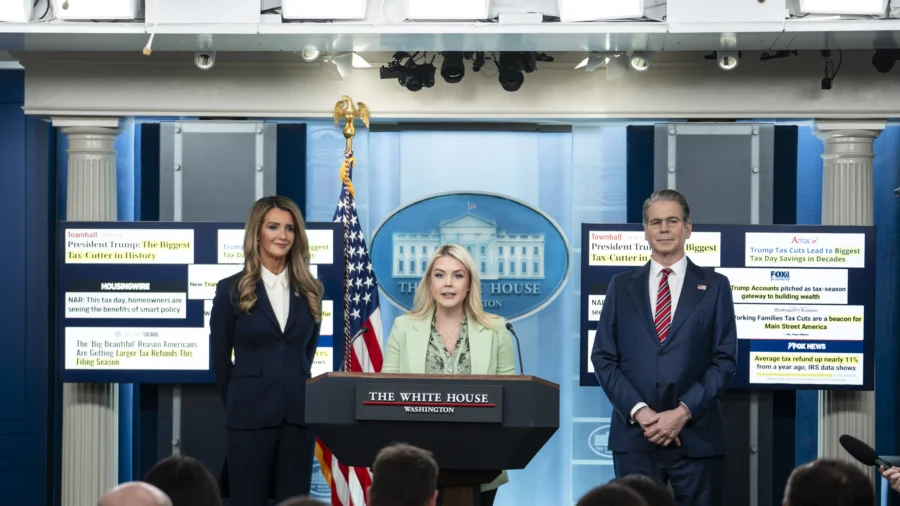
"We feel good about the prospects of a deal," White House press secretary Karoline Leavitt said at a news conference, calling conversations mediated by Pakistan "productive and ongoing." She denied reports that the United States had formally requested an extension of a two-week ceasefire agreed by the two sides on April 8.
More in-person talks had not yet been confirmed but would likely take place in Pakistan again, Leavitt said.
Pakistan's military confirmed Field Marshal Asim Munir had arrived in Tehran. Foreign Minister Abbas Araqchi posted on X welcoming Munir and said Iran was committed to "promoting peace and stability in the region."
Economic Pressure on Iran
Treasury Secretary Scott Bessent, speaking alongside Leavitt, predicted that China's purchase of Iranian oil would "pause" given the U.S. blockade on vessels calling at Iranian ports. He said the United States could impose secondary sanctions on countries that purchase Iranian crude.The U.S. Treasury had warned two Chinese banks not to process Iranian money or face sanctions, he said, without naming the banks. China previously bought more than 80 percent of Iran's shipped oil.
"The Iranians should know that this is going to be the financial equivalent of what we saw in the kinetic activities," Bessent said, referring to the U.S. and Israeli campaign of airstrikes that killed a number of Iranian leaders and damaged its defensive capacities and navy.
He also said the United States would not renew waivers that allowed the purchase of some Russian and Iranian oil without facing U.S. sanctions. The moves signal an end to the Trump administration's efforts to use the waivers to free up more oil supplies and lower soaring global energy prices.
The war has led Iran to effectively shut the Strait of Hormuz—a vital artery for global crude and gas shipments—to ships other than its own, sharply reducing exports from the Gulf and leaving energy importers scrambling for alternative supplies.
Tankers Intercepted
During the first three days of the U.S. blockade on ships entering and exiting Iranian ports, no vessels have made it past U.S. forces, the U.S. military said on Wednesday. Additionally, ten vessels complied with direction from U.S. forces to turn around and return toward an Iranian port or coastal area.However, Iran's Fars News agency said an Iranian supertanker subject to U.S. sanctions crossed the strait towards Iran's Imam Khomeini port despite the blockade. Fars did not identify the tanker or give further details of its voyage.
Iran's joint military command warned it would halt trade flows in the Gulf, the Sea of Oman and the Red Sea—which connects to the Suez Cana—if the U.S. blockade continued.
U.S. President Donald Trump has also threatened to escalate if the war resumes.
Talks Complicated by Nuclear Issue, Lebanon
Iran's nuclear ambitions were a key sticking point at last weekend's talks.Further complicating peace efforts, Israel has continued to attack Lebanon as it targets Iran-backed Hezbollah. Israel and the United States. say that campaign is not covered by the ceasefire, while Iran insists it is.
Israeli Prime Minister Benjamin Netanyahu said in a video statement on Wednesday evening that Israel was "prepared for any scenario" when it comes to the war with Iran.