


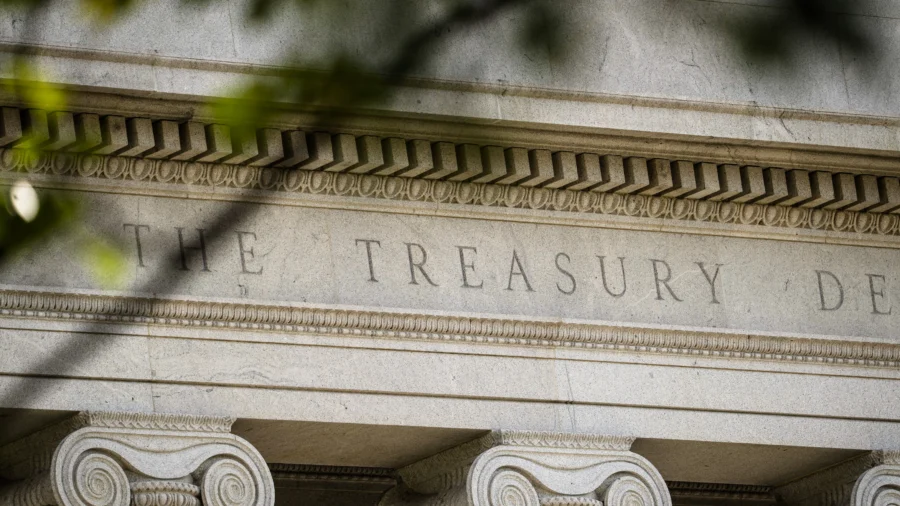
The U.S. government on Tuesday sanctioned four Iranian digital asset exchanges, including the largest in the country.
Nobitex, Wallex, Bitpin, and Ramzinex were designated, along with four C-level executives at Nobitex, including Chairman and co-founder Amir Hossein Rad, current CEO Seyed Ali Khoee, and two other co-founders from the Kharrazi family, the U.S. Treasury Department’s Office of Foreign Assets Control announced.
The action blocks any assets the parties hold in the United States or 50 percent of the assets they hold, and prohibits Americans from dealing with them.
The sanctions stem from the exchanges’ alleged role in processing more than 50 percent of Iranian digital asset inflows in 2025 for Nobitex alone, Iran’s largest digital exchange. Officials said the platforms facilitated payments tied to the Islamic Revolutionary Guard Corps (IRGC), ransomware actors, sanctions evasion, and efforts to prop up the Iranian rial. Nobitex also helped move regime assets out of Iran after U.S. combat operations began, even during internet blackouts.
“While Iran’s economy is in free fall, the regime has chosen to co-opt digital asset technologies for its own corrupt agenda, including evading sanctions and transferring wealth out of the country. Iran’s current economic chaos is proof that President [Donald] Trump’s maximum pressure campaign has been a success,” Treasury Secretary Scott Bessent said in a statement. “As promised, Treasury will continue to follow the money in support of Economic Fury, whether it is through the banking system or through digital assets, to prevent the regime from developing a nuclear weapon.”
The designations were made under the Trump administration’s Economic Fury campaign of maximum economic pressure on the Iranian regime.
Nobitex and the other exchanges were accused of operating in Iran’s financial sector while aiding the regime’s efforts to circumvent U.S. restrictions.
The sanctions aim to cut off funding streams that help Tehran sustain its military activities and nuclear ambitions despite heavy international pressure.
Iran’s embrace of cryptocurrency has grown sharply in recent years as a way to dodge traditional banking sanctions. Two of Nobitex’s co-founders are close associates of former Supreme Leader of Iran Ali Khamenei’s family.
IRGC-linked addresses received more than $3 billion in 2025—up from more than $2 billion in 2024—with their share rising to more than 50 percent of total Iranian crypto inflows by the end of 2025. These figures represent conservative estimates based only on identified and sanctioned wallets, according to the Chainalysis report.
Cryotocurrency has also become popular among ordinary Iranians. For roughly one in six of the population, crypto served as a vital lifeline to those facing relentless rial depreciation (down by nearly 90 percent since 2018) and chronic inflation of 40 percent to 50 percent, according to Chainalysis. Citizens turned to bitcoin and stablecoins such as U.S. dollar-backed stablecoins (USDT) on the Tron network to hedge savings, facilitate remittances, and move value when traditional banking failed.