


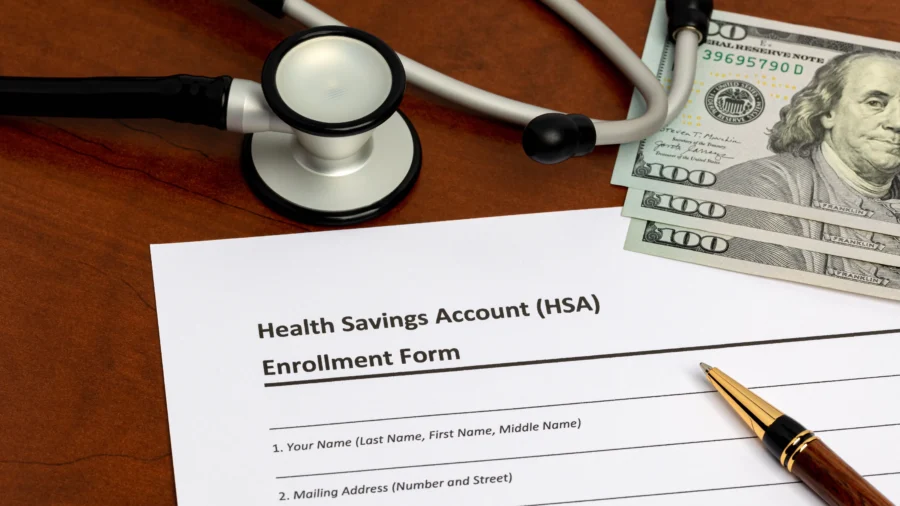
Americans spend about $1,524 every year on out-of-pocket health care spending, and consumers, while the United States spends $12,649 per person annually–the highest yearly medical expenditure in the entire world.
Yet despite high levels of medical spending, U.S. health care consumers largely don’t avail themselves of discounted and free health care funds provided by U.S. federal, state, and municipal governments, with aid also available from the non-profit sector.
"For consumers, the challenge is that many of these programs go unused simply because people don't know they exist or assume they aren't eligible,” Whitney Stidom, vice president of consumer enablement at eHealth Inc., told NTD News.
That’s especially true for U.S. seniors.
Seniors Should Take Full Advantage of These Five Health Care Programs
Start your health care savings journey with some free or low-cost government-sponsored medical programs and services.Preventive exams, screenings, and vaccines
Original Medicare and Medicare Advantage plans cover many important preventive care tests and resources, including breast and prostate cancer screenings, certain vaccines, and tobacco use cessation counseling. Yet a recent eHealth survey found that nearly 20 percent of Medicare beneficiaries are unaware that these appointments are covered at no cost each year. “People can start by connecting with a primary care physician, as research shows access to this type of care supports improved health outcomes and the earlier detection of disease,” Stidom advises.Take advantage of dental, vision, and hearing coverage
While traditional Medicare does not include routine coverage for dental, vision, and hearing care, many Medicare Advantage plans do. “That’s important because healthy teeth, eyes, and ears all contribute to overall well-being,” Stidom said.Use the over-the-counter (OTC) benefit
Another underused Medicare Advantage perk is the OTC benefit, which provides a set amount of money each quarter, month, or year for eligible products. “Not all Medicare Advantage plans come with an OTC benefit, and the plan offerings may vary, but some that do provide a pre-loaded spending card or an account credit to reimburse enrollees for eligible purchases, such as for pain relievers, cold and allergy medications, first aid supplies, vitamins, or dental care products,” Stidom said.Catch a ride to the doctor’s office
For about 1 in 5 adults aged 65 and older who are no longer driving, getting to the doctor’s office may be a challenge to accessing medical care. “Fortunately, some Medicare Advantage plans offer medical transportation benefits, which will provide a certain number of round-trip rides during the year,” Stidom said. “Some plans may require advance notice (typically 48 hours to 72 hours in advance) and require the use of a specific transportation company.”Long-term Medicaid care services
Health care experts say there are misconceptions regarding Medicaid's role as a "program for the poor."“More specifically, the government and the media rarely distinguish between the traditional health care Medicaid and long-term care Medicaid,” Evan Farr, a certified elder law attorney with Farr Law Firm, P.C., told NTD News.
Consequently, many middle-class families don’t bother to investigate or pursue potential long-term care Medicaid benefits prior to needing them. “When the time finally arrives for them to learn about and utilize the programs, they’ve often already wasted hundreds of thousands of dollars,” Farr noted.
Farr advises Americans seeking financial health care aid to consult professionals who work directly with the relevant government programs on a daily basis. “They can research the eligibility requirements for each program prior to experiencing a personal emergency, and realize that most government benefit programs contain proactive planning opportunities built into the laws governing them,” Farr said.