


The U.S. Department of State issued a travel advisory update for Haiti on April 16, warning Americans about safety risks involved in traveling to the Caribbean nation.
Haiti is designated with a “Level 4: Do Not Travel” classification, the department said in the update, citing the risk of “crime, terrorism, kidnapping, unrest, and limited health care.” Level 4 is the most severe among the four advisory levels.
“On July 27, 2023, the Department of State ordered non-emergency U.S. government employees and their family members to leave Haiti due to safety risks. Haiti has been under a national state of emergency since March 2024. This state of emergency remains in effect,” the update stated.
Violent crime is “rampant” in the country, the update said, especially in the capital city of Port-au-Prince, with crimes involving firearms common in the nation. Sexual assault, robbery, and carjacking also plague the country.
Armed groups may engage in gunfire attacks, with innocent people facing a risk of being struck by stray bullets, according to the update.
Local law enforcement’s ability to respond to serious crimes is “extremely limited,” especially outside Port-au-Prince and Cap-Haïtien, it said.
“Kidnapping is widespread. U.S. citizen kidnapping victims have been hurt or killed,” the department said.
“Kidnappers often demand ransoms. Ransom demands are typically in the high tens of thousands to high hundreds of thousands of dollars.
“Embassy employees are prohibited from visiting banks and using ATMs. U.S. citizens are often followed, attacked, and robbed soon after withdrawing money. If you must use an ATM, select one that is out of sight from the general public (such as inside your hotel), and be cautious at all times.”
In a Jan. 21 post, the U.N. Office on Drugs and Crime said that Haiti was facing “multiple, overlapping humanitarian, political, economic and security crises,” with 16,000 individuals killed since January 2022.
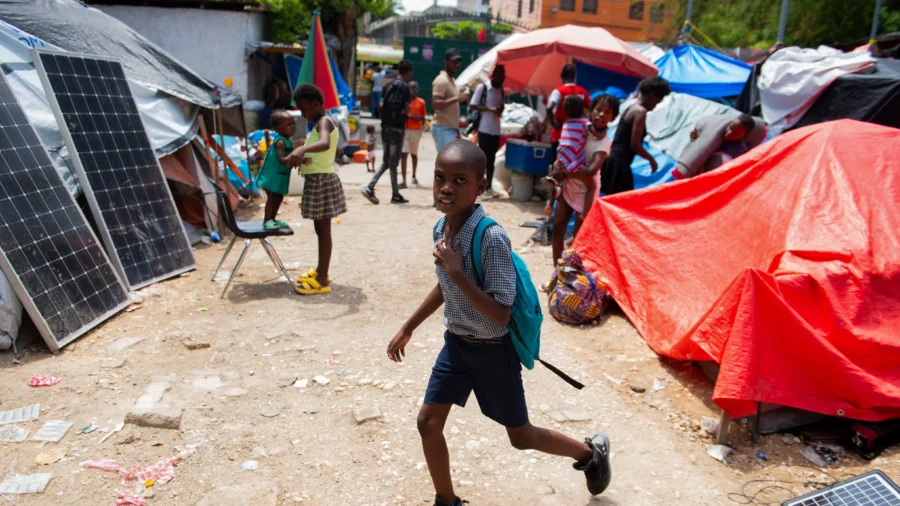
More than 1.5 million individuals have been displaced, the post said, and more than half the people in the country do not get enough food to eat.
“Powerful gangs now control vast swathes of territory and infrastructure in the country. Abetted by a steady flow of trafficked arms, they are inflicting horrific violence on civilians, including homicides, kidnapping, and sexual violence,” the organization said.
The U.N. Office of the High Commissioner for Human Rights said in a March 24 post that at least 5,519 people have been killed in the country between March 1, 2025, and Jan. 15, 2026, with more than 2,600 individuals getting injured.
In the advisory, the State Department said that U.S. commercial flights are not currently operating to or from Port-au-Prince. The U.S. Federal Aviation Administration has prohibited American air carrier flights to the Haitian capital due to “ongoing instability.”
“Travelers are often targeted, followed, and violently attacked and robbed shortly after leaving the Port-au-Prince international airport. For this reason, Embassy personnel are prohibited from traveling in personal vehicles to and from the airport,” the department said.
“Labadee, a port near Cap-Haïtien in the north—only accessible by cruise ship passengers—has private security and lower rates of reported crime. Travelers should exercise heightened precautions, however, due to increasing insecurity nationwide.”
Haiti TPS
The travel advisory update comes amid heated legislative debate about the presence of Haitian nationals in the United States.Rep. Ayanna Pressley (D-Mass.) called President Donald Trump’s move to end TPS for Haitians “cruel, unlawful, and life-threatening,” arguing that sending these people back to Haiti would be a death sentence to them.
In an April 9 post on Truth Social, Trump said that the TPS system has been a “massively abused and fraudulent” program.
The previous administration allowed “Tens of MILLIONS of Criminals, Lunatics, and the Mentally Insane from all over the World to pour into our Country, totally unvetted and unchecked through our wide Open Borders,” Trump wrote.
“We are rapidly trying to reverse this decline through Deportations,” he said.