


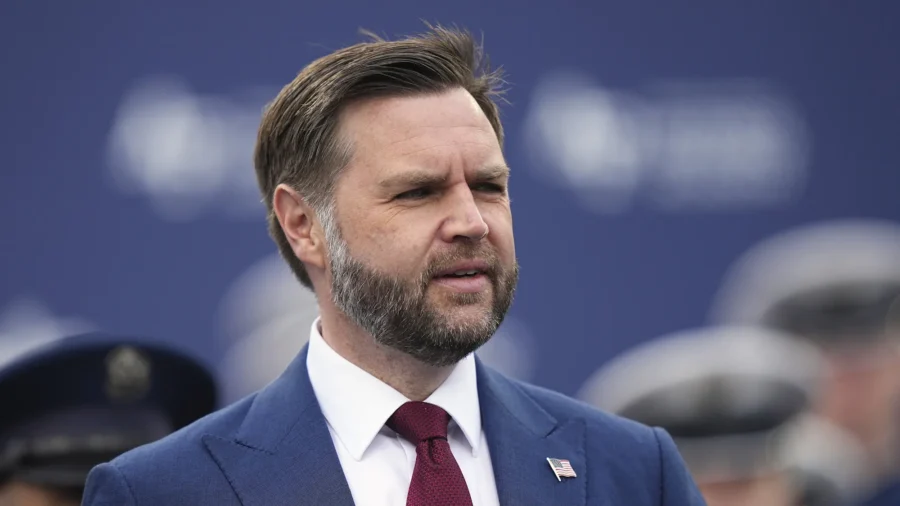
Vice President JD Vance outlined more details about the U.S.-Iran agreement to end a nearly four-month long war, emphasizing that Tehran "doesn't get a dime" unless it fulfills its obligations under the deal.
“We absolutely are open to the Gulf Coast countries investing in the reconstruction of Iran, but only if Iran ends their nuclear program, ends their enriched stockpile of material, and is really open to an inspections and enforcement regime that gives the American people confidence they’re never going to have a nuclear weapon,” Vance told CBS’ Good Morning America.
When pressed about whether Tehran will receive $24 billion in frozen funds if Tehran reaches certain benchmarks, Vance again stressed that it first needs to meet conditions under the agreement, a stance consistently reiterated by President Donald Trump.
"We're open to a lot of things that are on the table, but that $24 billion doesn’t appear anywhere in any of the text that we’ve talked about with the Iranians. What we have said is that we’re willing to talk about unfreezing assets, but a much much bigger deal is unsanctioning their economy so long as they make their commitments on the nuclear program," Vance said. "We already signed the deal digitally yesterday, and there's been no money released, and that won't change."
The vice president noted that the agreement carries different leverage than the Joint Comprehensive Plan of Action (JCPOA), an international agreement reached in 2015 between Iran, the United States, the United Kingdom, France, Germany, Russia, and China, along with the European Union, under the Obama administration. The main purpose of the JCPOA was to limit Iran's nuclear program in exchange for relief from economic sanctions.
This agreement is making sure Tehran doesn’t rebuild the nuclear program, while the JCPOA was “fundamentally about bribing them” to cease a nuclear program that was already in progress, according to Vance.
“If the Iranians comply with their end of the bargain, it’s going to be good for Iran," Vance said.
Vance added that he doesn’t see a need for the U.S. military to be involved in enforcement of Tehran's actions under the agreement, but that the United States will be involved in every aspect to make sure it is fulfilling its obligations.
The Trump administration plans to release the full text of the U.S-Iran agreement this week, according to Vance.
The memorandum of understanding has been signed by Vance and Trump, along with Iranian parliament speaker Mohammad Bagher Qalibaf. Vance added that technical talks will follow an official signing of the agreement on Friday.