


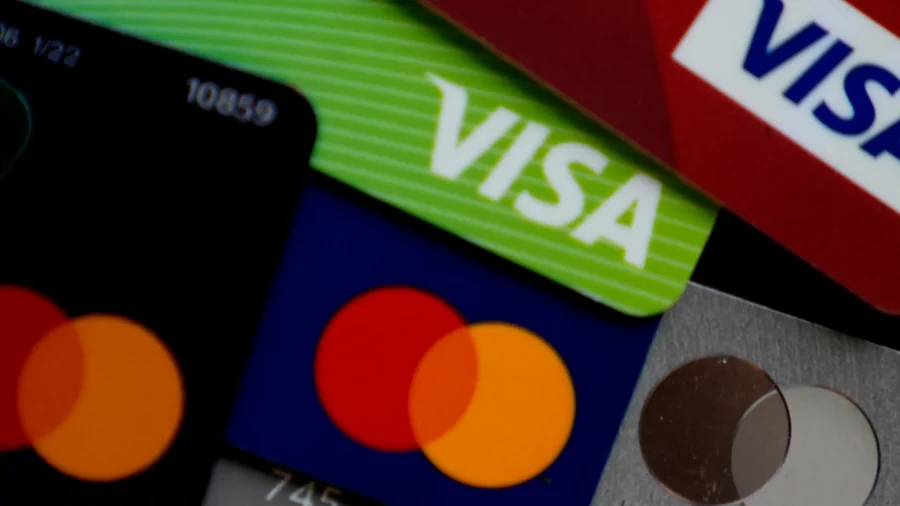
Visa and Mastercard announced an agreement on Monday with merchants that would end a 20-year legal battle over swipe fees in which businesses claimed the credit card giants violated U.S. antitrust laws.
The settlement calls for Visa and Mastercard to lower swipe fees, which are added to each transaction, by 0.1 percent for the next five years. The fees are between 2 percent and 2.5 percent currently.
“The proposed settlement with U.S. merchants of all sizes would provide meaningful relief, more flexibility and options to control how they accept payments from customers,” Visa stated.
Neither company admitted to any wrongdoing in the settlement, which still has to be approved by the court.
The agreement also caps standard consumer rates at 1.25 percent for eight years and allows merchants to charge customers a surcharge to pay the swipe fees.
Trade Group Criticizes
The agreement was criticized Monday by the National Association of Convenience Stores (NACS), the leading global trade association dedicated to advancing convenience and fuel retailing. The group said the proposal was “insulting” and wouldn’t benefit merchants and consumers.“The imaginary relief that this proposed settlement claims to offer is insulting to every one of us who ultimately foot the bill for higher credit card fees in the form of higher prices for gas, food, and other essentials,” Lyle Beckwith, NACS’s senior vice president of government relations, said in a statement.

Both prior settlements were rejected by the court.
NACS claimed Monday’s settlement is similar to a previous agreement offered in June 2024, which was rejected by U.S. District Judge Margo Brodie at the preliminary stage. The judge ruled it lacked sufficient merit to even consider through public comments, according to the organization.
“No one should be fooled by the credit card industry’s smoke and mirrors,” Beckwith said. “This proposed settlement endorses business as usual, including by letting Visa and Mastercard increase their own fees without any restraints.”
Beckwith added that the new settlement would allow the credit card companies to hike swipe fees for merchants and their customers.
“This proposed ‘settlement’ does nothing to stop their predatory and collusive behavior,” Beckwith said.

Swipe fee revenues have jumped 70 percent since 2020 and reached a record $187.2 billion in 2024, according to the group.