


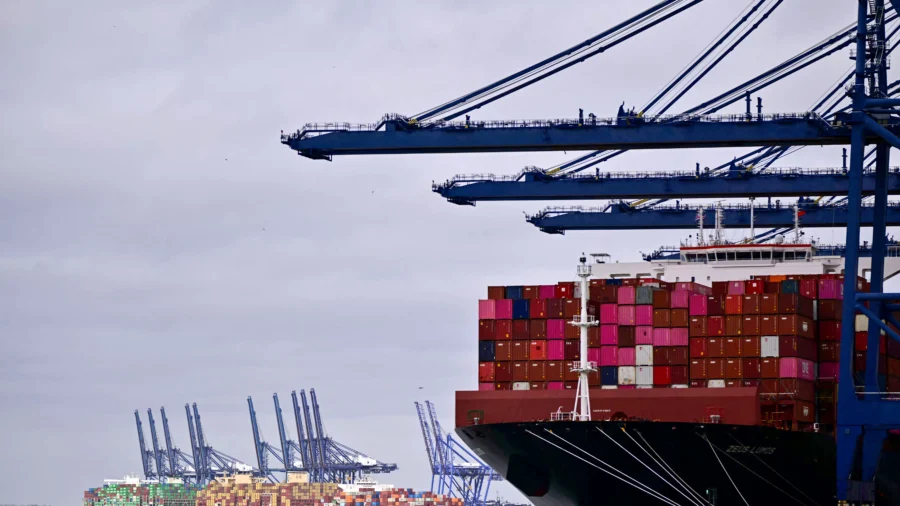
President Donald Trump granted a 60‑day Jones Act waiver to lower shipping costs and support fuel supply flows, the White House said on March 18.
The waiver allows foreign-flagged vessels to transport goods between U.S. ports. The suspension will apply to commodities, including coal, crude oil, fertilizer, natural gas, and refined fuel.
"President Trump’s decision to issue a 60-day Jones Act waiver is just another step to mitigate the short-term disruptions to the oil market as the U.S. military continues meeting the objectives of Operation Epic Fury," White House press secretary Karoline Leavitt said on X.
The 1920 Jones Act requires that shipments between U.S. ports use U.S.-flagged ships. The law was intended to bolster the American maritime sector, but it has long been faulted for delaying shipments and driving up costs, especially for fuel.
The waivers would permit foreign tankers to assist in moving U.S. crude to domestic refineries, helping offset energy price increases tied to disruptions in the Strait of Hormuz during the Iran war.
Energy prices have surged during the three-week-old Iranian conflict.
In addition to pain at the pump for motorists—the national average price for a gallon of gasoline surpassed $3.84 on March 18—shipping costs are soaring.
Diesel topped $5 a gallon this week for the first time since 2022, up from about $3.67 a month ago, according to the American Automobile Association.
A 2023 working paper estimated that waiving the Jones Act could reduce average East Coast gasoline prices by 63 cents.
Costs for diesel and jet fuel, economists estimate, could fall by as much as 82 cents and 80 cents, respectively.
Full Court Press
Suspending the Jones Act is one of several measures the administration has taken to attempt to stabilize global oil markets.The White House offered guaranteed political risk insurance earlier this month to help restore traffic in the Strait of Hormuz, a vital artery for oil and gas transit.
The president also proposed naval escorts for commercial tankers, and the administration has granted temporary waivers to allow the purchase of sanctioned oil.
Members of the International Energy Agency plan to release 400 million barrels of oil from their stockpiles, including 172 million barrels that Trump authorized the Department of Energy to release from the Strategic Petroleum Reserve to lower prices.
Trump and some economic observers have said energy prices will plummet once the conflict is resolved.
"I think your gas prices, as soon as that’s over, are going to come tumbling down along with everything else,” Trump told reporters on March 13. “I think it’s going to be, you’re going to see a very big decrease in the price of gasoline, gas, anything having to do with energy, as soon as this has ended.”
LPL Financial chief equity strategist Jeff Buchbinder said the economic and market impact will depend on the duration of the war in Iran and the effective closure of the Strait of Hormuz.
“While no one knows what the off-ramp looks like, we do know that opening the Strait will be messy and is likely to take at least a few more weeks,” Buchbinder said in a note emailed to The Epoch Times.
“Our allies have been reluctant to send naval escorts to the region to help, putting more pressure on President Trump to create the conditions for a ceasefire and clear the Strait unilaterally.”
Crude oil prices shrugged off the announcement in the middle of the trading week.
The price of a barrel of West Texas Intermediate—the U.S. benchmark for oil prices—climbed by almost 3 percent to about $99 per barrel on the New York Mercantile Exchange.
The price of Brent, the global barometer for crude, soared by about 6 percent to nearly $110 a barrel overseas.