


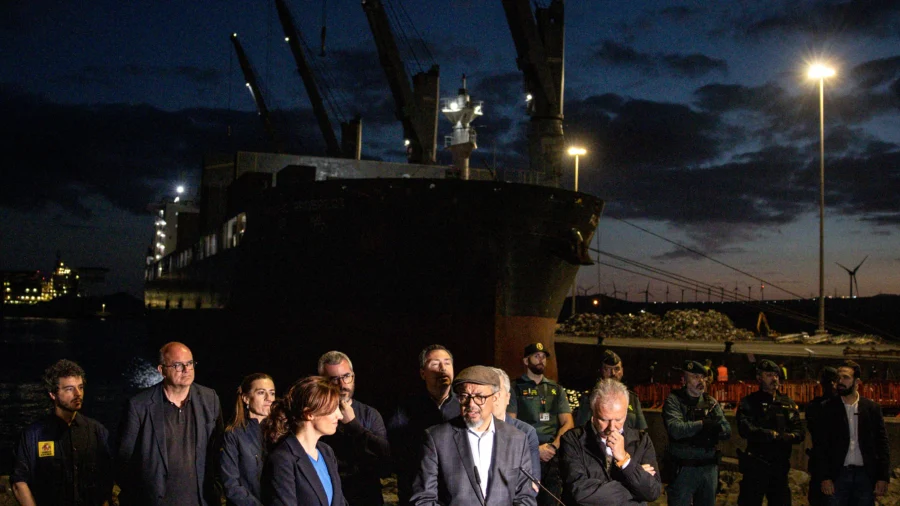
The World Health Organization (WHO) said on May 9 that hantavirus “is not another COVID” situation and suggested that the public health risk will remain low, as around 150 people prepare to exit the outbreak-ridden cruise ship.
“I know that when you hear the word ‘outbreak’ and watch a ship sail toward your shores, memories surface that none of us have fully put to rest,” Ghebreyesus said.
“The pain of 2020 is still real, and I do not dismiss it for a single moment.”
Nearly 150 people from 23 countries—including 17 Americans—have been stranded at sea for weeks after the outbreak of the Andes strain of hantavirus occurred.
The WHO was first notified about the health scare aboard the ship on May 2.
The agency has since confirmed that at least eight people were either suspected or confirmed to have hantavirus. Three people have died.
On Sunday, passengers will be ferried ashore at an industrial port in the Canary Islands, which is not near residential areas, and put into sealed and guarded vehicles through a “completely cordoned-off corridor,” and sent on a plane directly to their home countries, according to the WHO statement.
People will not be allowed to disembark the ship until their evacuation plane is ready to depart.
The CDC is sending a team of epidemiologists and medical personnel to conduct an exposure risk assessment for each American aboard the ship before they are evacuated to a quarantine facility in Omaha, Nebraska.
President Donald Trump said the United States is doing the most it can to make sure the virus stays contained.
“It’s very much, we hope, under control,” Trump told reporters on May 7. “It was the ship. And I think we’re going to make a full report about it tomorrow. We have a lot of great people studying it. It should be fine, we hope.”