


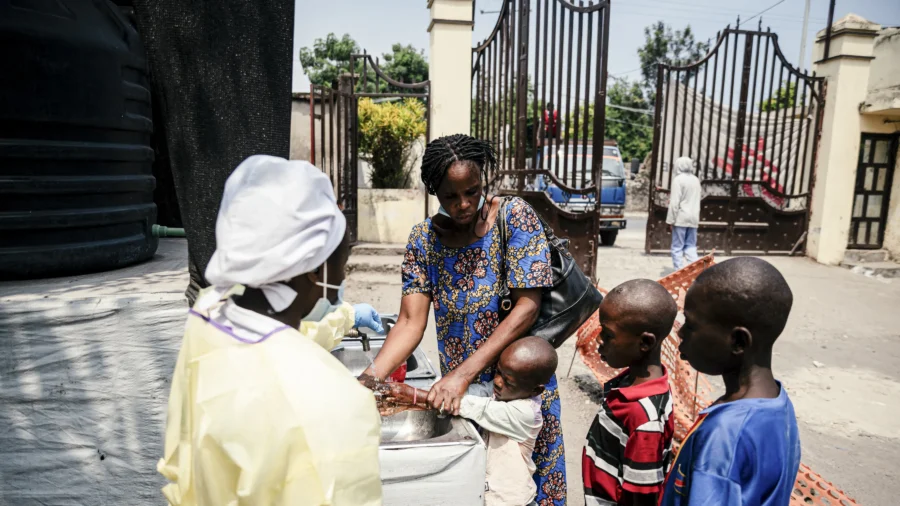
On Friday, the World Health Organization (WHO) upgraded the Ebola risk in the Democratic Republic of Congo to a “very high” at the national level.
“We are now revising our risk assessment to very high at the national level, high at the regional level, and low at the global level,” he said, adding that “82 cases have been confirmed in DRC, with seven confirmed deaths.”
“But we know the epidemic in DRC is much larger. There are now almost 750 suspected cases and 177 suspected deaths,” Tedros said.
The virus spread undetected for weeks in Congo's Ituri province after the first known death, as authorities tested for a more common Ebola virus and the results came back negative.
Tedro said the situation in Uganda is “currently stable, with two confirmed cases, and one death reported. There have been no new cases or deaths reported.”
“We are trying to catch up,” said Congo’s Foreign Minister Thérèse Kayikwamba Wagner. “It is a race against the clock."
Supplies are currently being rushed to Ituri in northeastern Congo, where nearly 1 million people have been displaced by armed conflict over mineral resources. Ramping up contact tracing is a priority, Kayikwamba Wagner said.
In the provincial capital, Bunia, there were empty emergency treatment centers. In the nearby town of Bambu, doctors used expired medical masks while tending to suspected Ebola patients.
The provincial government said Friday that it is temporarily banning wakes and gatherings of more than 50 people, with funerals to be held in strict compliance with health protocols.
The illness has also been reported in two Congolese provinces to the south of Ituri, North Kivu and South Kivu.
The Rwanda-backed M23 rebel group controls many key cities in that area, including Goma and Bukavu, where rebels reported two cases. The group said Friday it was creating a crisis team to fight the outbreak.
Kayikwamba Wagner said having the illness in rebel-held areas was alarming because “M23 is, despite whatever ambitions they may have, thoroughly ill-equipped" to fight the disease.
United States Response Efforts
The U.S. State Department is funding up to 50 new Ebola treatment clinics in Uganda and the Democratic Republic of the Congo. The clinics will support local partners in containing outbreaks and providing emergency screening and triage.“We know from previous outbreak response that ensuring partners rapidly scale up containment and treatment efforts in the affected regions is the most critical variable to ensuring an effective response and that the disease does not spread,” state department officials said
The U.S. government also temporarily paused visa issuance and routine consular services for travelers from countries impacted by the Ebola outbreak, including the Democratic Republic of the Congo, South Sudan, and Uganda.
The U.S. Department of Homeland Security is also requiring all U.S.-bound flights from those countries to land at Washington Dulles International Airport, where arriving passengers are screened for symptoms.