


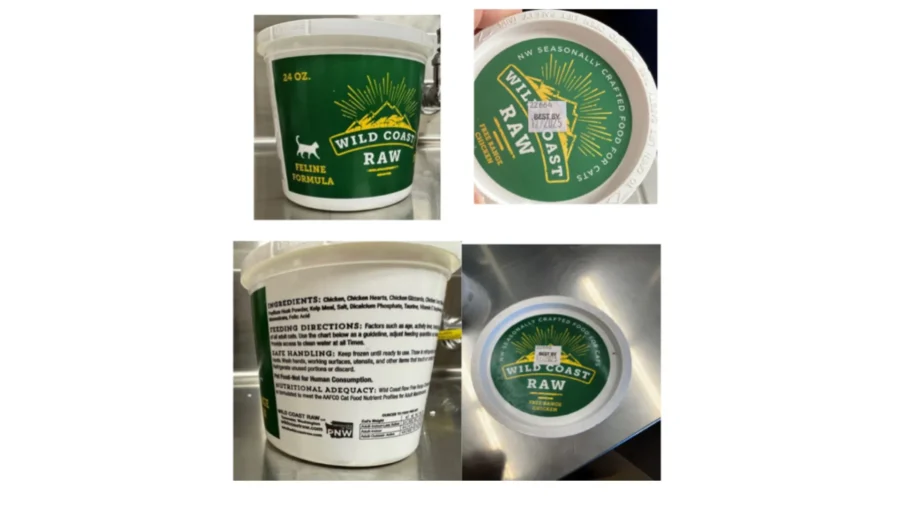
Wild Coast LLC, a pet food manufacturer based in Olympia, Washington, has transitioned to fully cooked poultry recipes in response to an expanded recall of its frozen raw cat food due to potential contamination with bird flu.
This decision aligns with guidance from the Centers for Disease Control and Prevention (CDC), which states that cooking raw products to an internal temperature of 165 degrees Fahrenheit kills bacteria and viruses, including H5N1, the company said.
According to the Washington State Department of Agriculture (WSDA), the recall was prompted by reports of indoor cats in Oregon falling ill after consuming the affected products in early February 2025. The severity of the illness led to the euthanization of some affected cats, as decided by their owners in consultation with veterinarians.
"Tests conducted by the Oregon Veterinary Diagnostic Laboratory at Oregon State University and the National Veterinary Services Laboratories at the U.S. Department of Agriculture confirmed the presence of HPAI in both cats and the food samples," the WSDA stated in a news release dated Feb. 14.
"The safety of our products and that of our customers' beloved pets is always our top priority," the company stated in its recall notice on its website. "We were devastated to learn of the passing of a beloved pet, and our hearts go out to the owner."
It added information on how their food is sourced, stating, "We thoroughly assess all suppliers from which we source our high-quality products. All of our suppliers use sustainable, organic, humanely raised, free-range, cage-free, GMO-free and antibiotic-free practices.”
Pet owners are advised to check for symptoms of bird flu infection in their animals. According to the WSDA, these may include "fever, lethargy, low appetite, reddened or inflamed eyes, discharge from the eyes and nose, difficulty breathing, and neurological signs like tremors, seizure, incoordination, or blindness."
While the risk to human health is currently considered low, the WSDA warns that people can potentially become infected if the virus enters their eyes, nose, or mouth, which could happen by handling contaminated pet food.
The Oregon Department of Agriculture and WSDA are collaborating on the investigation, to find the source of the problem, according to the company’s recall announcement.
Anyone who has purchased the recalled products are advised to discard them immediately, with refunds available through the place of purchase.