


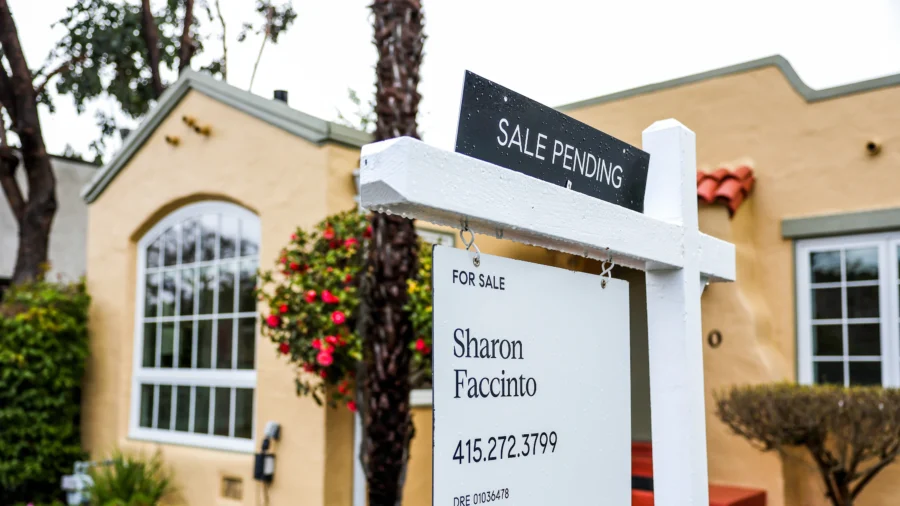
More U.S. homeowners are surprised when they open their property tax bill and see a number way higher than expected.
Accordingto Realtor.com, the median U.S. property taxes were $3,500 in 2024, up 2.8 percent from 2023. Company analysts cite higher home prices, rising home insurance costs, and upticks in local tax rates for the spike.
The good news? Realtor.com said homeowners have recourse with high property tax bills via “tax protesting,” given the high variability in local property tax assessment values.
One big issue is that property tax increases often come from reassessments that don't reflect damage or real market value. “If a home just went through a major storm, for example, and the county hasn’t updated the record to show that damage, the assessment ends up way off,” Jordan Blake, director of communications at Shoreline Public Adjusters, LLC in Naples, Florida, told NTD. “People feel stuck, but the truth is: you can challenge it—you just need to know how.”
Assuming that all relevant exemptions are in place, the best way to get a break on property tax is to protest a home’s assessed value. Nationwide, Realtor.com discovered that 40.5 percent of properties could benefit from lowering their assessed value to market value.
How can homeowners plan and execute a property tax assessment protest? Experts advise taking these action steps.
Check With Your Local Property Tax Office
If you’re a veteran, over a certain age, or have a disability, there may be additional property tax breaks. “The key is checking your local rules—each county can have different options,” Blake said. “Don’t assume your exemption is permanent. We’ve seen exemptions drop off during title transfers or refinances without the owner realizing it.”Pay Attention to the Calendar
Property tax offices make predictable mistakes during specific times.“For example, January assessments contain more errors because temporary workers handle overflow volume, and December appeals get approved faster because offices need to close their books,” Wesley Kang, founder of Realtor 1099 Café in Los Angeles, California, told NTD. Kang advises his clients to file property tax protests between Dec. 1-15 for the fastest application results or target January assessments for the biggest errors.
Be Specific
The strongest property tax appeals focus on measurable mistakes, like when assessors regularly count covered patios as living space, miss major road noise impact, or ignore commercial property influence on value. “My most successful clients win by challenging specific measurement errors rather than broad market arguments,” Kang said. “One owner saved $18,000 annually by proving the assessment included their neighbor's pool house. Sometimes, winning your appeal means measuring your house more carefully than the tax office did.”Measure Neighborhood Comps
Local property assessment databases often rely on bad information, including erroneous square footage, ghost bedrooms, and phantom amenities. “One of the low-hanging fruit is to compare your assessed value with similar homes on your block,” Ben Mizes, co-founder of Clever Real Estate, told NTD. “If yours is much higher, that’s a warning sign.”Don’t Overcomplicate the Appeal Process
Keep your property tax simple, as too much documentation can complicate the process.“Start by asking for your property record card and looking for any mistakes,” Mizes said. “Then, collect 3–5 neighborhood comps that sold for less, and make a strong, polite case. Most of the time, appeals don’t require legal assistance—win rates are higher than people realize.”
The views and opinions expressed are those of the interviewees. They are meant for general informational purposes only and should not be construed or interpreted as a recommendation or solicitation. NTD does not provide investment, tax, legal, financial planning, estate planning, or any other personal finance advice. NTD holds no liability for the accuracy or timeliness of the information provided.