


A 104 percent tariff on Chinese imports will take effect at 12:01 a.m. on Wednesday, April 9, the White House has confirmed.
Trump has said China has played its cards wrong. The president said on Tuesday that he is waiting to hear a response before the tariff takes effect. Despite this, Chinese communist officials have vowed to continue to escalate.
Treasury Secretary Scott Bessent earlier in the day said such a "big mistake" and a tit-for-tat tariff is going to hurt Beijing more than America.
"We are the deficit country," he said during an interview with CNBC. "So what do we lose by the Chinese raising tariffs on us? We export one fifth to them of what they export to us. So that is a losing hand for them."
He maintained the United States would not prioritize negotiations with its biggest adversary and instead focus on negotiating with its allies and cooperating trading partners. The White House confirmed that Trump met with his trade team earlier Tuesday and directed them to negotiate custom, "tailor-made" deals with each nation.
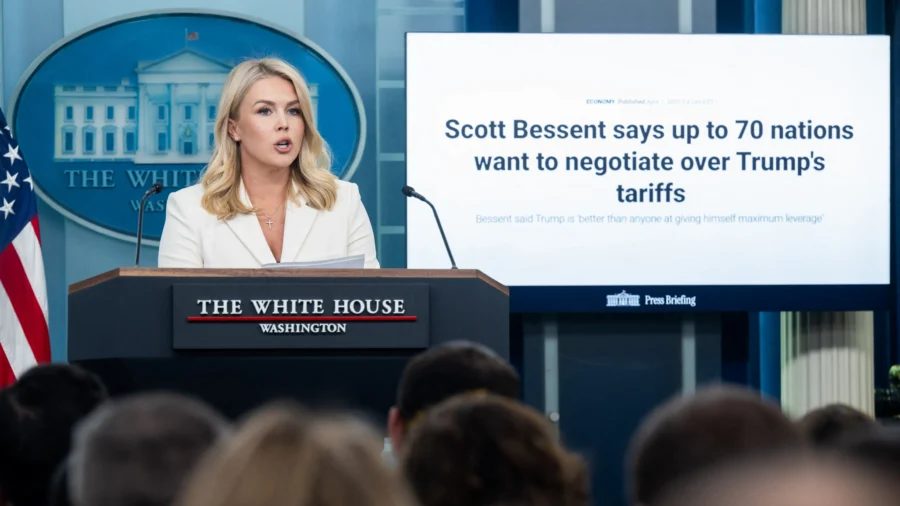
In a read out, Leavitt said that nearly 70 countries have reached out the White House and are "falling over themselves" to kickstart talks. She later added that Trump has a "spine of steel" and will not back down to China.
Meanwhile, allies such as Japan are willing and eager to negotiate with the United States.
If those countries are willing to negotiate and can come up with "solid proposals" then the White House is confident that deals can be made, Bessent said. Trump on Monday tasked Bessent and U.S. Trade Representative Jamieson Greer with leading talks with Japanese Prime Minister Shigeru Ishiba and his Cabinet.
Trump's decision to impose a 25 percent levy on auto imports, and a reciprocal 24 percent tariff on other Japanese goods, would deal a huge blow to Japan's economy, which relies heavily on exports. The higher duties could hinder the country's economic growth up to 0.8 percent, according to analysts.
Markets rebounded on Tuesday amid hopes of trade deals. Meanwhile, Trump has told Americans not to panic, rather be patient, amid the recent shifts in the global economy.