


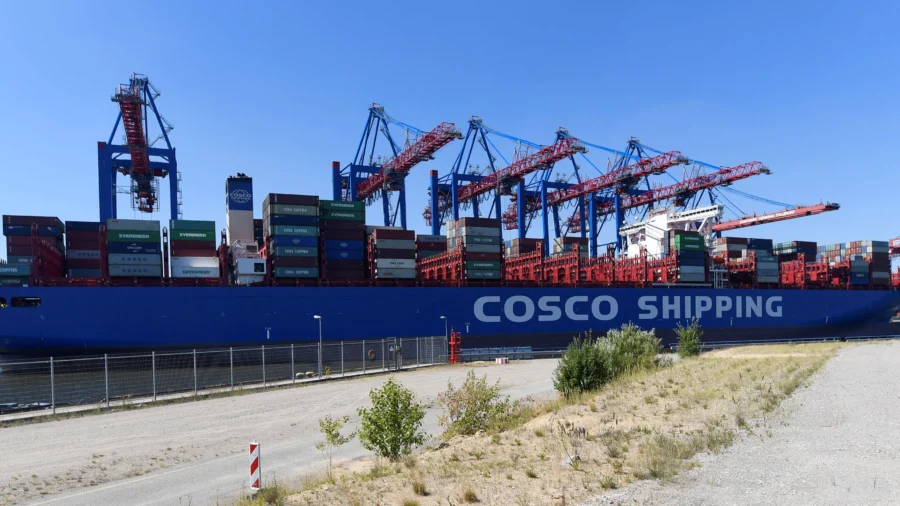
Two container ships operated by China’s COSCO Shipping Holdings turned back while attempting to exit the Strait of Hormuz early on March 27, according to ship-tracking data.
The vessels, CSCL Indian Ocean and CSCL Arctic Ocean, attempted to transit the strait but reversed course at around 3:20 a.m. and 3:50 a.m. UTC, ship-tracking service MarineTraffic said in a March 27 post on X.
MarineTraffic said the ships were part of COSCO’s MEX service within the Ocean Alliance network, linking the Middle East and the Far East, and noted the attempt marked the first by a major container carrier since the start of the conflict.
The attempted transit followed a March 25 customer advisory by COSCO confirming it had resumed accepting bookings for general cargo container shipments to Gulf destinations, including the United Arab Emirates, Saudi Arabia, Bahrain, Qatar, Kuwait, Iraq, and Oman.
Oil prices rose on March 27 following the unsuccessful transit. Brent crude climbed to about $111 per barrel, while West Texas Intermediate crude oil rose to over $97, according to Trading Economics, reflecting market concern over potential supply bottlenecks tied to the strait.
The developments come amid Tehran’s tightening controls over maritime movement through the strait.
Iran's Islamic Revolutionary Guard Corps (IRGC) said vessels linked to adversaries would not be allowed to pass, according to a March 27 post on X by state media the Mehr News Agency.
In a March 27 statement posted to X, the Iranian embassy in Nairobi said the maritime environment had become “highly unsafe, volatile, and unpredictable” due to what it described as “ongoing illegal military aggression by the US and the Israeli regime.”
“Maritime traffic through the Strait of Hormuz has not been suspended or closed and continues, subject to the measures adopted and the considerations arising from the current wartime situation,” the embassy said.
Diplomatic Steps
On March 26, U.S. President Donald Trump said talks with Iran were progressing and announced a 10-day pause in potential U.S. strikes on Iranian energy infrastructure, pushing his deadline to April 6.At a Cabinet meeting the same day, he added that Iranian officials were privately seeking an agreement, saying they are “begging to work out a deal,” while warning Tehran to “get serious” or face severe consequences.
U.S. officials, including special envoy Steve Witkoff, have confirmed Washington presented a 15-point framework for a potential agreement through intermediaries. Details of the proposal remain unclear.
Iranian officials have pushed back against U.S. claims of active negotiations.
A senior Iranian official told state media on the same day that Tehran had rejected the U.S.-backed proposal and would only agree to end the conflict on its own terms.
The official said Iran’s conditions include halting attacks, securing guarantees against future conflict, and gaining recognition of its authority over the Strait of Hormuz.
From The Epoch Times