


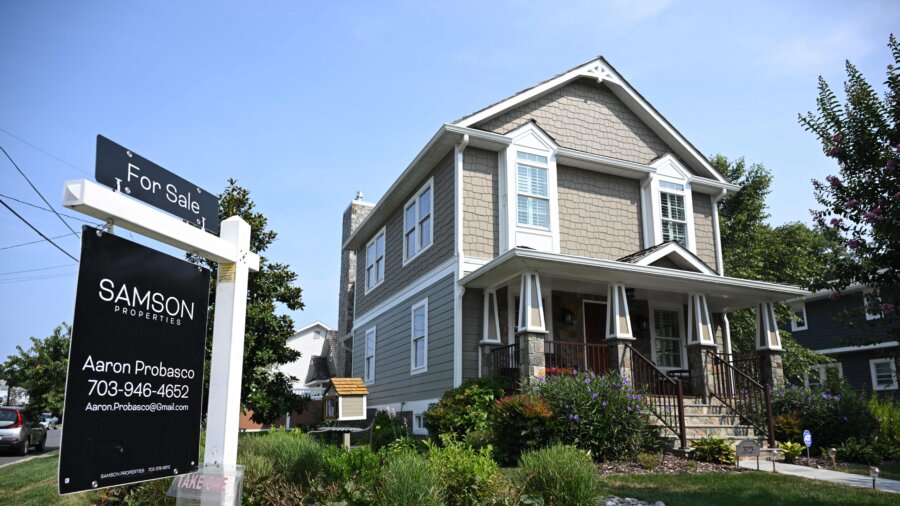
The study noted that survey respondents say the biggest barriers to landing a new home are rising home prices (39 percent), affordability (30 percent), and interest rates (18 percent).
“Other anxieties, including market instability, career uncertainty, tax rates, and limited inventory, were each reported by fewer than 5 percent of respondents,” IPX1031 reported.
Real estate experts lay the blame for housing on a lack of available homes across the United States.
“It all boils down to a supply and demand issue that has been thrown completely out of whack over the last decade,” Blake DeWitt, CEO and real estate investor at Investorade in Dallas, Texas, told NTD News.
DeWitt said the U.S. housing market is anywhere from 1.2 million to 5.5 million homes short and that newly built homes haven’t kept pace with population growth since 2008.
How Uncle Sam Can Help With a Home Purchase
On the upside, the federal government, along with every state and most counties, provides billions of dollars in assistance to home buyers every year. If you’re short on funds and want help buying a home, take advantage of government-approved home funding programs.1. Federal Housing Administration Loans
A good place to start is through the U.S. Federal Housing Administration, a part of the U.S. Department of Housing and Urban Development.“If you qualify for an FHA loan, you can get a mortgage with just 3.5 percent down and credit scores starting at 580,” DeWitt said.
2. Get a Veterans Administration or USDA Home Loan
If you’re a current U.S. military member or a veteran, a Veterans Administration (VA) loan is a solid financing option.“These loans are absolutely incredible if you or your spouse served in the military,” DeWitt noted. “Not only can you get a loan with no money down, but you don’t have to pay for private mortgage insurance, which can save you $150 to $300 per month on a $350,000 loan.”
USDA loans, backed by the U.S. Department of Agriculture, are also designed to promote home ownership across the U.S., but are targeted toward rural and eligible suburban areas.
3. For Low-Income Buyers, a HomeReady Mortgage Loan Can Help
The HomeReady Mortgage program through Fannie Mae and the Home Possible program through Freddie Mac are also good options for buyers with good credit but a lower income.“It assists with allowing for a lower down payment, and with a down payment often being a barrier to obtaining that desired home, it is an option to consider,” Derek Exley, founder at Reusable Tenant Screening Reports, a Colorado Springs-based rental application process services company.
State Funding Is Also Available
State housing finance agencies in all 50 states offer some type of down payment assistance as well. “Many of these programs will give you $5,000-$25,000 in a forgivable grant if you live in the home for 5-10 years,” DeWitt said.It’s also worth checking whether your state offers loans, grants, or giveaways tied to green energy initiatives.
“Energy-efficient mortgages are starting to become more mainstream,” Exley said. “This allows a homeowner to turn the cost of energy-efficient appliances and home upgrades into a mortgage benefit as the costs can be transferred into the mortgage itself.”