


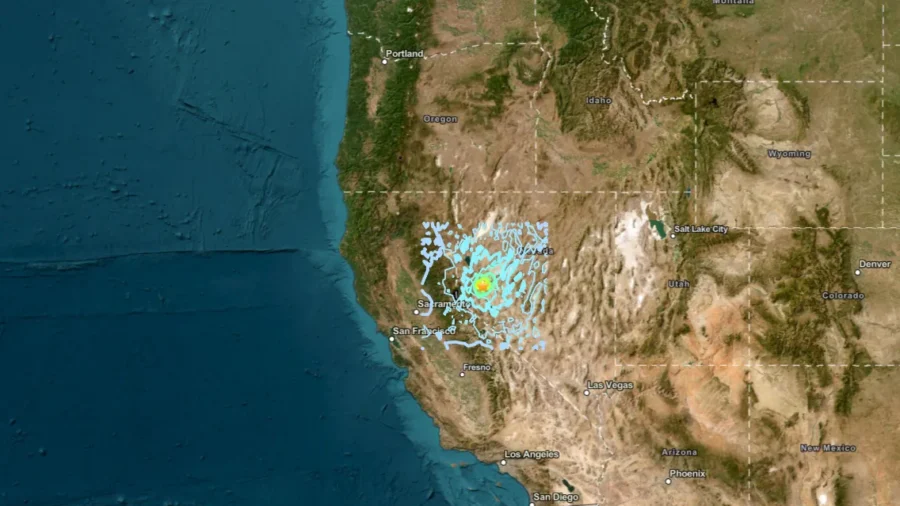
The tremor hit at 6:29 p.m. and was centered roughly 12 miles southeast of Silver Springs at a depth of 3 miles.
What the Numbers Mean
Magnitude measures the energy released at a quake's source and has replaced the old Richter scale as the standard unit of measurement, according to the USGS.How Earthquakes Work
An earthquake occurs when two blocks of the earth's crust suddenly slip past one another along a surface known as a fault or fault plane. The point underground where the rupture begins is called the hypocenter, while the spot directly above it on the earth's surface is the epicenter.The shaking people feel comes from energy that has been building up along the fault. When the force of the moving tectonic plates finally overcomes the friction locking the fault's jagged edges together, that stored energy is released as seismic waves, which radiate outward in all directions—much like ripples spreading across a pond. When those waves reach the surface, they shake the ground and everything on it.
Scientists record earthquakes using instruments called seismographs, which detect differences in movement between the shaking ground and a stationary hanging weight inside the device. The resulting recording is called a seismogram.
Earthquakes are far more frequent than many people realize. An estimated 500,000 detectable earthquakes occur worldwide every year, according to the USGS. Of those, about 100,000 are strong enough to be felt by people, and roughly 100 cause actual damage.
While quakes can strike anywhere in the United States, they are most common in Alaska, California, Hawaii, Nevada, and Washington State, according to the California Residential Mitigation Program, a state program that provides grants to help homeowners seismically retrofit their houses.