


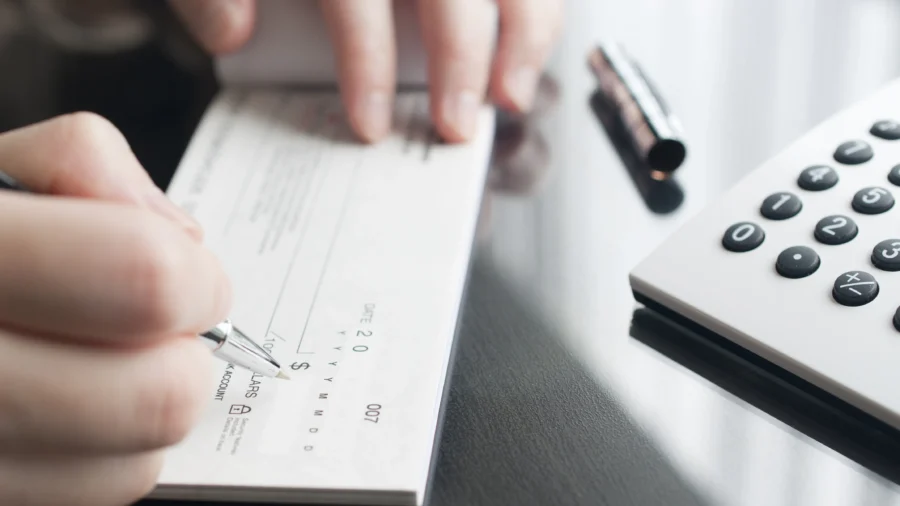
With today’s technology comes numerous ways for fraudsters to steal your money. But one somewhat old-fashioned item is increasingly the center of attention when it comes to theft. Check fraud is on the rise.
Checks Still Preferred Payment, but Vulnerable
Despite the list of options, some organizations continue to use checks as their primary payment method. Checks are accepted everywhere and don’t have the same fees, if any, that electronic payments have.Despite technological advancements, checks have not undergone significant evolution over the years. This makes them vulnerable to fraud.
For example, credit card companies are eliminating signature lines and printed card numbers on the card. Instead, they are employing chip technology to protect users.
However, checks still have the payer’s full banking information on the face of it. This provides check thieves with all the information they need to carry out their deception.
US Postal Service Thefts and Check Fraud
Despite the decline in check usage, fraudsters continue to target the USPS to commit check fraud. They steal personal checks, business checks, tax-refund checks, and checks related to government assistance.How Prevalent Is Check Fraud?
According to the U.S. Treasury Department Financial Crimes Enforcement Network (FinCEN), financial institutions filed more than 350,000 Suspicious Activity Reports (SARs) in 2021 regarding check fraud. This was a 23 percent increase over the number of check fraud SARs in 2020.However, in 2022, the trend continued to move upward, with the number of check fraud SARs reported to FinCEN reaching 680,000, double the previous year’s number.
Check Fraud Techniques
There are several techniques fraudsters use to commit check fraud.Altering a Legitimate Check
Check alteration is when a fraudster modifies a legitimate check to change critical details such as payee, amount, or other information.Forged Endorsements
A forged endorsement is when someone fraudulently signs another person’s name on a check to cash or deposit it. The stolen check is then presented to a bank teller. The fraudster uses fake identification to convince the teller to cash it. Meanwhile, the owner is unaware.Counterfeit Checks
Counterfeit check fraud is the creation of fake checks that closely resemble legitimate ones. They can target businesses as well as individuals.There are now advanced tools available to allow fraudsters to counterfeit. They use high-resolution printing to replicate authentic checks with precision. Artificial intelligence (AI) is also used to create convincing check designs.
Fraudsters hack into company email systems to steal check images and then modify them using AI. Fraudsters use stolen business check details and replicate counterfeit versions that bypass standard security checks.
Check Theft
Check theft involves stealing checks and using them to commit financial crimes. Fraudsters may steal checks from the mail or break into homes or businesses. Once they have your checks, they can steal your money.Preventing Check Fraud
You are the first line of defense when it comes to preventing check fraud. Protecting your checks and not leaving them available to theft is the first step. Here are ways to reduce the risk of falling victim.Only Use Secure Mailboxes
Mail theft is the most common way for someone to take your checks. They can easily steal checks from public or residential mailboxes. It’s ill-advised to place a check in your mailbox or a public blue mailbox. Instead, go to the post office and mail it.Use Digital Payments
Opt for secure electronic transfers via the Automated Clearing House (ACH). Use digital payment methods such as Zelle, Venmo, PayPal, and bank apps.Utilities, banks, credit card companies, and other organizations have portals where you can make payments without using checks.
Use Tamper-Proof Checks and Write Carefully
Only use checks with security features like watermarks, microprinting, or chemical-sensitive paper. This will make it difficult to alter.Paper Checks Are Targets for Thieves
Check fraud is rampant, and many don’t know it’s happening until it’s too late. It’s best to avoid using paper checks whenever possible. But if you must mail a check, make it a point to visit the post office.The views and opinions expressed are those of the authors. They are meant for general informational purposes only and should not be construed or interpreted as a recommendation or solicitation. NTD does not provide investment, tax, legal, financial planning, estate planning, or any other personal finance advice. NTD holds no liability for the accuracy or timeliness of the information provided.
From The Epoch Times