


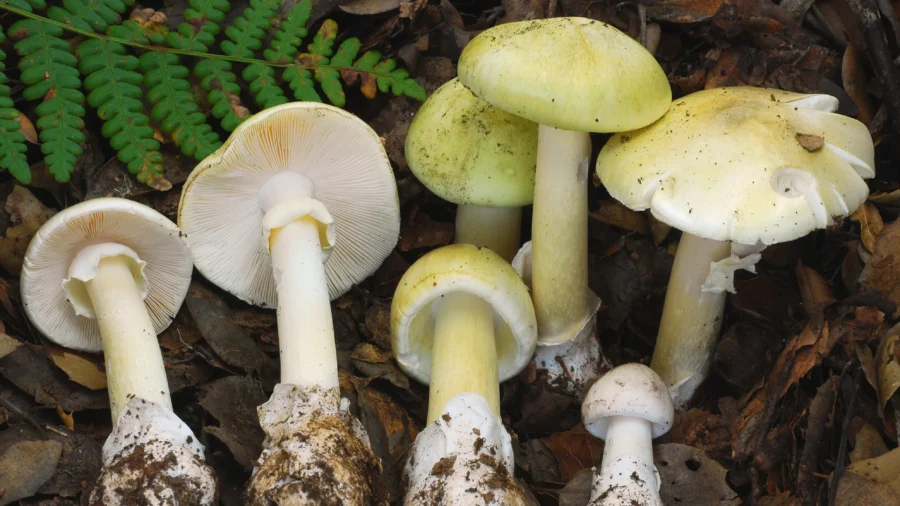
Dr. Craig Smollin, professor of emergency medicine at UCSF Medical Center and medical director of the San Francisco Division of the California Poison Control System, said the outbreak's severity is significant.
“Since November 2025, 47 people have been hospitalized because of eating foraged wild mushrooms,” Smollin said in a California Poison Control System advisory. “Overall, four of the patients developed severe liver failure and required liver transplants. Sadly, four other patients have died. The patients range in age from 19 months to 56 years old.”
Officials said recent spring rainfall likely contributed to an increase in wild mushroom growth, raising the risk of accidental ingestion statewide in both rural and urban areas.
The California Poison Control System said the outbreak is primarily linked to Amanita phalloides, known as the death cap, and Amanita ocreata, called the destroying angel. Both contain amatoxins, potent toxins that can cause severe liver failure and death, even in small amounts.
“California is experiencing an unprecedented outbreak of severe illness and deaths associated with the consumption of wild mushrooms,” Napa County public health officials said.
State health agencies said cases have been reported from Humboldt and Napa to San Luis Obispo and Sacramento counties, underscoring the statewide spread.
Symptoms of amatoxin poisoning typically include severe abdominal pain, vomiting, and diarrhea, often followed by liver damage. Officials warned symptoms may be delayed six to 24 hours after ingestion, complicating early detection and treatment.
Fatal Identification Errors
Health officials emphasized that cooking, boiling, freezing, or drying wild mushrooms does not eliminate toxins, and even experienced foragers can mistake deadly varieties for safe species. Officials strongly advised against eating mushrooms gathered by friends or family, since identification errors are common and can have fatal consequences.Parents are urged to supervise children outdoors in areas where wild mushrooms may grow, especially after rainfall. Pet owners are also warned to keep animals away from wild mushrooms.
Health officials continue to recommend avoiding wild mushrooms entirely and purchasing cultivated mushrooms from grocery stores or markets.