


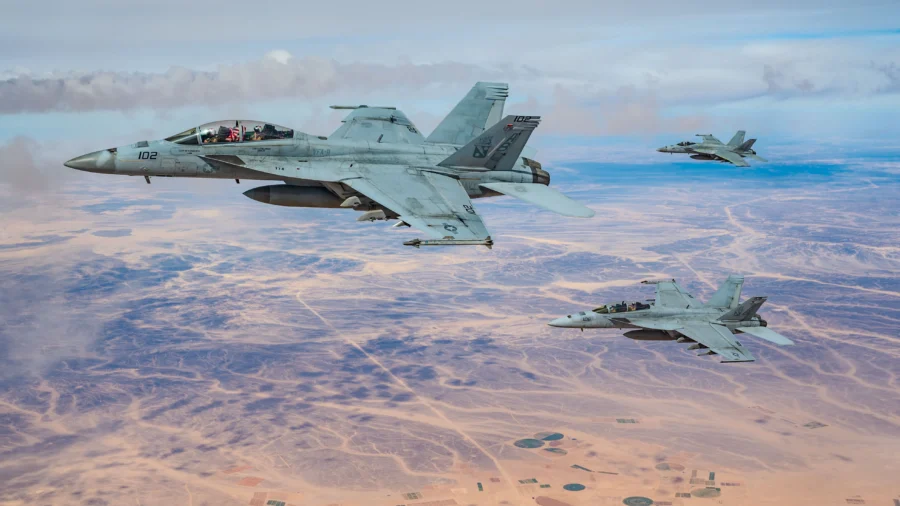
The battle to reopen the Strait of Hormuz has begun, with Pentagon officials announcing the launch of an offensive with the support of allies to reopen the critical oil shipping waterway that Iran has blocked in a bid to weaponize energy and other key commodity shipments in the ongoing conflict.
U.S. forces have deployed low-flying jets and Apache helicopters to strike Iranian vessels in the Strait of Hormuz, with some U.S. allies assisting by using Apaches to take on Iranian attack drones, Gen. Dan Caine, chairman of the U.S. Joint Chiefs of Staff, said during a March 19 press briefing.
“The A-10 Warthog is now in the fight across the southern flank and is hunting and killing fast attack watercraft in the Straits of Hormuz,” Caine said. “In addition, AH-64 Apaches have joined the fight on the southern flank, and they continue to work on the southern side. And that includes some of our allies who are using Apaches to handle one way attack drones.”
Carrying about one-fifth of the world’s oil, the strait has been largely closed as Tehran threatens vessels with mines, fast-attack craft, and missile strikes.
“I wonder what would happen if we ‘finished off’ what’s left of the Iranian Terror State, and let the Countries that use it, we don’t, be responsible for the so called ‘Strait?’“ Trump wrote in a March 18 post on social media. ”That would get some of our non-responsive ‘Allies’ in gear, and fast.”
“We call on Iran to cease immediately its threats, laying of mines, drone and missile attacks and other attempts to block the Strait to commercial shipping,” a March 19 joint statement from the UK, France, Germany, Italy, the Netherlands, Canada, and Japans stated. “We express our readiness to contribute to appropriate efforts to ensure safe passage through the Strait.”
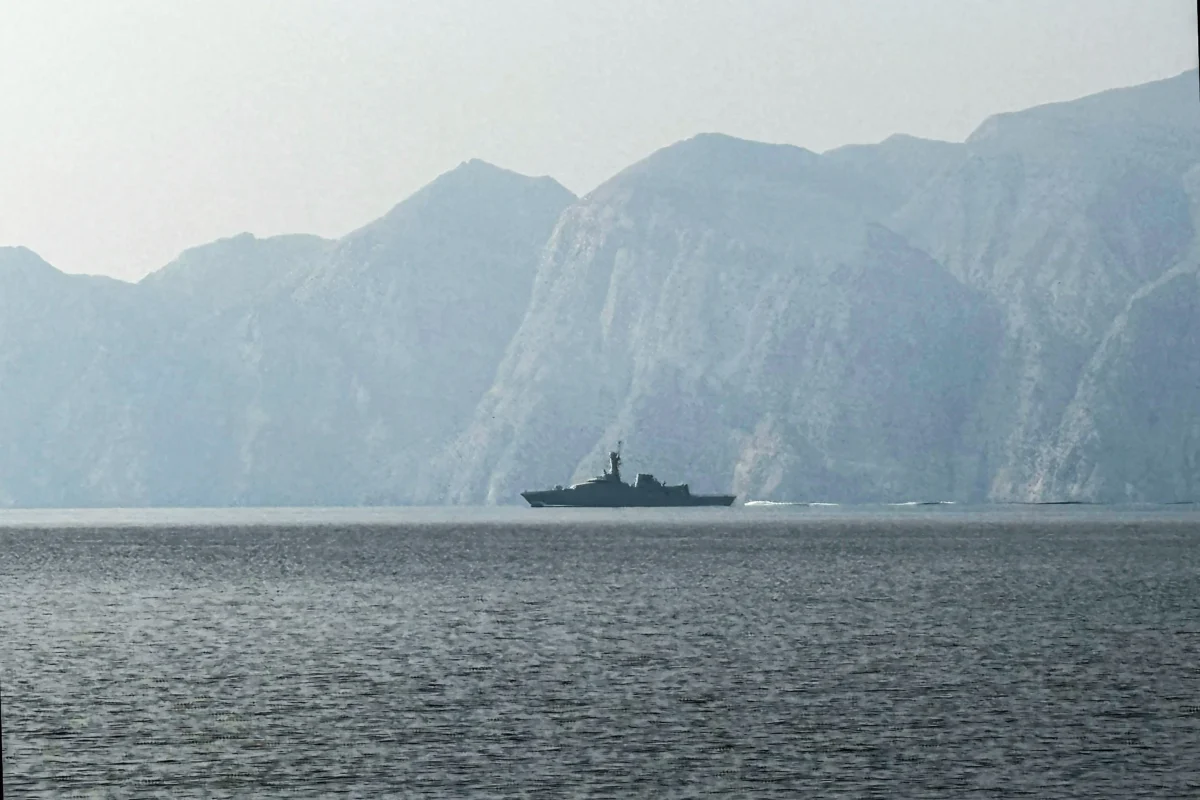
NATO Secretary-General Mark Rutte said on March 19 that member states are engaged in intensive talks on how to tackle the blockage of Hormuz.
Iran Escalates Gulf Strikes
Iran has widened attacks on Gulf energy infrastructure.On March 19, Iranian forces hit refineries in Saudi Arabia and Kuwait and liquefied natural gas (LNG) facilities in Qatar, jolting global markets. The strikes came a day after Israel hit Iran’s South Pars gas field, prompting Tehran to threaten broader retaliation.
The attacks continued on March 20, with Iran firing missiles at Israel and Israel hitting targets in Tehran, as Gulf states reported fresh threats, including a drone strike on a Kuwaiti refinery and intercepted projectiles over Saudi Arabia, the United Arab Emirates, and Bahrain.
During the Pentagon briefing on March 19, officials said the U.S. military had dropped 5,000-pound penetrator bombs on Iran’s underground facilities storing cruise missiles along the coast that could be used to hit ships in the Strait of Hormuz and other targets.
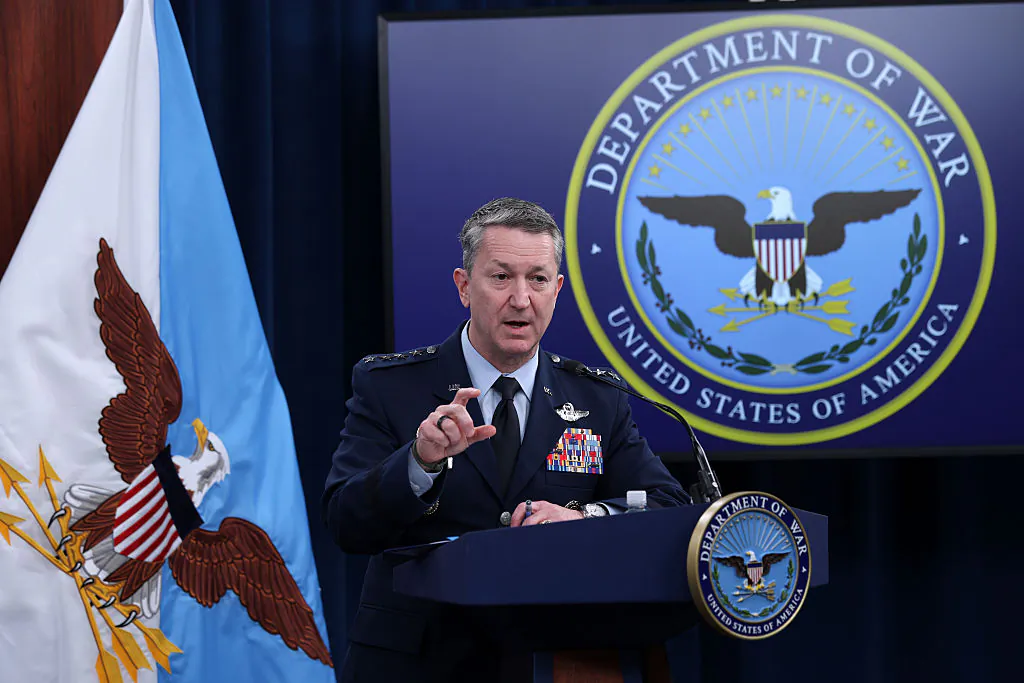
“We continue to hunt and kill mine storage facilities and naval ammunition depots,” Caine told reporters on March 19. “We continue to hunt and kill afloat assets, including more than 120 vessels and 44 mine layers, and the pressure will continue.”