


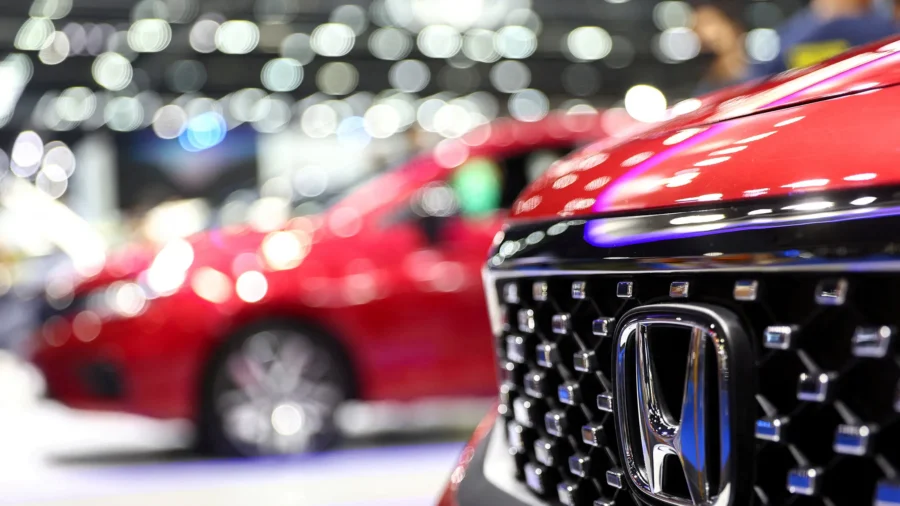
Honda
Honda Motor Company's recall accounts for the largest this month at some 1,693,199 vehicles, with several Honda and Acura models affected that were manufactured between 2022 and 2025.The affected models include the Honda Civic, Civic Hatchback, CR-V, CR-V Hybrid, HR-V, and the Acura Integra Type S, with specific variants such as the Civic Hatchback Hybrid and CR-V Fuel Cell Electric Vehicle also implicated.
Customers can identify the problem through abnormal noise when steering and/or a momentary “sticky” feeling when turning the steering wheel, Honda said.
Porsche
On Oct. 1, Porsche reported a potential issue with 183 units of its 2025 Taycan vehicles. Due to a software issue, the 4-door hybrid electric vehicle's rearview camera may not immediately display when the car is shifted into reverse.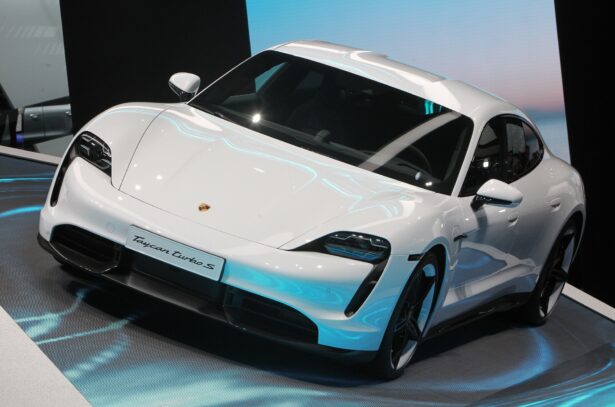
Nissan
Software issues also led to two recalls from Nissan. The Japanese carmaker is calling in 37,236 Nissan Rogue and Infiniti QX80 vehicles produced in 2023–2024 due to a rearview monitor that may turn blank when the cars are put in reverse.Chevrolet
General Motors announced that it is recalling 731 vehicles built with improperly heat-treated door strikers, making them susceptible to fracture, such that affected doors have the potential to open unexpectedly during impacts or crashes.BMW
Meanwhile, 11,579 BMW customers will be disappointed to find out that their car may need to be serviced again, after the integrated brake module installed under a previous recall was found to “not function according to specifications,” the carmaker said.The defective integrated brake system does not affect mechanical braking, BMW said, but the Antilock Brake System (ABS) and Dynamic Stability Control (DSC) systems will not function, thus extending the stopping distance.
A warning lamp and a message should be displayed when the integrated brake system fails, which is expected to occur in 1 percent of the recalled units—comprising 21 models of the X1, X5, X6, X7, XM, 530i, i5, 740i, 760i, i7, and 750e vehicles produced in 2023-2024.