


A senior Russian diplomat has said that the chances of a clash between Russia and NATO are increasing, with a risk of "potentially catastrophic" consequences.
In an interview with Russian state-run news agency TASS published on May 19, Deputy Foreign Minister Sergey Ryabkov highlighted what he called an "escalatory narrative" from Europe about "the looming threat of a high-intensity war" with Russia.
"As a result of this escalation of tensions, including blatantly provocative moves in the nuclear sphere, strategic risks are increasing, as is the danger of a head-on clash between NATO and our country, with potentially catastrophic consequences as a result," Ryabkov said.
NATO similarly shares concerns over escalating tensions with Russia.
Last year, during a Chatham House speech in London, NATO Secretary-General Mark Rutte said that “Russia could be ready to use military force against NATO within five years” and urged the defense alliance to strengthen itself and be ready to respond to an expanding range of threats.
"We are all on the Eastern flank now," Rutte said on June 9, 2025.
"The new generation of Russian missiles travel at many times the speed of sound. The distance between European capitals is only a matter of minutes. There is no longer East or West—there is just NATO."
NATO said in a post on its website from December 2025 that Russia "is the most significant and direct threat to Allies’ security," adding that the defense alliance aims "to constrain and contest Russia’s aggressive actions, and to counter its ability to conduct destabilising activities towards NATO and Allies."
Ryabkov's remarks come at a time when NATO allies in Europe are increasing their defense preparedness.
The leaders of Bulgaria, the Czech Republic, Estonia, Latvia, Lithuania, Poland, Romania, Slovakia, and Hungary—the so-called Bucharest Nine group—and the Nordic nations of Denmark, Finland, Iceland, Norway, and Sweden, released the joint statement after a summit in Romania's capital.
Russian Nuclear Drills
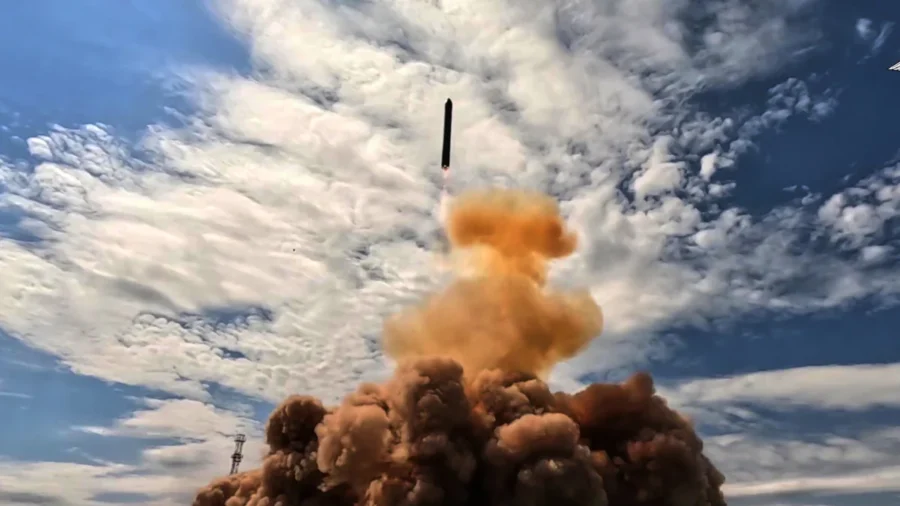
On May 19, the Russian Defense Ministry began three days of nuclear drills, according to TASS, to practice preparing and deploying nuclear forces amid what it called threats of aggression.The ministry said the exercises will involve more than 64,000 personnel and more than 7,800 pieces of military equipment, including more than 140 aircraft, 73 ships, and 200 missile launchers. There will also be 13 submarines, among which are eight strategic missile-carrying submarine cruisers, according to the state-run news agency.
The Russian navy's Northern and Pacific fleets will take part, according to the ministry, as well as long-range aviation and units from the Leningrad and Central Military Districts.
The ministry said that the drills will also practice preparing and deploying nuclear weapons on the territory of their neighboring ally, Belarus.
TASS quoted the Belarusian Defense Ministry as reporting on May 18 that its military units assigned to the use of nuclear weapons will practice interoperability with Russia.
The news agency said the Belarusian Defense Ministry stressed that the exercises were not directed at any other country and do not pose a threat to the region.