


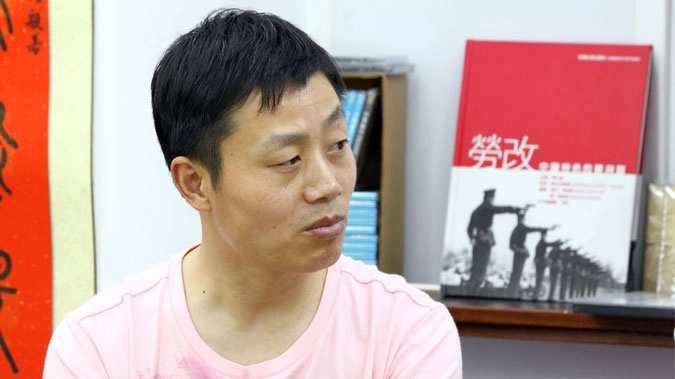
Du Bin, a Chinese filmmaker and former New York Times photographer, was arrested after being taken away by Beijing police on Nov. 15. The police have refused to disclose any details, citing the “confidential” nature of the case.
Du is currently detained at the Shunyi Detention Center in Beijing. On Dec. 1, his lawyer met with him and learned that Du had been verbally notified of his arrest. His family has not yet received any official legal documents.
Du had booked a flight to Japan on Nov. 16, but on the evening before his scheduled departure, he was taken away by police from his residence in Beijing.
According to Li, Du had been taking turns with his sister to care for their mother, who was hospitalized after suffering a cerebral infarction. When Du went missing, his family initially had no idea what had happened. They only learned he was in detention after his lawyer was finally allowed to meet him.
His lawyer attempted to contact the police multiple times but was repeatedly told that no details could be disclosed because the case is “confidential.”
In his early career, Du worked as a journalist in Beijing, focusing on the struggles of China’s vulnerable and marginalized groups. From 2004 onward, he served as a photographer for The New York Times Beijing bureau. In 2011, however, he was forced to give up the position due to pressure from the Chinese Communist Party (CCP).
Through the firsthand account of former detainee Liu Hua and testimonies from other survivors, Above the Ghosts’ Heads revealed the horrific conditions inside the Masanjia Women’s Labor Camp. Falun Gong practitioners and other detainees were subjected to brutal torture methods, including the tiger bench, electric shocks, solitary confinement in tiny cells, being strapped to the “dead man’s bed,” and various forms of sexual violence.
Falun Gong, founded in China in 1992 by Li Hongzhi, combines five sets of slow-motion qigong exercises with the moral principles of truthfulness, compassion, and forbearance. Since July 1999, the CCP has waged a nationwide campaign to eradicate the practice, resulting in widespread persecution, arbitrary detention, torture, extrajudicial killings, and credible reports of forced live organ harvesting from practitioners.
Following intense international pressure—including from Amnesty International and coverage by Western major media outlets—Du was released after 37 days in detention in 2013.
Du published the book Tiananmen Square Massacre in 2013. The book documents the CCP's armed suppression of the 1989 pro-democracy student movement and the ensuing bloodshed.
In an interview with The Epoch Times, Du said that communism has been evil from its very beginning, relying on terrorism and sustaining its rule through murder. “Wherever a communist party exists, there will be famine, war, catastrophe, and unnatural deaths,” he said.
“Throughout the entire history of the Communist movement, more than 100 million people have died unnatural deaths,” he continued. “Of those, over 80 million occurred in China during the Mao era alone—figures supported by my own research and that of other historians.”
Liu Hua, the main interviewee in Above the Ghosts' Heads, fled to the Netherlands and applied for asylum. She said Du’s recent arrest is illegal since there were no legal procedures followed in the process.
Liu calls on the international community to bring attention to this case and urges the CCP to immediately release Du. "There is no freedom, no human rights in China. I will call for his rescue every day."